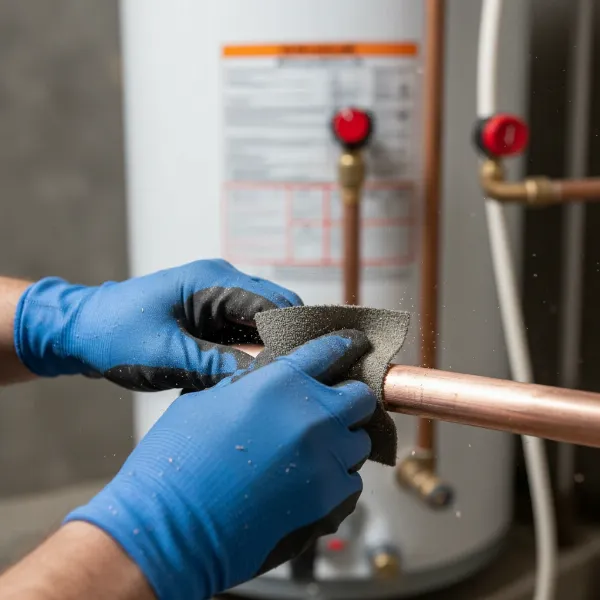
The continuous quest for instant hot water without the burden of a bulky storage tank has led many homeowners to explore tankless solutions. Among the myriad of options, the Rheem RTEX-13 Residential Tankless Water Heater stands out as a compelling choice for specific applications. This electric unit promises on-demand hot water, enhanced energy efficiency, and a space-saving design, making it a popular consideration for smaller living spaces or point-of-use needs. This comprehensive review will delve into its core features, performance capabilities, installation considerations, and overall suitability to help you determine if the RTEX-13 is the right fit for your home.
What is the Rheem RTEX-13 Tankless Water Heater?
The Rheem RTEX-13 is an electric tankless water heater designed to provide hot water on demand, eliminating the need for a traditional storage tank. Unlike conventional heaters that constantly heat and store water, tankless models only activate when hot water is needed, passing cold water over powerful heating elements as it flows through the unit. The RTEX-13 is particularly recognized for its compact size and efficiency, positioning it as an ideal solution for apartments, small homes, or dedicated point-of-use applications like a single bathroom or kitchen sink, where consistent hot water for limited demand is paramount.
Key Features and Specifications
The RTEX-13 is engineered with several features that contribute to its performance and user convenience. Understanding these specifications is crucial for evaluating its compatibility with your household’s requirements.
At its core, the unit operates on 13 kilowatts (kW) of power, requiring a 240V electrical supply. This translates to a significant electrical demand of 54 Amps, necessitating a dedicated 60 Amp double-pole breaker and 6 AWG wire for safe and proper installation.
A key performance indicator for any tankless water heater is its flow rate, measured in Gallons Per Minute (GPM). The RTEX-13 offers a maximum flow rate of approximately 3.17 GPM, depending on the inlet water temperature and desired temperature rise. Its minimum activation flow is a low 0.3 GPM.
Controlling the hot water output is made easy with an external digital thermostatic control and LED display. Users can precisely adjust the temperature in 1°F increments, ranging from a comfortable 80°F to a maximum of 140°F. This level of precision allows for personalized hot water settings to prevent scalding and optimize comfort.
Durability and longevity are supported by robust copper immersion heating elements with brass tops. These elements are designed to be threaded, simplifying replacement if needed and contributing to the unit’s extended lifespan. The RTEX-13 also boasts an impressive 99.8% thermal efficiency, largely due to its self-modulating power control, which adjusts energy consumption based on demand, minimizing waste.
In terms of physical design, the RTEX-13 is remarkably compact, typically measuring around 8.25 inches in width, 12.625 inches in height, and just 3.625 inches in depth. This small footprint, combined with its lightweight build (around 8.5 lbs), makes it easy to install in tight spaces without the need for additional venting.
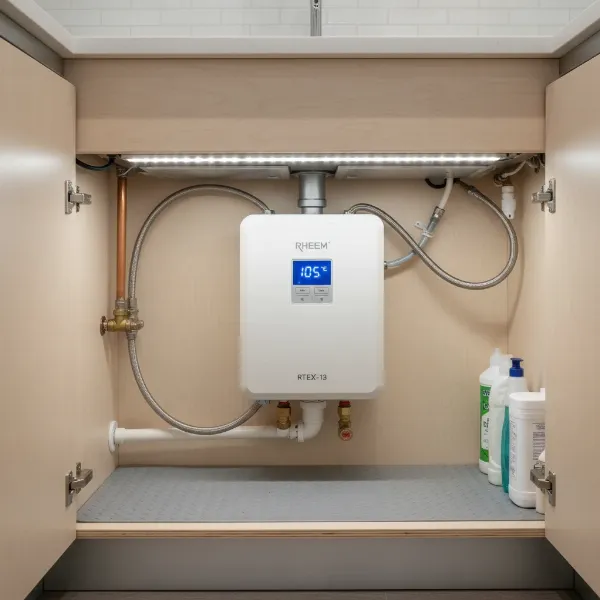 Rheem RTEX-13 electric tankless water heater, compact and wall-mounted under a sink.
Performance and Efficiency
The Rheem RTEX-13 delivers on-demand, consistent hot water for single-use applications. This means you won’t run out of hot water in the middle of a shower, provided the demand aligns with the unit’s flow capacity. Its high 99.8% thermal efficiency translates directly to energy savings, as there is zero standby heat loss, a common issue with traditional tank water heaters that continuously heat a reservoir of water.
However, it’s essential to manage expectations regarding its flow rate. While 3.17 GPM is sufficient for many single-fixture uses, it’s generally not designed for multiple simultaneous high-demand applications, especially in regions with colder inlet water temperatures. For example, it can comfortably support a water-saver shower head (1.5 GPM) or a standard hand sink (0.5 GPM), but trying to run a standard shower (2.0 GPM) and a kitchen sink (1-2 GPM) simultaneously might result in a noticeable drop in water temperature or pressure. The unit’s performance is sensitive to the incoming water temperature; colder water requires more energy to heat to the desired temperature, thus reducing the available GPM. Many users appreciate the quiet operation and the reported durability over several years of use.
 Person using a single faucet with instant hot water from a tankless heater.
Installation and Sizing Guide
Proper installation of the Rheem RTEX-13 is critical for both safety and optimal performance. Due to its significant electrical demands, it is strongly recommended that installation be performed by a qualified professional electrician and plumber to ensure compliance with all local codes and safety standards.
Electrical Requirements
|
Our Picks for the Best Water Heater in 2026
As an Amazon Associate I earn from qualifying purchases.
|
||
| Num | Product | Action |
|---|---|---|
| 1 | Cosori Electric Kettle, No Plastic Contact With Water, Wide Mouth For Easy Cleaning, Auto Shut Off, 1.7L Tea Kettle & Hot Water Boiler, Water Heater & Teapot, Borosilicate Glass, Black, 1500W |

|
| 2 | Immersion Water Heater Electric, 2000W Portable Water Heater with 304 S S Guard & LCD Thermometer, Fast Heating Bucket Heater, Ideal for Small Bucket Bathtub, Small Pool, Home Camping Outdoor Use |
|
| 3 | Chefman Electric Kettle, 1.8L 1500W, Hot Water Boiler, Removable Lid for Easy Cleaning, Auto Shut Off, Boil-Dry Protection, Stainless Steel Filter, BPA Free, Borosilicate Glass Electric Tea Kettle |
|
| 4 | Portable Immersion Water Heater 1800W 120V, Electric Heater for Buckets, Bathtubs and Mini Pools, Submersible Design with Thermostat, Real Time Temperature Display and Dry Burn Protection |
|
| 5 | Portable Water Heater 2000W, Pool Heater - Immersion Heater with Digital Thermometer, Upgraded Magnesium Oxide Heating for Fast Heating, for Small Pools, Bathtubs, Buckets, Tanks |
|
| 6 | OVENTE Electric Kettle, 1.7L Fast Boiling Water Heater for Coffee or Tea, BPA Free with Water Level Gauge, Auto Shut-Off, Boil-Dry Protection, Indicator Light and Removable Filter, White KP72W |
|
| 7 | Amazon Basics Electric Kettle with Glass Carafe for Tea and Coffee, BPA-Free, Fast Boiling, Auto Shut-Off, 1.7 Liter, 1500W, Black and Silver |
|
| 8 | Amazon Basics Electric Kettle with Glass Carafe for Tea and Coffee, BPA-Free, Fast Boiling, Auto Shut-Off, 1 Liter, 1500W, Glass and Steel |
|
| 9 | Amazon Basics Electric Stainless Steel Kettle for Tea and Coffee, BPA-Free, Fast Boiling, Auto Shut-Off, 1.7 Liter, 1500W, Black and Silver |
|
| 10 | Zojirushi Micom Water Boiler and Warmer (135 oz. / 4L, Silver) |
|
As an all-electric unit, the RTEX-13 requires a dedicated 240V circuit, a 60 Amp double-pole breaker, and 6 AWG wire. Before purchasing, ensure your home’s electrical panel can accommodate these requirements, as an upgrade might be necessary in older homes, adding to the overall cost.
Plumbing Requirements
The unit features 1/2-inch NPT water connections on the side. While not always mandated, installing manual shut-off valves on both the inlet and outlet lines is a good practice for easier future maintenance or servicing. Always check local codes regarding the requirement for a Temperature and Pressure (T&P) relief valve, as some jurisdictions may require it even though UL standards for this product type do not. It’s crucial to purge all air from the water lines before turning on the power to prevent damage.
Location
The RTEX-13 is designed for indoor installation only. It must be located in an area protected from freezing temperatures, as frozen water inside the unit can cause severe damage and void the warranty. The installation site should also be easily accessible for maintenance and away from areas prone to excessive humidity, moisture, or potential leaks from other pipes or air conditioning lines.
Sizing the RTEX-13 for Your Needs
Choosing the correct tankless water heater depends heavily on your specific hot water demands:
- Number of Fixtures: The RTEX-13 is best suited for single-point-of-use or very small dwellings with limited simultaneous hot water needs.
- Inlet Water Temperature: Colder incoming water reduces the unit’s effective GPM. For instance, in colder climates, it might only support one low-flow shower. In warmer climates, it can handle slightly more.
- Application Examples:
- Single Hand Sink: Easily handles (0.5 GPM).
- Water-Saver Shower Head: Typically sufficient (1.5 GPM).
- Standard Shower Head: Often sufficient for one shower, but check flow rate requirements (approx. 2.0 GPM).
- Kitchen Sink: Can manage if used alone (1-2 GPM).
“Understanding your home’s peak hot water demand and average inlet water temperature is the first step in selecting the right tankless water heater. For the RTEX-13, it’s about matching its output to a specific, limited demand rather than widespread whole-home use.” – John Davis, Master Plumber and Water Heater Specialist
Pros and Cons of the Rheem RTEX-13
Every appliance has its strengths and weaknesses, and the Rheem RTEX-13 is no exception. Weighing these factors helps in making an informed decision.
Advantages
- Space-Saving, Compact Design: Its small footprint makes it ideal for homes with limited utility space, allowing for installation in cabinets, under sinks, or small utility closets.
- Endless Hot Water (Within Limits): Provides a continuous supply of hot water for as long as needed, as long as the demand doesn’t exceed its flow rate capacity.
- High Energy Efficiency: With 99.8% thermal efficiency and no standby heat loss, it can lead to noticeable savings on energy bills compared to tank models.
- Precise Digital Temperature Control: The external digital display and 1°F increment adjustments offer superior control over water temperature, enhancing comfort and safety.
- Durable Components, Field-Serviceable Elements: Copper heating elements are robust, and their threaded design allows for easy replacement, extending the unit’s service life.
- Longer Lifespan: Tankless units like the RTEX-13 typically last 20 years or more with proper maintenance, significantly longer than traditional tank water heaters.
Disadvantages
- Limited Flow Rate for Multi-Point Simultaneous Use: This is its primary limitation. It’s not designed to supply multiple showers or a shower and dishwasher running at the same time, especially in areas with colder incoming water.
- Significant Electrical Demands: The requirement for a dedicated 60A double-pole breaker and 6 AWG wiring can be a hurdle for some homes, potentially necessitating an expensive electrical panel upgrade.
- Higher Initial Cost: While energy savings can offset this over time, the upfront purchase and installation cost (especially if electrical upgrades are needed) can be higher than a small tank water heater.
- Performance Sensitive to Inlet Water Temperature: In colder climates, the unit’s effective GPM will decrease, further limiting its ability to supply hot water for multiple fixtures.
Maintenance Tips for Your Rheem RTEX-13
While tankless electric water heaters generally require less maintenance than their gas counterparts, a few simple steps can ensure your Rheem RTEX-13 operates efficiently and reliably for years.
- Regular Inspection: Periodically check the unit for any signs of leaks, corrosion, or loose electrical connections. Early detection can prevent minor issues from becoming major problems.
- Cleaning Sediment: Although electric tankless heaters are less prone to mineral buildup than tank models or gas tankless units, flushing the system annually can help remove any sediment that may accumulate, especially in areas with hard water. Refer to your owner’s manual for specific instructions on flushing.
- Check Electrical Connections: Ensure all wiring connections remain tight and secure. Any loose connections can lead to inefficiencies or safety hazards.
- Adjust Temperature Appropriately: While the unit allows for precise temperature control, setting it to the lowest comfortable temperature (e.g., 120°F) can save energy and reduce the risk of scalding, especially in homes with children or the elderly.
Conclusion
The Rheem RTEX-13 Residential Tankless Water Heater emerges as an excellent solution for those seeking a highly efficient, compact, and reliable source of on-demand hot water, particularly for point-of-use applications or smaller homes. Its ability to provide endless hot water within its flow limits, coupled with precise digital temperature control and significant energy savings, makes it a compelling choice for the right user. However, its substantial electrical requirements and limited GPM for simultaneous, high-demand use are crucial considerations. By carefully evaluating your household’s specific hot water needs and existing electrical infrastructure, you can determine if the RTEX-13 is the optimal choice to bring compact efficiency and consistent comfort to your modern home.
Considering its performance characteristics, could the Rheem RTEX-13 be the upgrade your small household needs for smart, efficient hot water delivery?
Frequently Asked Questions
Is the Rheem RTEX-13 suitable for a whole-home application?
The Rheem RTEX-13 is generally best suited for point-of-use or small homes with limited hot water demand, such as apartments or cabins. Its maximum flow rate typically supports one major fixture at a time, depending on the incoming water temperature. For larger homes or those with multiple simultaneous hot water needs, a higher-capacity tankless water heater would be more appropriate.
How does the RTEX-13 save energy compared to a traditional water heater?
The RTEX-13 saves energy primarily by eliminating standby heat loss. Traditional tank water heaters continuously heat a large volume of water, losing energy even when hot water isn’t being used. The tankless RTEX-13 only activates and consumes power when hot water is called for, heating water on demand and boasting a high 99.8% thermal efficiency.
What are the electrical requirements for installing an RTEX-13?
The Rheem RTEX-13 requires a dedicated 240V electrical supply, draws 54 Amps, and necessitates a 60 Amp double-pole breaker. It also requires 6 AWG wiring. It is crucial to verify that your home’s electrical panel can support these specifications before installation, and professional installation by a qualified electrician is strongly recommended.
How long does the Rheem RTEX-13 typically last?
With proper installation and regular maintenance, the Rheem RTEX-13 tankless water heater can have a lifespan of 20 years or more. This is generally twice as long as the average lifespan of a traditional tank-style Water Heater, offering long-term reliability and value.
Can I install the Rheem RTEX-13 myself?
While theoretically possible for experienced DIYers, professional installation by a qualified electrician and plumber is highly recommended. The RTEX-13 involves significant electrical wiring and plumbing connections that must comply with local codes and safety standards. Incorrect installation can lead to safety hazards, void the warranty, and result in property damage.