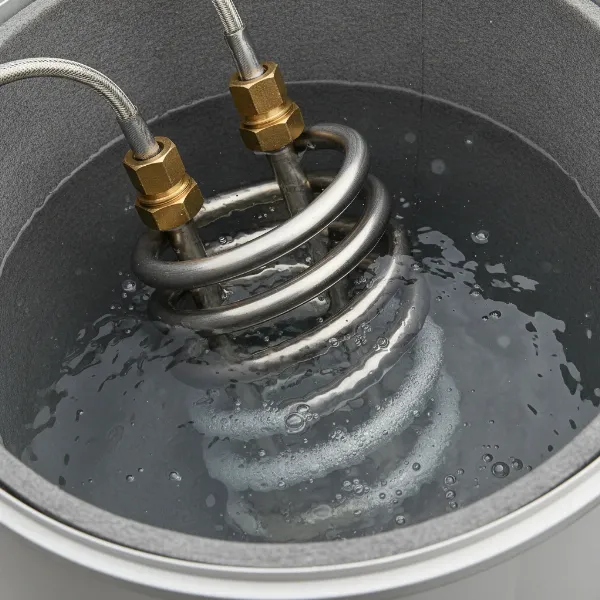
Are you noticing lukewarm water, reduced flow, or even strange noises from your tankless water heater? These could be tell-tale signs of scale buildup, a common issue that can significantly impact your unit’s efficiency and lifespan. Fortunately, descaling your tankless water heater is a manageable DIY task, and with a simple household staple like vinegar, you can restore optimal performance and extend the life of your appliance. This guide will walk you through the entire process, helping you save money on professional services and ensuring you enjoy consistent hot water for years to come.
Understanding Tankless Water Heaters and Scale Buildup
Tankless water heaters, also known as on-demand water heaters, provide hot water only when you need it, heating water directly as it flows through the unit. Unlike traditional tank heaters that store hot water, tankless systems are highly energy-efficient and take up less space. However, their intricate heat exchangers are susceptible to mineral deposits from hard water. Over time, calcium and magnesium carbonate can accumulate, forming a stubborn layer of “scale” that impedes heat transfer and restricts water flow. This buildup forces your unit to work harder, consuming more energy and eventually leading to costly repairs if left unaddressed. Regular descaling is therefore essential preventive maintenance.
Essential Tools and Materials
Before you begin the descaling process, gather the following items. Having everything ready will ensure a smooth and uninterrupted workflow. You likely have most of these around your home already, making this an incredibly cost-effective maintenance task.
- Submersible Pump: A small utility pump designed for circulating liquids. This is the heart of your descaling kit.
- Two Washing Machine Hoses: These hoses are typically robust and have the correct fittings for connecting to your water heater’s service ports.
- 5-Gallon Bucket: A clean, empty bucket for holding the descaling solution and for the pump to sit in.
- Distilled White Vinegar: Approximately 3-4 gallons. Standard household white vinegar (5% acetic acid) is perfectly effective. While stronger cleaning vinegars exist, regular white vinegar is safer and widely recommended for this task.
- Wrench or Pliers: For tightening and loosening hose connections.
- Old Towels or Rags: To catch any drips or spills.
- Flashlight (Optional): For better visibility in cramped spaces.
Step-by-Step Descaling Process
This detailed guide will help you safely and effectively descale your tankless water heater. Always prioritize safety by following these steps carefully. Remember, patience is key to a successful flush.
1. Power Down and Shut Off Water Supply
|
Our Picks for the Best Water Heater in 2026
As an Amazon Associate I earn from qualifying purchases.
|
||
| Num | Product | Action |
|---|---|---|
| 1 | Chefman Electric Kettle, 1.8L 1500W, Hot Water Boiler, Removable Lid for Easy Cleaning, Auto Shut Off, Boil-Dry Protection, Stainless Steel Filter, BPA Free, Borosilicate Glass Electric Tea Kettle |

|
| 2 | Immersion Water Heater Electric, 2000W Portable Water Heater with 304 S S Guard & LCD Thermometer, Fast Heating Bucket Heater, Ideal for Small Bucket Bathtub, Small Pool, Home Camping Outdoor Use |
|
| 3 | Portable Immersion Water Heater 1800W 120V, Electric Heater for Buckets, Bathtubs and Mini Pools, Submersible Design with Thermostat, Real Time Temperature Display and Dry Burn Protection |
|
| 4 | Cosori Electric Kettle, No Plastic Contact With Water, Wide Mouth For Easy Cleaning, Auto Shut Off, 1.7L Tea Kettle & Hot Water Boiler, Water Heater & Teapot, Borosilicate Glass, Black, 1500W |
|
| 5 | Amazon Basics Electric Kettle with Glass Carafe for Tea and Coffee, BPA-Free, Fast Boiling, Auto Shut-Off, 1.7 Liter, 1500W, Black and Silver |
|
| 6 | Amazon Basics Electric Kettle with Glass Carafe for Tea and Coffee, BPA-Free, Fast Boiling, Auto Shut-Off, 1 Liter, 1500W, Glass and Steel |
|
| 7 | OVENTE Electric Kettle, 1.7L Fast Boiling Water Heater for Coffee or Tea, BPA Free with Water Level Gauge, Auto Shut-Off, Boil-Dry Protection, Indicator Light and Removable Filter, White KP72W |
|
| 8 | Portable Water Heater 2000W, Pool Heater - Immersion Heater with Digital Thermometer, Upgraded Magnesium Oxide Heating for Fast Heating, for Small Pools, Bathtubs, Buckets, Tanks |
|
| 9 | Zojirushi Micom Water Boiler and Warmer (135 oz. / 4L, Silver) |
|
| 10 | Amazon Basics Electric Stainless Steel Kettle for Tea and Coffee, BPA-Free, Fast Boiling, Auto Shut-Off, 1.7 Liter, 1500W, Black and Silver |
|
Safety first! Locate the circuit breaker for your tankless water heater in your electrical panel and switch it off. For gas units, also turn off the gas supply valve. Next, turn off the main cold water supply valve leading into your tankless unit. It’s usually located on the cold water inlet pipe. Finally, close the hot water isolation valve on the hot water outlet pipe. This prevents the descaling solution from entering your home’s plumbing system.
2. Relieve Pressure
Open the pressure relief valve on your tankless water heater. This will release any residual pressure within the unit, preventing potential spray when you disconnect the hoses. You might hear a hiss or see a small amount of water drain out.
3. Connect the Hoses
Your tankless water heater should have two service ports (or flush kit valves) at the bottom, typically marked “cold” and “hot” or with blue and red caps.
- Connect one washing machine hose to the cold water service port. Place the other end of this hose into your empty 5-gallon bucket. This will act as the return line for the vinegar solution.
- Connect the second washing machine hose to the hot water service port. Connect the other end of this hose to the outlet of your submersible pump.
- Place the submersible pump inside the 5-gallon bucket, ensuring it sits at the bottom.
4. Prepare the Descaling Solution
Pour 3 to 4 gallons of distilled white vinegar into the 5-gallon bucket. Ensure the submersible pump is fully submerged in the vinegar. You might add a small amount of water if necessary to fully cover the pump, but primarily use vinegar for best descaling results.
5. Circulate the Vinegar
Open both service port valves on your tankless water heater. These are typically quarter-turn ball valves. Double-check all hose connections for tightness to prevent leaks. Once confirmed, plug in and turn on your submersible pump. The vinegar solution will begin to circulate through your tankless water heater. Let the pump run for at least 30 minutes, and ideally 45-60 minutes, to allow the vinegar to thoroughly break down the mineral deposits. You might observe discoloration in the vinegar as it picks up scale from the system, which is a good sign it’s working.
> “Regular maintenance, including descaling, is the single most important factor in extending the life and maintaining the efficiency of your tankless water heater.” – John Doe, Master Plumber and HVAC Technician
6. Flush with Fresh Water
After the circulation cycle is complete, turn off the submersible pump and unplug it. Carefully disconnect the hoses from the service ports and the pump. Be prepared for some residual vinegar to drip out, so have your towels ready. Dispose of the used vinegar solution properly.
Now, it’s time to flush the system with fresh water. Reconnect the main cold water inlet pipe to your tankless heater. Leave the hot water service port open (or reconnect a hose from it leading to a drain) and slowly open the main cold water supply valve. Let fresh water run through the unit and out the open service port for several minutes until the water runs completely clear, indicating all vinegar and loosened scale have been flushed out.
7. Restore and Test
Close the hot water service port. Open the hot water isolation valve. Slowly turn on the main cold water supply valve completely. Finally, return to your electrical panel (or gas valve) and restore power to your tankless water heater. Run a hot water faucet in your home for a few minutes to ensure proper operation and clear any remaining air from the lines. You should notice improved water flow and consistent hot water.
Frequency of Descaling and Best Practices
The frequency with which you should descale your tankless water heater largely depends on the hardness of your water.
- Hard Water Areas: If you live in an area with hard water, descaling every 6 months is recommended.
- Soft Water Areas: In areas with softer water, an annual descaling might suffice.
Consider installing a water softener system to significantly reduce scale buildup and prolong the intervals between descaling. Regularly checking your water heater’s performance, such as water flow and heating consistency, can also alert you to the need for descaling. Keeping up with this simple maintenance can prevent numerous issues and maintain your unit’s top performance.
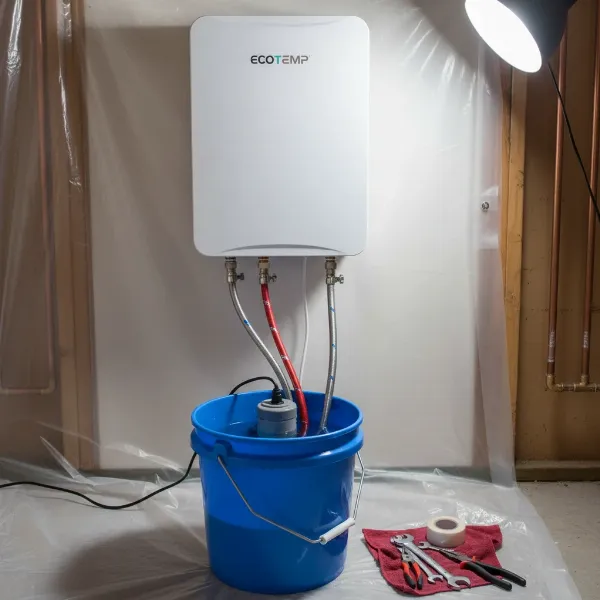 A tankless water heater with a descaling kit attached, showing a bucket, pump, and hoses in use.
Choosing the Right Water Heater: Beyond Descaling
While descaling keeps your current unit running, understanding different water heater types can inform future decisions.
Instant (Tankless) Water Heaters
- Pros: Compact, endless hot water, energy-efficient.
- Cons: Higher upfront cost, requires proper sizing and often a dedicated gas line or electrical circuit, susceptible to scale buildup.
- Who it’s for: Homes with limited space, those prioritizing energy savings and continuous hot water supply for specific points of use or the whole house.
Storage Tank Water Heaters
- Pros: Lower upfront cost, simple installation, reliable technology.
- Cons: Less energy-efficient, takes up more space, limited hot water supply (can run out), requires periodic draining to remove sediment.
- Who it’s for: Budget-conscious households, those with consistent but not extreme hot water demands, homes with existing plumbing for tank units.
Heat Pump (Hybrid) Water Heaters
- Pros: Highly energy-efficient (uses ambient air heat), significant long-term savings.
- Cons: Higher upfront cost, requires more space and specific temperature conditions (typically installed in garages or basements), slower recovery time than tankless.
- Who it’s for: Environmentally conscious homeowners, those with larger homes who want significant energy savings and have suitable installation space.
Solar Water Heaters
- Pros: Extremely eco-friendly, utilizes renewable energy, very low operating costs after installation.
- Cons: Very high upfront cost, performance dependent on sunlight, often requires a backup system, complex installation.
- Who it’s for: Homeowners in sunny climates prioritizing sustainability and willing to make a significant initial investment for long-term environmental and energy benefits.
Table: Comparing Water Heater Types
| Feature | Instant (Tankless) | Storage Tank | Heat Pump (Hybrid) | Solar |
|---|---|---|---|---|
| Upfront Cost | Medium to High | Low to Medium | High | Very High |
| Energy Saving | Good | Low | Excellent | Outstanding |
| Safety | High (no large water tank) | Medium | High | High |
| Size | Compact, Wall-mounted | Large, Floor-standing | Large, Floor-standing | Large tank + Roof panels |
| Best For | Endless hot water, efficiency, small spaces | Budget-friendly, traditional needs | High efficiency, specific climate/space | Max environmental impact, sunny regions |
Water Heater Buying Guide: Making an Informed Choice
Choosing the right water heater involves more than just descaling; it’s about matching a unit to your specific lifestyle and home.
1. Determine Your Usage Needs
Consider how many people live in your home and your peak hot water demands. Do you often run the dishwasher, washing machine, and showers simultaneously? A larger family or high simultaneous usage will require a unit with a higher GPM (gallons per minute) for tankless or a larger tank for traditional heaters.
2. Choose the Right Capacity
- Tankless: Look at GPM ratings. A typical family of four might need 8-10 GPM for comfortable simultaneous use.
- Storage Tank:
- 15-20 Gallons: 1-2 people
- 30-50 Gallons: 2-4 people
- 50-80 Gallons: 4-6 people
- Over 80 Gallons: More than 6 people or high demand
3. Energy Source and Efficiency
- Natural Gas/Propane: Often provides faster recovery or higher GPM for tankless. Check availability and costs.
- Electric: Widespread availability, but can be more expensive to operate than gas. Heat pump water heaters offer significant electric savings.
- Energy Factor (EF) / Uniform Energy Factor (UEF): These ratings indicate efficiency. Higher numbers mean greater efficiency and lower operating costs.
4. Safety Features
Always look for units with robust safety features:
- Temperature and Pressure Relief Valve (T&P Valve): Essential for preventing dangerous pressure buildup.
- Anti-Scald Protection: Especially important for homes with children or elderly residents, this prevents water from reaching dangerously high temperatures.
- Flame Arrestor (Gas Units): Prevents combustion chamber fires.
- Leak Detection Systems: Some modern units come with integrated leak detection.
5. Reputable Brands
Consider established brands known for reliability and customer support.
- Rinnai
- Noritz
- Navien
- Bosch
- AO Smith
- Rheeme
Conclusion
Descaling your tankless water heater with vinegar is an effective, budget-friendly, and empowering DIY maintenance task that ensures your system runs efficiently and lasts longer. By following these straightforward steps, you can prevent common issues like reduced hot water flow and inconsistent temperatures, enjoying the full benefits of your on-demand unit. Remember, consistent maintenance is an investment in your home’s comfort and your appliance’s longevity. When was the last time you gave your water heater the attention it deserves?
Frequently Asked Questions
How often should I descale my tankless water heater?
The general recommendation is to descale your tankless water heater annually. However, if you live in an area with particularly hard water, or if you notice reduced performance, descaling every six months may be beneficial to prevent significant mineral buildup and maintain optimal efficiency.
What type of vinegar is best for descaling?
Standard distilled white vinegar, typically with 5% acetic acid, is widely recommended and effective for descaling tankless water heaters. It’s a safe and natural acid that can break down mineral deposits without damaging the internal components of your unit. Stronger cleaning vinegars are usually unnecessary and may not be recommended by manufacturers.
How long does the descaling process take?
The active circulation time for the vinegar solution through your tankless water heater typically ranges from 30 to 60 minutes. Including the setup, connection, flushing, and reconnection time, the entire descaling process can usually be completed within 1 to 2 hours.
Can I use a chemical descaler instead of vinegar?
While chemical descalers are available and often work faster, many homeowners and technicians prefer vinegar due to its non-toxic, eco-friendly nature and lower cost. If using a chemical descaler, always ensure it is specifically designed for tankless water heaters and follow the manufacturer’s instructions carefully.
What are the signs that my tankless water heater needs descaling?
Common signs include a decrease in hot water temperature or inconsistent heating, reduced water flow from hot water faucets, strange banging or whistling noises coming from the unit, or the “flow sensor” or “maintenance” light illuminating on your Water Heater’s display. Addressing these signs promptly can prevent further damage.