As an expert with over a decade in the water heating industry, I’ve seen countless systems, from compact residential units to complex industrial setups. One of the most common questions homeowners ask about tankless water heaters is concerning their maintenance, specifically, how often they need to be flushed. While tankless units offer incredible efficiency and on-demand hot water, their advanced technology requires specific care to maintain peak performance and longevity. Ignoring this crucial maintenance step can lead to reduced efficiency, higher utility bills, and even premature system failure. This comprehensive guide will walk you through the essential aspects of tankless water heater flushing, detailing why it’s vital, how often it should be done, the signs to watch for, and whether you can tackle it yourself or should call a professional.
Why is Tankless Water Heater Flushing Essential?
Tankless water heaters excel at providing endless hot water by rapidly heating water as it flows through the unit. However, the very nature of this process makes them susceptible to mineral buildup, especially in their intricate heat exchangers. Water, even seemingly clean tap water, contains dissolved minerals like calcium and magnesium. Over time, as water is heated, these minerals precipitate and form hard deposits known as “scale.”
This scale acts as an insulating layer within the heat exchanger, forcing your unit to work harder to achieve the desired water temperature. The consequences of neglected flushing are significant:
- Reduced Efficiency: Scale buildup impedes heat transfer, causing your tankless water heater to consume more energy to heat water, directly impacting your utility bills.
- Decreased Lifespan: The added strain on components from working harder shortens the overall life of the unit. Regular flushing can extend its lifespan by several years.
- Inconsistent Hot Water: Mineral deposits can restrict water flow and interfere with the heating process, leading to fluctuating water temperatures or even cold bursts mid-shower.
- Reduced Water Pressure: As scale accumulates, it can narrow the internal pipes, causing a noticeable drop in hot water pressure throughout your home.
- Strange Noises: Popping, crackling, or rumbling sounds from your unit often indicate mineral deposits interfering with the heating elements.
- Voided Warranty: Many manufacturers require regular maintenance, including flushing, to keep your warranty valid. Neglecting this could leave you responsible for costly repairs.
Flushing removes these damaging deposits, ensuring your system runs smoothly, efficiently, and provides the reliable hot water you expect.
How Often Should You Flush Your Tankless Water Heater?
The frequency of flushing a tankless water heater is not a one-size-fits-all answer; it largely depends on your water quality and usage habits. However, a general rule of thumb is at least once a year.
Here’s a more detailed breakdown:
- Hard Water Areas: If your home is in an area with hard water (high mineral content), you should consider flushing your tankless water heater more frequently, typically every six to nine months, or at least once a year to prevent excessive scaling. The higher concentration of minerals means faster accumulation and a greater need for regular descaling.
- Soft Water Areas: For homes with naturally soft water or those using a water softener system, flushing once a year is usually sufficient to maintain optimal performance.
- High Usage Households: If your household has a high demand for hot water, leading to frequent and extended use of the tankless unit, more frequent maintenance might be beneficial to keep up with the operational demands.
Always consult your tankless water heater’s owner’s manual. Manufacturers often provide specific guidelines tailored to their model’s design, which can be the most accurate recommendation for your particular unit.
Signs Your Tankless Water Heater Needs Flushing
Even if you adhere to a regular maintenance schedule, your tankless water heater might exhibit signs that it needs attention sooner than planned. Recognizing these indicators can help prevent minor issues from escalating into major, costly repairs.
Look out for these common warning signs:
- Fluctuating Water Temperatures: If your hot water isn’t consistently hot or cycles between hot and lukewarm, mineral buildup in the heat exchanger is likely hindering its ability to maintain temperature.
- Reduced Hot Water Flow or Pressure: A noticeable decrease in the force of hot water coming from your faucets or showerheads often indicates scale restricting water pathways within the unit.
- Unusual Noises: Popping, crackling, rumbling, or knocking sounds coming from your tankless unit are telltale signs of sediment and mineral deposits interfering with the heating process.
- Increased Energy Bills: If your utility bills are creeping up without a corresponding increase in usage, your water heater might be working harder due to mineral buildup, consuming more energy than necessary.
- Error Codes: Modern tankless water heaters often feature diagnostic displays that will show error codes when maintenance or repair is required, including issues related to scale buildup.
- Delayed Hot Water: While tankless heaters provide on-demand hot water, significant scale can cause a delay in hot water delivery as the system struggles to heat effectively.
Catching these signs early and flushing your unit can restore its performance and extend its lifespan.
DIY vs. Professional Tankless Water Heater Flushing
Deciding whether to flush your tankless water heater yourself or hire a professional depends on your comfort level with plumbing tasks and the specific requirements of your unit.
DIY Flushing
For the mechanically inclined homeowner, flushing a tankless water heater can be a rewarding and cost-saving DIY project. Flush kits, readily available at home improvement stores, typically include a circulation pump and hoses. You’ll also need a 5-gallon bucket and a descaling agent, often food-grade white vinegar or a specialized commercial solution.
Potential Benefits of DIY:
- Cost Savings: You save on labor costs.
- Convenience: You can perform the maintenance on your own schedule.
Potential Drawbacks of DIY:
- Risk of Error: Incorrect procedures can lead to leaks, damage to the unit, or ineffective descaling.
- Messy Process: Dealing with water and descaling solutions can be messy if not handled carefully.
- Warranty Concerns: Some manufacturers may require professional service documentation to honor warranties, especially for major issues.
|
Our Picks for the Best Water Heater in 2026
As an Amazon Associate I earn from qualifying purchases.
|
||
| Num | Product | Action |
|---|---|---|
| 1 | Amazon Basics Electric Kettle with Glass Carafe for Tea and Coffee, BPA-Free, Fast Boiling, Auto Shut-Off, 1.7 Liter, 1500W, Black and Silver |

|
| 2 | OVENTE Electric Kettle, 1.7L Fast Boiling Water Heater for Coffee or Tea, BPA Free with Water Level Gauge, Auto Shut-Off, Boil-Dry Protection, Indicator Light and Removable Filter, White KP72W |
|
| 3 | Chefman Electric Kettle, 1.8L 1500W, Hot Water Boiler, Removable Lid for Easy Cleaning, Auto Shut Off, Boil-Dry Protection, Stainless Steel Filter, BPA Free, Borosilicate Glass Electric Tea Kettle |
|
| 4 | Portable Water Heater 2000W, Pool Heater - Immersion Heater with Digital Thermometer, Upgraded Magnesium Oxide Heating for Fast Heating, for Small Pools, Bathtubs, Buckets, Tanks |
|
| 5 | Amazon Basics Electric Kettle with Glass Carafe for Tea and Coffee, BPA-Free, Fast Boiling, Auto Shut-Off, 1 Liter, 1500W, Glass and Steel |
|
| 6 | Zojirushi Micom Water Boiler and Warmer (135 oz. / 4L, Silver) |
|
| 7 | Immersion Water Heater Electric, 2000W Portable Water Heater with 304 S S Guard & LCD Thermometer, Fast Heating Bucket Heater, Ideal for Small Bucket Bathtub, Small Pool, Home Camping Outdoor Use |
|
| 8 | Cosori Electric Kettle, No Plastic Contact With Water, Wide Mouth For Easy Cleaning, Auto Shut Off, 1.7L Tea Kettle & Hot Water Boiler, Water Heater & Teapot, Borosilicate Glass, Black, 1500W |
|
| 9 | Amazon Basics Electric Stainless Steel Kettle for Tea and Coffee, BPA-Free, Fast Boiling, Auto Shut-Off, 1.7 Liter, 1500W, Black and Silver |
|
| 10 | Portable Immersion Water Heater 1800W 120V, Electric Heater for Buckets, Bathtubs and Mini Pools, Submersible Design with Thermostat, Real Time Temperature Display and Dry Burn Protection |
|
Professional Flushing
Hiring a certified technician for your tankless water heater flush offers peace of mind and ensures the job is done correctly and safely. Professionals have specialized tools, expertise, and knowledge of various tankless models, including those with specific bypass valve procedures (like some Rinnai units).
Benefits of Professional Service:
- Expertise and Accuracy: Technicians can correctly diagnose issues, perform thorough descaling, and ensure all connections are secure.
- Warranty Protection: Professional service often provides the necessary documentation to maintain your unit’s warranty.
- Comprehensive Inspection: A professional flush often includes a broader inspection of your unit and associated plumbing, identifying potential problems before they become critical.
- Safety: Working with water and electricity or gas requires caution; professionals ensure safety protocols are followed.
“While DIY flushing can save money, the value of a professional inspection extends beyond just descaling. A trained eye can spot minor issues that, if ignored, could lead to costly repairs or even premature replacement of your tankless unit.” – John Smith, Master Plumber and Water Heater Specialist
Ultimately, if you’re unsure about any step or your unit is particularly complex, consulting a professional is always the safest and most reliable option.
Step-by-Step Guide to Flushing Your Tankless Water Heater (DIY)
If you’re confident in your DIY skills, here’s a general guide to flushing your tankless water heater. Always refer to your specific manufacturer’s manual for detailed instructions, as steps can vary between models.
Tools and Materials You’ll Need:
- Tankless water heater flush kit (includes a submersible pump and two hoses)
- 5-gallon bucket
- 3-5 gallons of food-grade white vinegar or a commercial descaling solution
- Safety glasses and rubber gloves
- Towels or rags
- Flathead screwdriver (if needed for purge valves)
The Flushing Process:
- Safety First: Turn Off Power and Water.
- Locate your tankless water heater and turn off its power supply (either flip the circuit breaker for electric units or turn off the gas supply valve for gas units).
- Close the cold water inlet and hot water outlet valves on your unit. These are typically quarter-turn ball valves.
- Locate and Open Purge Valves.
- Identify the purge/service valves, usually located on the hot and cold water lines leading to the unit.
- Open the caps or turn the purge valves to the drain position to release pressure and allow any residual water to drain.
- Connect Hoses.
- Attach one hose from your flush kit to the cold water inlet purge valve. Place the other end of this hose into your 5-gallon bucket.
- Attach the second hose from your flush kit to the hot water outlet purge valve.
- Connect the submersible pump to the hose leading to the cold water inlet.
- Prepare Descaling Solution.
- Fill your 5-gallon bucket with 3-5 gallons of food-grade white vinegar or the recommended commercial descaling solution. Ensure the submersible pump is fully submerged in the solution.
- Circulate the Solution.
- Open both purge valves (cold inlet and hot outlet) on your tankless unit.
- Turn on the submersible pump. The pump will circulate the descaling solution through your tankless water heater, dissolving mineral buildup.
- Allow the solution to circulate for approximately 45-60 minutes for commercial solutions. If using white vinegar, some sources suggest 1.5 to 2 hours due to its milder nature.
- Turn Off Pump and Close Valves.
- After the recommended circulation time, turn off the submersible pump.
- Close the cold water inlet purge valve first, then the hot water outlet purge valve.
- Disconnect Hoses and Flush with Clean Water.
- Carefully disconnect the hoses from the unit. Be prepared for some residual solution to drain.
- Open the main cold water inlet valve to the water heater (not the purge valve). This will flush clean water through the unit, pushing out any remaining descaling solution and loosened debris. Let it run for a few minutes until the water runs clear.
- Close the cold water inlet valve again.
- Reconnect Water Lines and Restore Power.
- Close the purge valves on the hot and cold lines.
- Reconnect any caps or plugs you removed from the purge valves.
- Slowly open both the main cold water inlet and hot water outlet valves to the tankless unit.
- Restore power (gas or electricity) to your tankless water heater.
- Test for Proper Operation.
- Open a hot water faucet inside your home and let the water run for a few minutes to ensure the system is fully purged of air and is producing hot water at a consistent temperature and flow. Check for any leaks around the unit and connections.
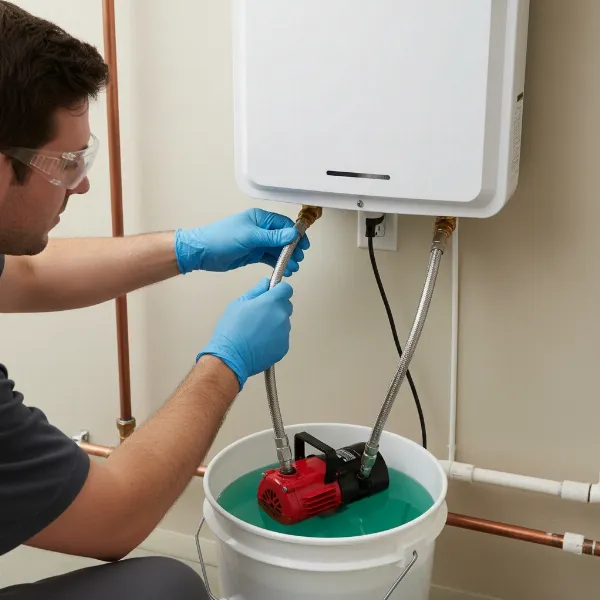 A homeowner using a tankless water heater flushing kit with a bucket and hoses.
Conclusion
Maintaining your tankless water heater with regular flushing is paramount for ensuring its efficiency, longevity, and consistent delivery of hot water. While tankless units are a smart investment for energy savings and convenience, ignoring mineral buildup can undermine these benefits, leading to costly repairs and premature replacement. By understanding the optimal flushing frequency—annually for most, more often in hard water areas—and recognizing the warning signs, you can proactively protect your investment. Whether you choose to tackle the task yourself or entrust it to a professional, prioritizing this essential maintenance will keep your tankless water heater operating at its best for years to come. Isn’t a reliable supply of hot water worth a little preventive care?
Frequently Asked Questions
How often should I flush my tankless water heater if I have very hard water?
If you live in an area with very hard water, it is highly recommended to flush your tankless water heater every six to nine months. Hard water contains higher concentrations of minerals like calcium and magnesium, which accelerate scale buildup and can quickly impact your unit’s efficiency and lifespan. Regular flushing prevents these deposits from causing significant problems.
Can I use regular household vinegar to flush my tankless water heater?
Yes, food-grade distilled white vinegar is a common and effective natural descaling agent for tankless water heaters, especially for moderate mineral buildup. When using vinegar, it’s generally recommended to allow it to circulate through the system for a longer duration, typically 1.5 to 2 hours, compared to commercial descaling solutions. Always ensure the unit’s power is off during the process.
What happens if I never flush my tankless water heater?
Neglecting to flush your tankless Water Heater can lead to severe mineral buildup, known as scale, which insulates the heat exchanger and restricts water flow. This results in reduced hot water pressure, fluctuating temperatures, increased energy consumption, strange noises, and ultimately, a significantly shortened lifespan for your unit. It can also void your manufacturer’s warranty.