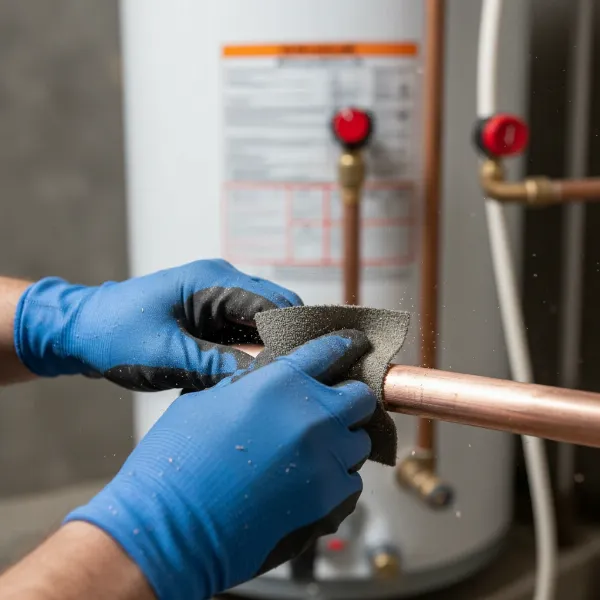
Navigating the world of water heaters can be daunting, especially when seeking a balance between consistent hot water, energy efficiency, and modern convenience. Traditional electric water heaters often struggle with high operating costs, while conventional gas models raise environmental concerns. The Rheem Performance Platinum Hybrid Smart Water Heater emerges as a compelling solution, promising significant energy savings and smart home integration. This in-depth review will explore its innovative technology, key features, practical benefits, and potential drawbacks to help you determine if this advanced system is the right choice for your home.
Understanding Hybrid Heat Pump Water Heater Technology
At its core, the Rheem Performance Platinum Hybrid Smart Water Heater utilizes advanced heat pump technology, a fundamental departure from conventional heating methods. Unlike standard electric water heaters that rely solely on resistive heating elements, a hybrid heat pump unit functions by extracting heat from the surrounding air and transferring it to the water in the tank. This process is akin to how a refrigerator cools its interior, but in reverse.
This method makes hybrid water heaters incredibly efficient. By moving existing heat rather than generating it, the unit consumes significantly less electricity. For instance, the Rheem Hybrid is up to four times more efficient than a conventional electric water heater, leading to substantial energy cost reductions. A beneficial side effect of this heat transfer process is that the unit also acts as a dehumidifier and provides some cooling to the area where it’s installed, making spaces like basements or garages more comfortable.
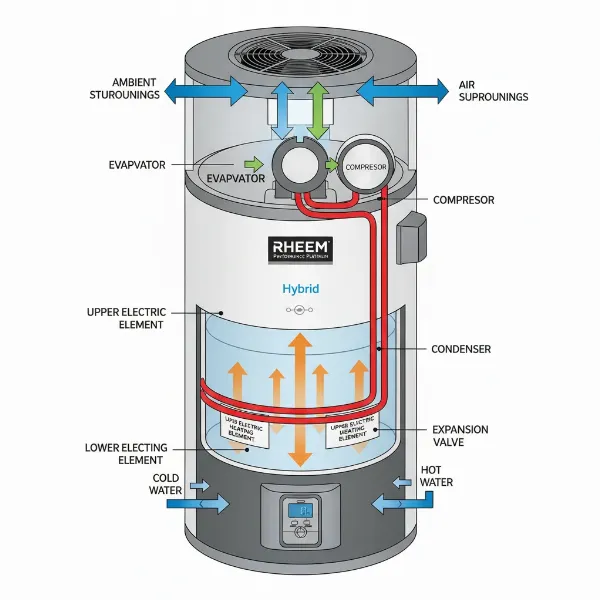 Diagram illustrating how a Rheem Performance Platinum Hybrid Smart Water Heater works, showing heat extraction from air.
Key Features of the Rheem Performance Platinum Hybrid Smart Water Heater
The Rheem Performance Platinum Hybrid Smart Water Heater is engineered with several features that set it apart, focusing on efficiency, convenience, and reliability.
Unmatched Energy Efficiency
|
Our Picks for the Best Water Heater in 2026
As an Amazon Associate I earn from qualifying purchases.
|
||
| Num | Product | Action |
|---|---|---|
| 1 | OVENTE Electric Kettle, 1.7L Fast Boiling Water Heater for Coffee or Tea, BPA Free with Water Level Gauge, Auto Shut-Off, Boil-Dry Protection, Indicator Light and Removable Filter, White KP72W |

|
| 2 | Portable Water Heater 2000W, Pool Heater - Immersion Heater with Digital Thermometer, Upgraded Magnesium Oxide Heating for Fast Heating, for Small Pools, Bathtubs, Buckets, Tanks |
|
| 3 | Zojirushi Micom Water Boiler and Warmer (135 oz. / 4L, Silver) |
|
| 4 | Amazon Basics Electric Kettle with Glass Carafe for Tea and Coffee, BPA-Free, Fast Boiling, Auto Shut-Off, 1.7 Liter, 1500W, Black and Silver |
|
| 5 | Cosori Electric Kettle, No Plastic Contact With Water, Wide Mouth For Easy Cleaning, Auto Shut Off, 1.7L Tea Kettle & Hot Water Boiler, Water Heater & Teapot, Borosilicate Glass, Black, 1500W |
|
| 6 | Portable Immersion Water Heater 1800W 120V, Electric Heater for Buckets, Bathtubs and Mini Pools, Submersible Design with Thermostat, Real Time Temperature Display and Dry Burn Protection |
|
| 7 | Immersion Water Heater Electric, 2000W Portable Water Heater with 304 S S Guard & LCD Thermometer, Fast Heating Bucket Heater, Ideal for Small Bucket Bathtub, Small Pool, Home Camping Outdoor Use |
|
| 8 | Chefman Electric Kettle, 1.8L 1500W, Hot Water Boiler, Removable Lid for Easy Cleaning, Auto Shut Off, Boil-Dry Protection, Stainless Steel Filter, BPA Free, Borosilicate Glass Electric Tea Kettle |
|
| 9 | Amazon Basics Electric Kettle with Glass Carafe for Tea and Coffee, BPA-Free, Fast Boiling, Auto Shut-Off, 1 Liter, 1500W, Glass and Steel |
|
| 10 | Amazon Basics Electric Stainless Steel Kettle for Tea and Coffee, BPA-Free, Fast Boiling, Auto Shut-Off, 1.7 Liter, 1500W, Black and Silver |
|
This water heater boasts an impressive Uniform Energy Factor (UEF) of up to 4.07, significantly reducing operating costs. Homeowners can expect estimated energy cost savings of up to $575 per year, potentially accumulating over $5,750 in savings over a decade. This makes it an ENERGY STAR® certified appliance, qualifying it for various federal tax credits (up to $2,000) and numerous local or utility rebates, further offsetting the initial investment. Users have reported exceptionally low monthly electric bills, with some families of four paying as little as $5.50 per month for hot water.
Smart Connectivity with EcoNet
Integrated Wi-Fi connectivity, powered by the Rheem EcoNet app, transforms this appliance into a smart home device. Through the app, users can remotely monitor hot water availability, track energy usage in real-time, and control various operating modes like Efficiency or Performance modes. The smart system also includes LeakGuard™ (or LeakSense™ in some models) leak detection and prevention, which incorporates a factory-installed auto water shut-off valve to limit leaks to a minimal amount (typically no more than 20 ounces), providing peace of mind. This level of control and monitoring empowers users to optimize their energy consumption effortlessly, even when away from home.
Reliable Performance & Hot Water Availability
Despite its focus on energy efficiency, the Rheem Hybrid Water Heater does not compromise on performance. It delivers hot water faster than many standard electric water heaters, ensuring a consistent supply even for busy households with high demand. Users frequently report rarely running out of hot water, even after multiple back-to-back showers. The system’s wide ambient operating range, from 37°F to 145°F (3°C to 63°C), is a class-leading feature, allowing for more days of heat pump operation annually, and it is designed to meet Northern Climate specifications (Tier 4) for reliable performance in colder regions.
Flexible Installation & Design
Rheem has designed the Performance Platinum Hybrid for easier installation and replacement. Newer models feature universal side and new top water connections, which simplify setup and can save on installation costs. Additionally, a duct-ready design eliminates the need for separate duct adapters, offering more flexible installation options and simplifying the process for homeowners or professionals. Available in 40, 50, 65, and 80-gallon capacities, it can accommodate various household sizes and hot water demands.
Rheem Hybrid Water Heater: Pros and Cons
Like any advanced appliance, the Rheem Performance Platinum Hybrid Smart Water Heater comes with a distinct set of advantages and considerations.
Pros
- Significant Cost Savings: The most touted benefit is the drastic reduction in energy bills. Being up to 4x more efficient than traditional electric units, it can lead to annual savings of hundreds of dollars, potentially paying for itself within a few years.
- Environmental Benefits: By consuming less electricity, it lowers your carbon footprint and promotes a more sustainable home.
- Dehumidification and Cooling: The heat pump extracts heat and moisture from the air, effectively dehumidifying and slightly cooling the installation area. This can be particularly advantageous in humid climates or in spaces like basements and garages.
- Smart Control and Monitoring: The EcoNet app provides unparalleled control, allowing for remote temperature adjustments, vacation settings, and detailed energy usage tracking.
- Reliable Hot Water Supply: Despite its efficiency, the hybrid system ensures a steady and ample supply of hot water, with many users reporting they never run out, even with high demand.
- Rebate and Tax Credit Eligibility: Its ENERGY STAR® certification makes it eligible for significant federal tax credits and local utility rebates, which can substantially reduce the initial purchase price.
- Extended Warranty: Rheem typically offers a 10-year limited tank and parts warranty, reflecting confidence in the product’s durability.
Cons
- Higher Upfront Cost: The initial purchase price of a hybrid heat pump water heater is generally higher than that of conventional electric or gas models. However, this is often offset by long-term energy savings and available rebates.
- Noise Level: The unit produces a low compressor-type hum, comparable to a small window air conditioner or refrigerator. While many users find it unobtrusive in a basement or garage, it may be noticeable and potentially irritating if installed in or near a living space.
- Larger Size and Space Requirements: Hybrid heat pump water heaters are typically taller than standard electric models due to the integrated heat pump components. They also require specific clearance around the unit (18-24 inches on sides, 12 inches from walls) and adequate air volume (at least 450-700 cubic feet) for optimal airflow and efficiency.
- Condensate Drainage: As the unit dehumidifies, it produces condensate that needs to be drained, requiring a connection to a floor drain or a condensate pump if gravity drainage isn’t possible.
- Efficiency in Cold Climates: While designed to perform in various climates, its peak efficiency is achieved when ambient temperatures are within its optimal operating range (e.g., 40-145°F). In very cold conditions, the electric resistance heating elements may activate more frequently, reducing the heat pump’s efficiency benefits.
- Slower Recovery in Heat Pump Only Mode: If exclusively run in “Heat Pump Only” mode, water heating can take longer compared to modes that utilize electric resistance. However, “High Demand” or “Electric Only” modes can quickly provide hot water when needed.
Is the Rheem Performance Platinum Hybrid Right for You? (Buying Guide)
Deciding if the Rheem Performance Platinum Hybrid Smart Water Heater is the right fit involves evaluating your household’s specific needs, installation environment, and long-term priorities.
Determine Your Household’s Hot Water Needs
The Rheem Performance Platinum Hybrid is available in various tank capacities (40, 50, 65, and 80 gallons) to accommodate different family sizes and hot water demands.
- 40-50 Liters (10-13 Gallons): While direct-vent models aren’t standard for this product, traditional small capacity heaters suit 1-2 people with low usage. The Rheem hybrid models generally start from 40 gallons, suitable for 2-3 people.
- 50-80 Liters (13-21 Gallons): This range is often sufficient for 2-4 people. The 40-gallon Rheem Hybrid is typically recommended for 2-3 people.
- Over 80 Liters (21+ Gallons): For larger families or those with high hot water consumption (multiple showers, laundry, dishwasher running simultaneously), a 65 or 80-gallon Rheem Hybrid is recommended to ensure an ample supply. For a family of four, the 50-gallon or 65-gallon model is often praised for never running out of hot water.
Choose the Right Capacity
- 1-2 People: A 40-gallon model might suffice, but consider a 50-gallon for added comfort and efficiency.
- 2-4 People: A 50-65 gallon unit is generally ideal, balancing efficiency with sufficient hot water.
- 4-6+ People: An 80-gallon unit is best to handle peak demand, especially with energy-saving modes.
Consider the Installation Location
The location of your water heater significantly impacts the hybrid unit’s efficiency and your comfort.
- Ideal Locations: Basements, garages, and large utility rooms are excellent choices. These spaces typically have the necessary air volume (at least 450-700 cubic feet) and ambient temperature range (40-145°F) for the heat pump to operate efficiently. The cooling and dehumidifying effects are often welcome in these areas.
- Locations to Avoid or Adapt: Small, unconditioned closets or living spaces are generally not recommended due to noise concerns and the need for ample airflow. If installation in a smaller room (e.g., less than 700 cubic feet down to 450 cubic feet) is unavoidable, Rheem recommends adding a full louvered door or two louvers (top and bottom) for proper air exchange, or ducting the unit to a larger space. In very cold climates, placing the unit in a heated basement is more effective than an unheated garage.
Electrical and Plumbing Considerations
The Rheem Performance Platinum Hybrid requires a dedicated 208/240-volt circuit, typically rated for 30-50 amps, depending on the model. Existing wiring may need to be upgraded. Additionally, a condensate drain line is necessary to manage the water extracted from the air. Ensure your home’s electrical panel can handle the added load and that plumbing for both hot/cold water and condensate drainage is feasible. While DIY installation is possible for those with experience, professional installation is often recommended to ensure compliance with local codes and optimal performance.
Evaluate Your Budget and Long-Term Savings
While the upfront cost is higher, remember the significant long-term energy savings. Coupled with potential federal tax credits (up to $2,000) and local rebates, the net cost can be considerably reduced. Many users report the unit paying for itself within 2-3 years through energy savings alone. Factor in these incentives and long-term operational costs when making your decision.
> “Investing in a Rheem Hybrid Water Heater isn’t just about hot water; it’s about smart energy management for your home. The initial cost quickly becomes a long-term saving, especially with today’s energy prices.” – John Smith, Master Plumber and Energy Consultant
Tips for Optimal Usage and Maintenance
To maximize the efficiency and lifespan of your Rheem Performance Platinum Hybrid Smart Water Heater, consistent maintenance and smart usage are key.
Understanding Operating Modes
Your Rheem Hybrid water heater offers various operating modes accessible via the control panel or EcoNet app, allowing you to customize its performance based on your needs:
- Heat Pump Only: This is the most energy-efficient mode, utilizing only the heat pump to heat water. It’s ideal for consistent use when demand isn’t excessively high, as it has a slower recovery rate.
- Energy Saver: This mode balances efficiency and availability, often adjusting temperature settings during off-peak times. Some users find this mode more efficient than “Heat Pump Only” in certain scenarios, while others report better savings with “Heat Pump Only” if hot water demand allows for longer recovery times.
- High Demand: This mode prioritizes rapid hot water recovery, often engaging electric resistance elements alongside the heat pump. Useful for periods of unusually high hot water use.
- Electric Only: Functions like a traditional electric water heater, using only resistive elements. This is the least efficient mode but provides the fastest recovery and is useful in very cold ambient temperatures where heat pump efficiency is compromised.
Consider scheduling modes via the EcoNet app to align with your household’s daily routine, such as using “Heat Pump Mode” before peak usage times and switching to “Energy Saver” or “Vacation” mode during off-peak hours or when away.
Adjusting Temperature Settings
Setting the temperature appropriately can save energy and prevent scalding. A common recommendation is 120°F (49°C) for most households, balancing safety and efficiency. The EcoNet app allows for precise control, letting you adjust settings on the fly. Some users prefer slightly higher temperatures (e.g., 130°F) for dishwashers or laundry, which can be managed by scheduling the heat pump to run at that temperature before usage.
Regular Maintenance for Longevity
Like any water heater, the Rheem Hybrid requires periodic maintenance to ensure optimal performance and longevity.
- Anode Rod Inspection: Regularly check and replace the anode rod (sacrificial rod) to prevent corrosion of the tank. This can be done annually.
- Clean Air Filters: The heat pump relies on airflow, so keeping the air filter clean is crucial for maintaining efficiency. Check and clean or replace these filters as per the manufacturer’s recommendations.
- Flush the Tank: Periodically drain and flush the water heater tank to remove sediment buildup, which can reduce efficiency and tank lifespan.
- Condensate Drain: Ensure the condensate drain line remains clear and free of blockages to prevent overflow and potential water damage.
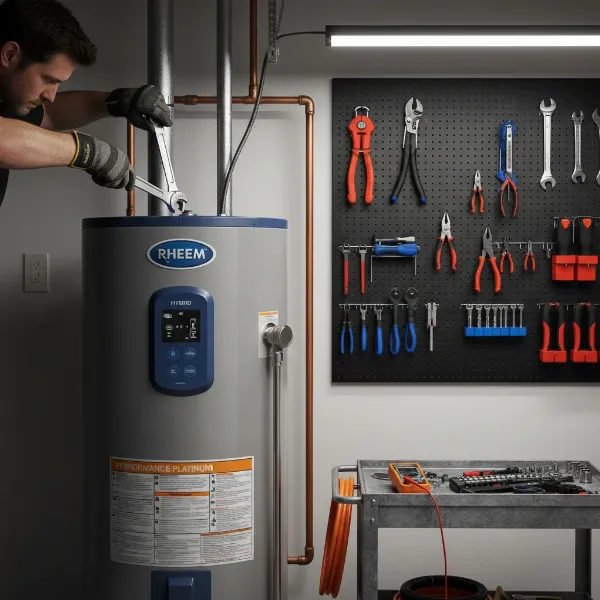 A person performing routine maintenance on a Rheem Performance Platinum Hybrid Smart Water Heater in a clean garage.
Conclusion
The Rheem Performance Platinum Hybrid Smart Water Heater stands out as a top-tier choice for homeowners seeking an energy-efficient, technologically advanced, and reliable hot water solution. Its innovative heat pump technology, coupled with smart features via the EcoNet app, offers significant long-term cost savings, environmental benefits, and unparalleled convenience. While the initial investment and specific installation requirements warrant consideration, the consistent hot water supply, dehumidifying properties, and eligibility for various rebates make it a valuable upgrade for many modern homes. By understanding its features and committing to regular maintenance, this hybrid smart water heater can provide years of efficient and dependable service. Is it time for your home to experience the future of hot water heating?
Frequently Asked Questions
How loud is the Rheem Performance Platinum Hybrid Water Heater?
The Rheem Hybrid produces a low compressor hum, often compared to a refrigerator or small window air conditioner. It’s generally well-tolerated when installed in basements or garages, but might be noticeable in or near living spaces. Scheduling operation during off-peak hours can help minimize disturbance.
Can the Rheem Hybrid Water Heater work in cold climates?
Yes, the Rheem Performance Platinum Hybrid is designed to operate efficiently in a wide ambient temperature range, typically from 37°F to 145°F (3°C to 63°C), meeting Northern Climate specifications. In very cold conditions, its electric resistance elements may assist the heat pump, ensuring hot water availability, though at reduced heat pump efficiency.
What are the installation requirements for this water heater?
Installation requires a dedicated 208/240-volt, 30-50 amp electrical circuit and proper clearances for airflow (minimum 450-700 cubic feet of air volume in the room, with 18-24 inches of side clearance). A condensate drain line is also necessary to remove moisture extracted from the air. Professional installation is recommended.
How much can I save on energy bills with the Rheem Hybrid?
The Rheem Performance Platinum Hybrid can be up to four times more efficient than standard electric Water Heaters. Many users report annual savings of $400-$575, with total savings potentially exceeding $5,000 over ten years, depending on water usage and local electricity rates. It also qualifies for significant rebates and tax credits.
Does the Rheem Hybrid Water Heater run out of hot water easily?
In most typical household scenarios, the Rheem Hybrid provides a consistent and ample supply of hot water. Users rarely report running out, even with multiple showers or high demand. For periods of exceptionally heavy use, “High Demand” or “Electric Only” modes can be activated for faster recovery.