Experiencing a sudden cold shower is never a pleasant surprise, and often, a silent pilot light on your gas water heater is the culprit. While the thought of working with a gas appliance can feel daunting, relighting a pilot light is a common task for homeowners. With the right knowledge and a strict adherence to safety protocols, you can often restore your hot water supply quickly and efficiently. This comprehensive guide will walk you through each step to safely relight your gas water heater’s pilot light, empowering you to tackle this common household issue with confidence.
Understanding Your Gas Water Heater’s Pilot Light
At the heart of many gas water heaters is a small, constant flame known as the pilot light. Its primary role is to ignite the main burner whenever your water heater needs to warm up a fresh batch of water. Think of it as the tiny spark that keeps the entire system ready to deliver comfort.
Most modern gas water heaters utilize one of two main ignition systems. The standing pilot light is a continuously burning flame that provides an instant ignition source for the main burner. If this flame extinguishes, you will need to manually relight it. Newer models often feature electronic or intermittent ignition systems, which only spark to life when hot water is needed, then shut off. These systems typically relight automatically and do not require manual intervention. You can often determine your water heater’s ignition type by checking your owner’s manual or looking for an igniter button near the gas control valve.
Crucial to the standing pilot system is the thermocouple, a small metal probe positioned within the pilot flame. This essential safety device generates a tiny electrical current when heated, signaling to the gas control valve that the pilot light is indeed burning. If the thermocouple cools down, indicating the pilot flame has gone out, it automatically shuts off the gas supply to prevent unburned gas from accumulating—a vital safety feature.
Essential Safety Precautions Before You Begin
Safety is paramount when dealing with gas appliances. Before you attempt to relight your gas water heater’s pilot light, take a moment to review and follow these critical precautions. Your well-being and the integrity of your home depend on it.
Firstly, if you ever detect a distinct odor of gas, stop immediately. Do not attempt to relight anything, switch on any electrical devices, or operate anything that could create a spark. Instead, ventilate your home by opening windows and doors, then leave the premises and contact your gas utility company or a certified plumbing professional from a safe location. This step is non-negotiable for your safety.
Always refer to your water heater’s owner’s manual. Manufacturers often have specific instructions tailored to your model, which should always take precedence over general guidelines. Ensure the area around your water heater is clear of any flammable materials, debris, or obstructions that could impede airflow or create a fire hazard. Good ventilation is also crucial to prevent the buildup of any residual gas. You might find it helpful to have a flashlight to illuminate dimly lit areas and a flathead screwdriver if your water heater’s access panel requires removal.
Step-by-Step Guide to Relighting Your Pilot Light
Relighting your water heater’s pilot light is a methodical process. Follow these steps carefully to ensure a safe and successful outcome.
Step 1: Locate the Pilot Light Assembly
|
Our Picks for the Best Water Heater in 2026
As an Amazon Associate I earn from qualifying purchases.
|
||
| Num | Product | Action |
|---|---|---|
| 1 | Portable Immersion Water Heater 1800W 120V, Electric Heater for Buckets, Bathtubs and Mini Pools, Submersible Design with Thermostat, Real Time Temperature Display and Dry Burn Protection |

|
| 2 | Zojirushi Micom Water Boiler and Warmer (135 oz. / 4L, Silver) |
|
| 3 | Immersion Water Heater Electric, 2000W Portable Water Heater with 304 S S Guard & LCD Thermometer, Fast Heating Bucket Heater, Ideal for Small Bucket Bathtub, Small Pool, Home Camping Outdoor Use |
|
| 4 | Chefman Electric Kettle, 1.8L 1500W, Hot Water Boiler, Removable Lid for Easy Cleaning, Auto Shut Off, Boil-Dry Protection, Stainless Steel Filter, BPA Free, Borosilicate Glass Electric Tea Kettle |
|
| 5 | Cosori Electric Kettle, No Plastic Contact With Water, Wide Mouth For Easy Cleaning, Auto Shut Off, 1.7L Tea Kettle & Hot Water Boiler, Water Heater & Teapot, Borosilicate Glass, Black, 1500W |
|
| 6 | Amazon Basics Electric Kettle with Glass Carafe for Tea and Coffee, BPA-Free, Fast Boiling, Auto Shut-Off, 1.7 Liter, 1500W, Black and Silver |
|
| 7 | Amazon Basics Electric Stainless Steel Kettle for Tea and Coffee, BPA-Free, Fast Boiling, Auto Shut-Off, 1.7 Liter, 1500W, Black and Silver |
|
| 8 | OVENTE Electric Kettle, 1.7L Fast Boiling Water Heater for Coffee or Tea, BPA Free with Water Level Gauge, Auto Shut-Off, Boil-Dry Protection, Indicator Light and Removable Filter, White KP72W |
|
| 9 | Portable Water Heater 2000W, Pool Heater - Immersion Heater with Digital Thermometer, Upgraded Magnesium Oxide Heating for Fast Heating, for Small Pools, Bathtubs, Buckets, Tanks |
|
| 10 | Amazon Basics Electric Kettle with Glass Carafe for Tea and Coffee, BPA-Free, Fast Boiling, Auto Shut-Off, 1 Liter, 1500W, Glass and Steel |
|
Begin by finding the access panel near the bottom of your water heater. You may need a screwdriver to remove this panel, revealing the gas control valve, the pilot tube, and the main burner assembly. Familiarize yourself with the gas control knob, which typically has settings like “OFF,” “PILOT,” and “ON.” Also, look for a small red or black igniter button, if your model has one.
Step 2: Turn Off Gas and Wait
Before proceeding, turn the gas control knob to the “OFF” position. This action cuts off the gas supply to the unit. It’s crucial to then wait a minimum of 5 to 10 minutes. This waiting period allows any unburned gas in the system to dissipate safely, significantly reducing the risk of a dangerous flashback or explosion when you attempt to relight the pilot. Do not rush this step.
Step 3: Set Control to “PILOT”
After the waiting period, rotate the gas control knob to the “PILOT” setting. Now, firmly press and hold this knob down. You should feel a slight resistance as you depress it, which opens the pilot gas line. You’ll need to keep this knob pressed throughout the ignition process to allow gas to flow to the pilot.
Step 4: Ignite the Pilot Flame
There are two primary methods for lighting the pilot flame, depending on your water heater model:
- Option A: Electronic Igniter: While continuing to hold down the gas control knob, repeatedly press the igniter button (usually red or black) every second or so. You should hear a clicking sound indicating a spark. Look for the pilot flame to ignite through the viewing window or access opening. Once lit, continue holding the gas control knob down for another 30 to 60 seconds. This vital step ensures the thermocouple heats up sufficiently to keep the pilot flame lit after you release the knob.
- Option B: Manual Lighting: If your water heater lacks an igniter button, you’ll need a long lighter or a fireplace match. While holding down the gas control knob, carefully bring the flame to the pilot opening until the pilot light ignites. As with electronic ignition, continue holding the gas control knob down for an additional 30 to 60 seconds to properly heat the thermocouple.
“Patience is key during the ignition phase, especially when heating the thermocouple. That brief hold ensures the safety system registers the pilot flame and keeps the gas flowing.” – John Smith, Master Plumber, Water Heater Max
Step 5: Release Knob and Verify
Slowly and carefully release the gas control knob. Observe the pilot flame closely. It should remain steadily lit, typically a small, strong blue flame. If the pilot light extinguishes, do not be discouraged. Simply return the gas control knob to “OFF,” wait another 5 minutes, and repeat steps 3 and 4. It might take a couple of attempts for the thermocouple to register correctly.
Step 6: Turn Gas to “ON” and Set Thermostat
Once the pilot light is burning steadily, you can now rotate the gas control knob from “PILOT” to the “ON” position. Finally, adjust your water heater’s thermostat to your desired temperature setting. You should soon hear the main burner ignite, indicating that your water heater is back in operation and ready to provide hot water.
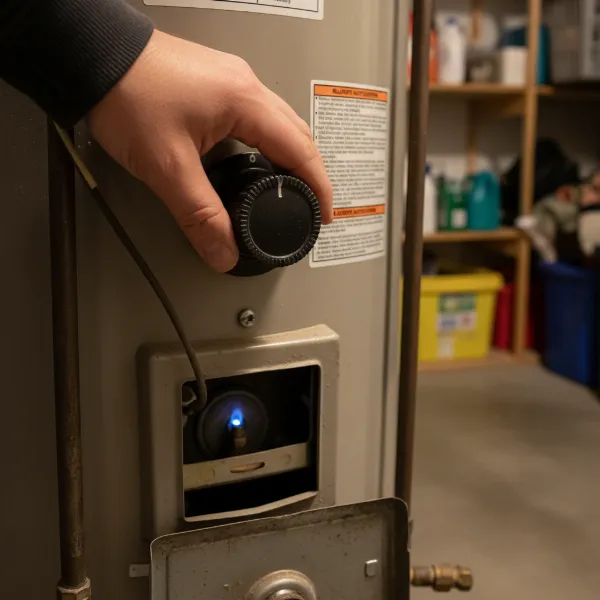 A close-up of a hand pressing the gas control knob on a gas water heater, with a small pilot flame visible.
Common Reasons Your Pilot Light Goes Out & Troubleshooting
If your pilot light consistently goes out or won’t stay lit, it’s a sign of an underlying issue beyond a simple relight. Understanding these common problems can help you decide whether you need a quick fix or professional assistance.
The most frequent culprit is a faulty or dirty thermocouple. If the thermocouple is coated with soot or debris, it may not adequately sense the pilot flame, causing the gas valve to shut off as a safety measure. You might try gently cleaning the thermocouple with fine-grit sandpaper, taking care not to bend or damage it. If cleaning doesn’t work, the thermocouple itself may be damaged and require replacement.
Other issues can include a clogged pilot tube, which prevents enough gas from reaching the pilot flame. A thin wire or needle can sometimes clear minor blockages. Fluctuations in gas pressure or even a strong draft from an open window or door can extinguish a fragile pilot flame. Ensuring proper ventilation without excessive drafts is important. A lack of sufficient combustion air around the water heater can also starve the flame, potentially leading to incomplete combustion and safety hazards. Finally, a malfunctioning gas control valve can prevent the pilot from lighting or staying lit, a more complex issue that usually requires professional repair.
When to Call a Professional for Your Water Heater
While relighting a pilot light is often a DIY task, there are specific situations where calling a certified professional is the safest and most prudent course of action. Your safety should always be the top priority.
You should contact a professional immediately if you smell gas at any point during the process or if the odor persists after ventilating your home. If your pilot light refuses to stay lit after several relighting attempts, it indicates a more serious underlying problem, such as a faulty thermocouple, a malfunctioning gas control valve, or issues with your gas supply line. Attempting to force the unit to work could lead to further damage or safety risks. Additionally, if you are simply uncomfortable or unsure about any step of the relighting process, do not hesitate to reach out to a qualified plumber. They have the expertise, tools, and safety training to diagnose and resolve water heater issues safely and effectively.
Conclusion
Understanding how to safely relight the pilot light on your gas water heater is a valuable skill for any homeowner. By carefully following the step-by-step instructions and prioritizing safety at every turn, you can confidently restore your hot water supply and avoid the inconvenience of cold showers. Regular maintenance, including an occasional check of your pilot light and the surrounding area, can help prevent future outages. Remember, while many issues can be resolved with a simple relight, never hesitate to consult a professional if you suspect a gas leak or if the problem persists. Your comfort and safety are worth the peace of mind that expert help provides.
Do you regularly check your water heater’s pilot light, or do you only think about it when the hot water runs out?
Frequently Asked Questions
How often should I check my water heater’s pilot light?
For standing pilot models, it’s generally not necessary to check it regularly unless you experience a lack of hot water. The thermocouple is designed to keep it lit. However, a quick visual check during routine home maintenance or if you hear unusual sounds from the water heater can be a good proactive measure.
What does a healthy pilot flame look like?
A healthy pilot flame should be strong, steady, and predominantly blue. A flickering, weak, or yellow/orange flame can indicate issues such as a dirty pilot assembly or insufficient oxygen, which might require cleaning or professional inspection.
Can a strong draft really put out a pilot light?
Yes, a strong draft can definitely extinguish a pilot light, especially if your water heater is located in a utility closet, garage, or basement that is exposed to external air currents. Ensure the area around your Water Heater is adequately protected from drafts while maintaining proper ventilation.
Is it dangerous if my pilot light goes out frequently?
If your pilot light goes out frequently, it’s not inherently dangerous due to built-in safety mechanisms that shut off gas flow. However, it indicates a recurring problem, often with the thermocouple or gas supply. Ignoring it means repeated cold showers and potential larger issues down the line, so professional diagnosis is recommended.