Reliable hot water is a cornerstone of modern comfort, yet the system that delivers it often goes unnoticed until a problem arises. For homeowners considering a new or replacement gas water heater, understanding the venting mechanism is paramount. Two prominent options, power vent and direct vent water heaters, offer distinct advantages and considerations that directly impact installation, efficiency, and safety. Making an informed decision between these two systems is crucial for ensuring your home has a consistent, safe, and cost-effective hot water supply.
Understanding Power Vent and Direct Vent Water Heaters
Gas water heaters produce combustion gases that must be safely expelled from your home to prevent the buildup of harmful fumes, including carbon monoxide. The method by which these gases are vented differentiates various water heater types. Power vent and direct vent models represent advanced solutions for homes where traditional atmospheric venting through a chimney may not be feasible or desired. Each system uses a unique approach to manage exhaust and air intake, impacting everything from installation flexibility to operational costs.
Power Vent Water Heaters
Power vent water heaters are distinguished by their use of an electric-powered fan or blower to forcibly expel combustion gases through a vent pipe. This mechanical assistance allows for greater flexibility in where the water heater can be installed within your home.
- How They Work: An electric blower fan actively pushes exhaust gases through a vent pipe, which can be routed either horizontally through an exterior wall or vertically through the roof. This forced-draft system can use less expensive PVC piping due to lower exhaust temperatures, offering more adaptable installation options compared to traditional metal chimneys.
- Advantages:
- Flexible Installation: Power vent systems do not require a vertical chimney or a direct upward draft, making them ideal for basements, utility closets, or other locations far from an exterior wall where venting might be challenging.
- Improved Energy Efficiency: By actively controlling airflow and often drawing combustion air from the living space, power vent heaters can operate with higher thermal efficiency, reducing heat loss and potentially lowering energy bills.
- Enhanced Safety: The powered exhaust system actively prevents combustion gases from re-entering the home, reducing the risk of backdrafting and ensuring safer indoor air quality.
- Disadvantages:
- Requires Electricity: The blower fan needs electricity to operate, meaning the water heater will not function during a power outage.
- Higher Initial Cost: The added complexity of the blower, motor, and associated wiring typically results in a higher upfront purchase and installation cost.
- Noise: The operation of the blower fan can generate a noticeable humming sound, which might be a consideration if the unit is installed near living areas.
- Maintenance: The fan and motor are moving parts that may require occasional maintenance or replacement over the lifespan of the unit.
|
Our Picks for the Best Water Heater in 2026
As an Amazon Associate I earn from qualifying purchases.
|
||
| Num | Product | Action |
|---|---|---|
| 1 | OVENTE Electric Kettle, 1.7L Fast Boiling Water Heater for Coffee or Tea, BPA Free with Water Level Gauge, Auto Shut-Off, Boil-Dry Protection, Indicator Light and Removable Filter, White KP72W |

|
| 2 | Zojirushi Micom Water Boiler and Warmer (135 oz. / 4L, Silver) |
|
| 3 | Portable Water Heater 2000W, Pool Heater - Immersion Heater with Digital Thermometer, Upgraded Magnesium Oxide Heating for Fast Heating, for Small Pools, Bathtubs, Buckets, Tanks |
|
| 4 | Immersion Water Heater Electric, 2000W Portable Water Heater with 304 S S Guard & LCD Thermometer, Fast Heating Bucket Heater, Ideal for Small Bucket Bathtub, Small Pool, Home Camping Outdoor Use |
|
| 5 | Amazon Basics Electric Stainless Steel Kettle for Tea and Coffee, BPA-Free, Fast Boiling, Auto Shut-Off, 1.7 Liter, 1500W, Black and Silver |
|
| 6 | Amazon Basics Electric Kettle with Glass Carafe for Tea and Coffee, BPA-Free, Fast Boiling, Auto Shut-Off, 1 Liter, 1500W, Glass and Steel |
|
| 7 | Chefman Electric Kettle, 1.8L 1500W, Hot Water Boiler, Removable Lid for Easy Cleaning, Auto Shut Off, Boil-Dry Protection, Stainless Steel Filter, BPA Free, Borosilicate Glass Electric Tea Kettle |
|
| 8 | Amazon Basics Electric Kettle with Glass Carafe for Tea and Coffee, BPA-Free, Fast Boiling, Auto Shut-Off, 1.7 Liter, 1500W, Black and Silver |
|
| 9 | Portable Immersion Water Heater 1800W 120V, Electric Heater for Buckets, Bathtubs and Mini Pools, Submersible Design with Thermostat, Real Time Temperature Display and Dry Burn Protection |
|
| 10 | Cosori Electric Kettle, No Plastic Contact With Water, Wide Mouth For Easy Cleaning, Auto Shut Off, 1.7L Tea Kettle & Hot Water Boiler, Water Heater & Teapot, Borosilicate Glass, Black, 1500W |
|
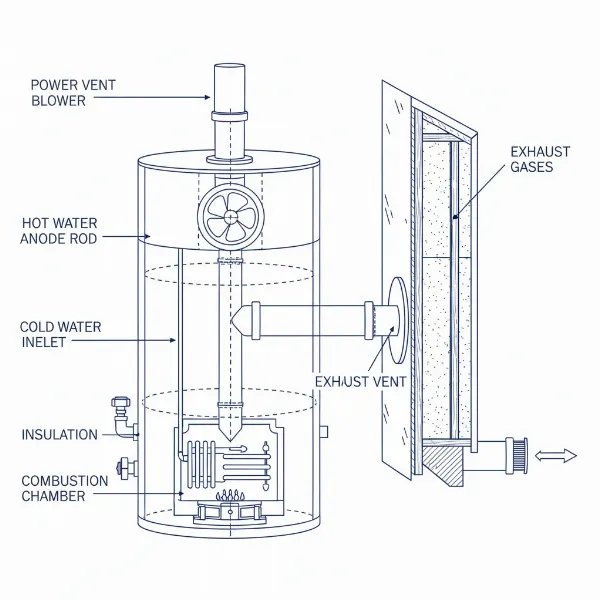 A diagram illustrating a power vent water heater with an electric fan pushing exhaust gases horizontally through a wall.
Direct Vent Water Heaters
Direct vent water heaters employ a sealed combustion system that draws all air for combustion from outside the home and expels exhaust gases directly back outdoors. They typically operate without an electric fan, relying on natural draft or a sealed coaxial pipe system.
- How They Work: Direct vent water heaters utilize a sealed combustion chamber. Air for combustion is drawn in from outside through one pipe, while exhaust gases are expelled through another, often concentric, pipe, both terminating through a sidewall or roof. This sealed system isolates the combustion process from the indoor air.
- Advantages:
- Operates Without Electricity for Venting: Since they don’t rely on a powered fan for venting, direct vent water heaters can continue to provide hot water during power outages (though some models may have electronic ignitions that require minimal power).
- Superior Indoor Air Quality: By drawing all combustion air from outside, these units prevent depletion of indoor air and eliminate any risk of backdrafting combustion gases into the living space.
- Quiet Operation: Without a mechanical fan, direct vent water heaters typically operate much more quietly than power vent models.
- Fewer Moving Parts: The absence of an electric blower means fewer components that can break down, potentially leading to lower maintenance costs and a longer operational lifespan.
- Disadvantages:
- Limited Installation Flexibility: Direct vent water heaters must be installed relatively close to an exterior wall or roof penetration to facilitate the dual-pipe venting system. This can restrict placement options compared to power vent models.
- Specific Venting Materials: While not always more expensive, the specialized coaxial or dual-pipe venting system can be rigid and requires precise installation.
- Potentially Lower Efficiency (Compared to high-efficiency power vents): While more efficient than traditional atmospheric models, some direct vent systems might not reach the highest efficiency ratings achieved by advanced power vent units that reclaim heat.
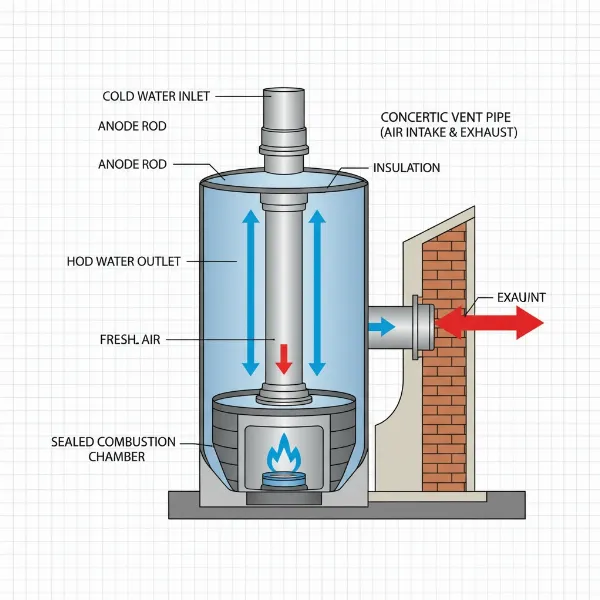 A clear diagram showing a direct vent water heater with two concentric pipes, one for air intake and one for exhaust, extending directly through a wall.
Bảng So Sánh Các Loại Water Heater Venting
Understanding the core differences side-by-side can illuminate which system best aligns with your home’s unique requirements.
| Tính năng | Power Vent Water Heater | Direct Vent Water Heater |
|---|---|---|
| Venting Mechanism | Fan-assisted, forced exhaust | Natural draft or sealed coaxial, draws from outside |
| Installation Flexibility | High (can vent horizontally, longer runs) | Low (must be near exterior wall/roof) |
| Electrical Requirement | Yes (for fan operation) | No (for venting, but some may require for ignition) |
| Noise Level | Moderate (due to fan) | Low (quiet operation) |
| Energy Efficiency | Generally high (can be very efficient with heat recovery) | High (sealed combustion, uses outside air for combustion) |
| Initial Cost | Higher (blower, wiring) | Moderate to High (specialized venting) |
| Maintenance | More (fan, motor) | Less (fewer moving parts) |
| Indoor Air Quality | Very good (active exhaust, reduces backdraft risk) | Excellent (sealed combustion, draws outside air) |
| Power Outage Operation | Non-functional | Functional (if pilot light is manual) |
Choosing the Right Water Heater Venting System
Selecting between a power vent and direct vent water heater involves evaluating several factors specific to your home and lifestyle. Consider these points to make an informed decision.
Installation Location Constraints
Where do you plan to install your water heater? Power vent models offer significantly more flexibility, allowing placement in central locations like basements or utility rooms, as their fan can push exhaust gases through lengthy horizontal or vertical PVC runs. Direct vent units, conversely, demand proximity to an exterior wall or roof, as their venting system relies on a direct, relatively short path to the outdoors for both air intake and exhaust. If you have limited access to a chimney or a clear vertical vent path, a power vent might be your only practical option.
Energy Efficiency and Operating Costs
Both power vent and direct vent water heaters are generally more energy-efficient than older, atmospherically vented models. Direct vent systems often boast excellent efficiency because their sealed combustion system prevents heated indoor air from escaping up the flue. Power vent units can also be highly efficient, with some advanced models capable of reclaiming heat from exhaust gases. However, remember that power vent units require electricity to run their fan, adding a small electrical cost to their operation, which direct vent units typically avoid for their core venting function.
Noise Considerations
The sound of your water heater can be a factor, especially if it’s located near living spaces or bedrooms. Direct vent water heaters operate very quietly since they don’t have a motorized fan. Power vent models, on the other hand, produce a noticeable hum or whirring sound when the fan is running. While usually not disruptive, some homeowners prefer the silent operation of a direct vent system.
Reliability During Power Outages
For those in areas prone to power outages, this is a critical differentiator. A power vent water heater will cease to operate during an electrical disruption because its fan cannot function. In contrast, many direct vent water heaters can continue to produce hot water as their natural venting mechanism does not require electricity. This can be a significant advantage for maintaining essential services during an outage.
Safety and Air Quality
Both systems are designed with safety in mind to prevent carbon monoxide leaks. Direct vent water heaters excel in indoor air safety because their sealed combustion system draws all air from outside, completely isolating the burning process from your home’s air. Power vent systems, while also very safe, actively force exhaust out, significantly reducing backdraft risk.
Budget and Long-Term Value
While power vent water heaters often have a higher initial purchase price due to the integrated fan and more complex controls, their flexible installation can sometimes offset costs if it avoids expensive chimney modifications. Direct vent systems might have a slightly lower initial cost for the unit itself, but the specialized venting components and installation requirements can vary. When evaluating long-term value, consider energy efficiency, potential maintenance needs for the fan in power vent models, and the overall lifespan of each system.
“When advising clients, I always emphasize that the ‘best’ water heater isn’t just about efficiency numbers, but how well it integrates with their home’s structure and lifestyle needs. A quiet, reliable direct vent can be perfect for some, while the flexible placement of a power vent is invaluable for others.” – John Smith, Master Plumber, Water Heater Max
Tips for Maximizing Your Water Heater’s Performance
Regardless of whether you choose a power vent or direct vent water heater, proper usage and maintenance are key to ensuring its longevity, efficiency, and safe operation.
Regular Maintenance and Inspections
Schedule annual professional inspections for your gas water heater. A technician can check the venting system for blockages, ensure the combustion chamber is clean, inspect the fan (for power vent models), and verify all safety controls are functioning correctly. For tank-style heaters, draining the tank to remove sediment can prolong its life and maintain efficiency.
Adjust Temperature Appropriately
Setting your water heater’s temperature too high not only wastes energy but can also pose a scalding risk. Most households find that a setting of 120°F (49°C) is sufficient for comfort and hygiene while being more energy-efficient.
Monitor for Warning Signs
Be vigilant for any unusual sounds, smells (especially gas odors), or changes in your hot water supply. For power vent heaters, listen for persistent loud noises from the fan. For direct vent units, check the outdoor vent terminal for obstructions like debris or nests. Address any concerns promptly by contacting a qualified technician.
Ensure Proper Airflow
For any gas appliance, proper airflow is critical. While direct vent systems draw air from outside, ensuring that the area around your water heater is clear of obstructions is generally good practice for safety and accessibility.
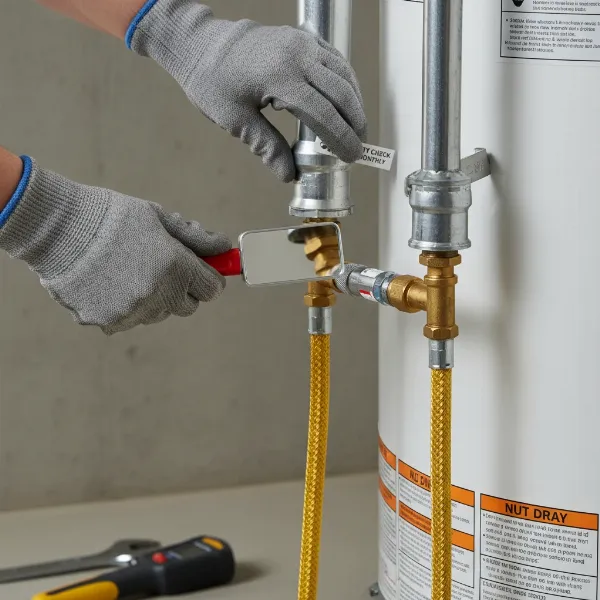 A person performing routine maintenance on a gas water heater, checking connections and the vent pipe.
Conclusion
Choosing between a power vent and direct vent water heater is a significant decision that impacts your home’s comfort, energy consumption, and safety. Power vent models offer unparalleled installation flexibility due to their mechanical fan, making them suitable for challenging locations, though they require electricity and may produce some noise. Direct vent water heaters, with their sealed combustion and reliance on natural draft or coaxial piping, provide excellent indoor air quality and quiet operation, often continuing to function during power outages, but with stricter placement requirements.
By carefully considering your home’s layout, budget, energy priorities, and personal preferences regarding noise and power outage reliability, you can confidently select the water heater system that best meets your needs. Consulting with a qualified plumbing professional can provide tailored advice and ensure a safe, efficient installation. What factors are most important to you when choosing a new water heater for your home?
Frequently Asked Questions
Do power vent water heaters use a lot of electricity?
While power vent water heaters require electricity to operate their exhaust fan, the energy consumption for the fan itself is generally minimal. The primary energy usage still comes from heating the water with gas. The electrical cost for the fan is typically a small fraction of the overall operating cost, but it’s important to remember that the unit won’t function without power.
Can I install a direct vent water heater in my garage?
Yes, direct vent Water Heaters are often a good option for garages or utility rooms, provided there is direct access to an exterior wall for the venting system. Since they draw combustion air from outside, they are well-suited for spaces that might not have ample indoor air for combustion or where air quality is a concern. Always adhere to local building codes and manufacturer’s instructions for clearances.