Tucked away, out of sight and out of mind—that’s how most of us like our home utilities. So, when you’re tight on space, that empty closet can start looking like the perfect spot for a new water heater. But before you start measuring, the big question is, Can You Install A Water Heater In A Closet? The short answer is yes, you absolutely can. The longer, and much more important answer is: yes, but only if you follow some very strict safety and building code requirements.
As a senior tech here at Water Heater World, I’ve seen my fair share of creative installations. Some are genius space-savers, while others are downright dangerous accidents waiting to happen. Putting a water heater in a closet isn’t a simple “shove it in and hook it up” job. It’s a project that demands careful planning, an understanding of how these appliances work, and a healthy respect for safety codes. Let’s break down everything you need to know to do it right.
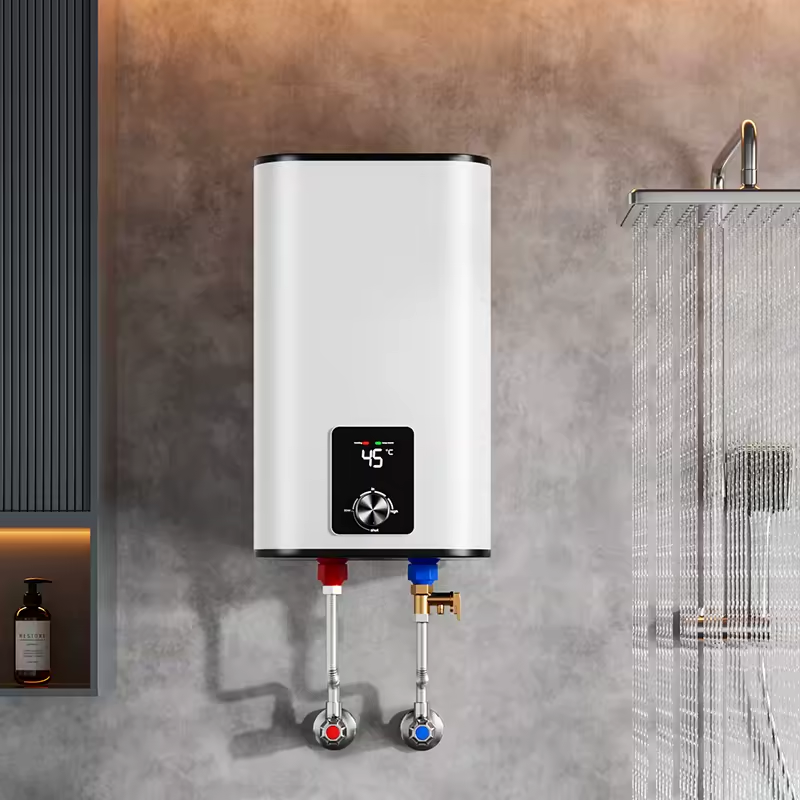
The Short Answer vs. The Safe Answer
Let’s get straight to the point. Can you physically place a water heater in a closet? Yes. Should you? That depends entirely on the type of water heater and the specifics of the closet itself. The difference between a convenient, hidden water heater and a serious hazard comes down to three little words: air, space, and access.
Think of it this way: your water heater needs to breathe, it needs some personal space, and you (or a technician) need to be able to get to it for maintenance and repairs. Get any of these wrong, and you’re rolling the dice.
Not All Closets (or Heaters) Are Created Equal
The rules of the game change dramatically depending on whether you have a gas or an electric water heater. They have fundamentally different needs, especially when enclosed in a small space.
Gas Water Heaters: The High-Maintenance Roommate
A gas water heater is essentially a controlled fire in a box. To burn gas safely and efficiently, it needs a constant supply of fresh air for combustion. It also produces exhaust fumes (like carbon monoxide) that must be safely vented outside your home. Squeezing one into a sealed closet is a recipe for disaster.
If you’re considering putting a gas water heater in a closet, you must account for:
- Combustion Air: This is the air the burner needs to ignite the gas. A standard closet doesn’t have enough air. To meet code, the closet will likely need two vents: one within 12 inches of the ceiling and another within 12 inches of the floor. These vents allow air to circulate from the surrounding living space or directly from the outside.
- Ventilation (Flue): This is the pipe (or flue) that carries dangerous exhaust gases like carbon monoxide safely out of your house. It needs to be installed correctly, with proper pitch and clearance from combustible materials like wood framing. A blocked or improperly installed vent can cause a deadly buildup of CO in your home.
- Clearance: Manufacturers specify minimum distances the heater must be from walls and other objects. This isn’t just for show; it prevents heat from building up and creating a fire hazard. You’ll typically need at least 12 inches of clearance in the front for access and a few inches on the sides and back.
Safety First: Never, ever install a gas water heater in a closet that is used to store clothes or other flammable items. Carbon Monoxide (CO) is colorless, odorless, and lethal. Improper installation is a leading cause of CO poisoning in homes.
Electric Water Heaters: The Quieter, Simpler Option
Electric water heaters are a bit more forgiving. Since there’s no flame, you don’t need to worry about combustion air or venting exhaust fumes. This makes them a much more common and safer choice for closet installations. However, “easier” doesn’t mean “no rules.”
You still need to consider:
- Clearance and Access: Just like a gas model, you need enough room to get to the unit. Imagine a technician trying to replace a heating element or the thermostat. They need space to work. A good rule of thumb is to ensure at least 30 inches of clear working space in front of the unit.
- A Drip Pan: This is non-negotiable. A water heater closet must have a drain pan underneath the unit, with a drain line that runs to a suitable location (like a floor drain or outside). Water heaters will all eventually leak. A pan can turn a catastrophic flood into a minor inconvenience.
- Structural Support: A standard 40- or 50-gallon tank full of water can weigh over 400 pounds. Ensure the floor of the closet can handle that weight.
Can You Install a Water Heater in a Closet? Key Code Requirements
Building codes aren’t just suggestions; they’re legally enforceable rules designed to keep you safe. While local codes can vary, they generally follow a set of universal principles for closet installations.
- Sufficient Room Volume: For gas heaters, if the closet doesn’t have dedicated vents to the outside, it must be part of a larger “unconfined space.” The rule of thumb is 50 cubic feet of room volume for every 1,000 BTU/hr of appliance input. A small, sealed closet will never meet this.
- Proper Venting and Air Supply: As mentioned, this is the big one for gas models. The closet must be properly vented to provide combustion air and exhaust fumes.
- A Dedicated Space: You cannot use a water heater closet for general storage, especially not for flammable liquids, cleaning supplies, or clothing. The space must be dedicated to the appliance.
- Accessibility for Service: You must be able to easily access the controls, burner, and shut-off valves. Codes often specify a minimum clear workspace in front of the unit.
- Pressure Relief Valve Discharge: The Temperature and Pressure Relief (TPR) valve is a critical safety feature. Its discharge pipe must be run to a safe location, usually near the floor, where you can see it. It can’t just terminate inside the closet.
Bảng trống.As our go-to expert, Master Plumber Johnathan Miles, always says, “The codes are written in response to past tragedies. Don’t try to find a clever way around them. If the manual and the code say you need six inches of clearance, give it six inches. It’s there for a reason.”
The Bedroom Closet Dilemma: Why It’s Usually a “No”
One question we get all the time is about installing a water heater in a bedroom or bathroom closet. In almost all cases, this is prohibited by building codes, especially for gas-fired units. Why? The risk is just too high. A small gas leak or a carbon monoxide leak in a space where people sleep is incredibly dangerous. For this reason, most jurisdictions explicitly forbid installing fuel-burning appliances in sleeping quarters or in a closet that only opens into such a room.
A Practical Checklist Before You Start
Thinking about a closet installation? Run through this quick checklist first.
- [ ] Check Your Local Codes: This is step one. Call your local building department and ask about the requirements for installing a water heater in an enclosure.
- [ ] Measure Everything: Don’t just measure the heater. Measure the closet’s height, width, and depth. Account for the required clearance on all sides and the working space in front.
- [ ] Gas or Electric?: Determine which type you have or plan to buy. If it’s gas, your planning just got a lot more complicated.
- [ ] Plan for Air: If you’re going with gas, how will you supply combustion air? Will you need louvered doors, or vents cut through the walls?
- [ ] Plan for Water: Where will the drain pan line go? Do you have easy access to the cold and hot water lines?
- [ ] Call a Professional: Honestly, this is our best advice. A licensed plumber will know the local codes inside and out and can tell you definitively if your closet is a suitable—and safe—location.
Frequently Asked Questions (FAQ)
Q: Is it legal to have a water heater in a closet?
A: Yes, it is generally legal, provided the installation meets all local building and plumbing codes. The codes for a gas water heater are far stricter than for an electric one, focusing heavily on ventilation and combustion air.
Q: What is the minimum closet size for a water heater?
A: There is no single “minimum size,” as it depends on the dimensions of the water heater itself plus the required clearances. You must allow for manufacturer-specified clearances (often a few inches on the sides/back) and at least 30 inches of clear service access in the front.
Q: Do electric water heaters need to be vented in a closet?
A: No. Electric water heaters do not produce any exhaust fumes, so they do not require ventilation or a flue pipe like gas models do. However, they still require adequate clearance for heat dissipation and service access.
Q: Can I put a tankless water heater in any closet?
A: Tankless water heaters are much smaller, making them great candidates for closets. However, the same rules apply. A gas tankless model still needs proper venting and combustion air, while an electric model just needs clearance and access. Always check the manufacturer’s installation manual.
Q: What are the signs my closet water heater is unsafe?
A: For a gas unit, signs include soot or black marks around the heater, excessive condensation, or a weak or flickering pilot light, all of which can indicate poor ventilation. For any unit, signs of water leaks or corrosion are immediate red flags. If your CO detector goes off, evacuate immediately.
The Final Verdict
So, can you install a water heater in a closet? Yes, you can, and it can be a fantastic way to save space. But this is one home improvement project where cutting corners is not an option. The safety of your home and family is on the line.
An electric water heater is by far the simpler and safer choice for a closet. A gas water heater requires a much more complex, code-compliant setup to ensure it gets the air it needs to run safely. Whichever you choose, our strongest recommendation is to consult with a qualified, licensed plumber. They can assess your specific situation and ensure your new water heater is not only convenient but, most importantly, completely safe.