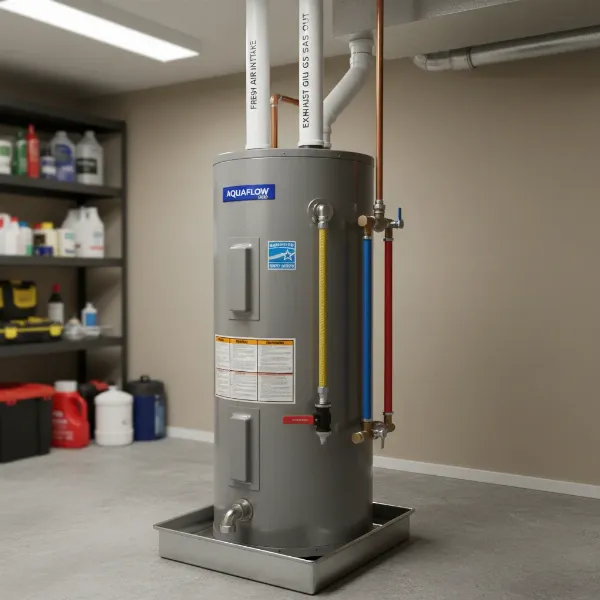
Living in an earthquake-prone region brings unique challenges, and securing your home’s vital systems is paramount. Among these, your water heater stands as one of the most critical appliances, posing significant risks if not properly protected during seismic activity. An unanchored water heater can become a dangerous projectile, threatening property, safety, and even your emergency water supply. Investing in the right water heater straps for earthquake protection is not just a recommendation; it’s a crucial step towards safeguarding your home and family.
Why Water Heater Earthquake Straps Are Crucial
The forces generated during an earthquake can be immense, easily dislodging heavy appliances like water heaters. When a water heater tips or falls, the consequences can be catastrophic.
- Risk of Fire: If a gas-powered water heater ruptures its gas line, it can lead to a dangerous gas leak, potentially igniting a fire. The 1994 Northridge earthquake, for instance, saw numerous fires traced back to displaced water heaters.
- Risk of Flood: Damaged water supply lines can cause significant flooding, leading to extensive water damage to your home and belongings. A 50-gallon water heater, when full, can weigh over 400 pounds, making its impact considerable.
- Property Damage and Injury: A large, unsecured water heater falling over can crush objects, damage walls, and pose a severe injury risk to anyone nearby.
- Loss of Emergency Water Supply: In the aftermath of a major earthquake, utilities can be disrupted, making your water heater a critical source of potable water. If it’s damaged, this emergency supply is lost.
Properly installed water heater earthquake straps prevent these scenarios by keeping the tank securely anchored, ensuring it remains upright and connected during seismic events.
Understanding Water Heater Strapping Requirements
While local codes can vary, general guidelines and best practices for water heater strapping are widely accepted, especially in seismically active areas like California. These requirements are designed to maximize safety and effectiveness.
Most residential water heaters require at least two heavy-duty straps. For larger tanks, such as 75-80 gallon models, three straps might be necessary, and 100-gallon tanks could even need four. The placement of these straps is crucial: one strap must be located within the upper one-third of the water heater’s vertical dimension, and the other within the lower one-third. It is also critical that the lower strap is positioned at least four inches above the appliance’s controls, such as the gas valve or thermostat, to prevent interference or damage.
Jurisdictions often reference codes like the California Plumbing Code Section 507.2, which mandates that all water heaters be anchored or strapped to prevent movement during an earthquake. Look for products that are IAPMO listed and have approvals from authorities like the California Division of the State Architect (DSA), indicating they meet rigorous safety standards.
Types of Water Heater Straps
Choosing the right type of water heater strap involves understanding the available options and their respective benefits. Not all strapping materials are created equal, and some are far more effective than others.
Heavy-Gauge Galvanized Steel Straps
These are widely considered the gold standard for earthquake protection. Made from durable, heavy-gauge galvanized steel, these metallic straps offer superior strength and rigidity to firmly hold your water heater in place.
- Pros: Exceptional durability, high tensile strength, excellent resistance to corrosion, and widely approved by building codes. Brands like HoldRite Quick Strap and Everbilt are prominent in this category.
- Cons: Installation can be slightly more involved than with other types, often requiring specific tools for tightening and securing to wall studs.
|
Our Picks for the Best Water Heater in 2026
As an Amazon Associate I earn from qualifying purchases.
|
||
| Num | Product | Action |
|---|---|---|
| 1 | Cosori Electric Kettle, No Plastic Contact With Water, Wide Mouth For Easy Cleaning, Auto Shut Off, 1.7L Tea Kettle & Hot Water Boiler, Water Heater & Teapot, Borosilicate Glass, Black, 1500W |

|
| 2 | Portable Immersion Water Heater 1800W 120V, Electric Heater for Buckets, Bathtubs and Mini Pools, Submersible Design with Thermostat, Real Time Temperature Display and Dry Burn Protection |
|
| 3 | Zojirushi Micom Water Boiler and Warmer (135 oz. / 4L, Silver) |
|
| 4 | Chefman Electric Kettle, 1.8L 1500W, Hot Water Boiler, Removable Lid for Easy Cleaning, Auto Shut Off, Boil-Dry Protection, Stainless Steel Filter, BPA Free, Borosilicate Glass Electric Tea Kettle |
|
| 5 | Amazon Basics Electric Kettle with Glass Carafe for Tea and Coffee, BPA-Free, Fast Boiling, Auto Shut-Off, 1.7 Liter, 1500W, Black and Silver |
|
| 6 | OVENTE Electric Kettle, 1.7L Fast Boiling Water Heater for Coffee or Tea, BPA Free with Water Level Gauge, Auto Shut-Off, Boil-Dry Protection, Indicator Light and Removable Filter, White KP72W |
|
| 7 | Amazon Basics Electric Stainless Steel Kettle for Tea and Coffee, BPA-Free, Fast Boiling, Auto Shut-Off, 1.7 Liter, 1500W, Black and Silver |
|
| 8 | Portable Water Heater 2000W, Pool Heater - Immersion Heater with Digital Thermometer, Upgraded Magnesium Oxide Heating for Fast Heating, for Small Pools, Bathtubs, Buckets, Tanks |
|
| 9 | Amazon Basics Electric Kettle with Glass Carafe for Tea and Coffee, BPA-Free, Fast Boiling, Auto Shut-Off, 1 Liter, 1500W, Glass and Steel |
|
| 10 | Immersion Water Heater Electric, 2000W Portable Water Heater with 304 S S Guard & LCD Thermometer, Fast Heating Bucket Heater, Ideal for Small Bucket Bathtub, Small Pool, Home Camping Outdoor Use |
|
Soft-Belt Style Straps
An alternative to metallic straps, soft-belt style water heater straps are typically made from robust polyester or nylon materials. These can be a good option if they are independently lab-tested and meet local code requirements.
- Pros: Often easier and quicker to install due to their flexible nature and buckle systems, making them popular for DIY projects. The Firefighter FR-80 and HoldRite Quick Belt are examples.
- Cons: While strong, their flexibility might be less rigid than steel, and it’s essential to verify their code compliance and testing certifications to ensure adequate seismic performance.
What to Avoid: Inadequate Materials
It’s vital to steer clear of unsuitable materials. Simple plumber’s tape, for instance, is expressly inadequate for seismic bracing. Post-earthquake analyses have shown that many tanks secured with plumber’s tape failed, highlighting the necessity of using purpose-built, heavy-duty strapping kits. These general-purpose tapes simply lack the strength and engineering to withstand significant seismic forces.
How to Choose the Right Water Heater Straps
Selecting the ideal water heater straps involves considering several factors to ensure optimal protection for your home and appliances.
Consider Your Location’s Seismic Activity
If you live in an area with high seismic risk, such as California or the Pacific Northwest, investing in the most robust and code-compliant strapping available is highly recommended. These regions often have stricter building codes specifically addressing earthquake preparedness.
Water Heater Size and Type
The size and weight of your water heater will influence the number and strength of the straps needed. Larger tanks, which weigh significantly more when full, require more substantial bracing to resist movement effectively. Always ensure the strapping kit you select is rated for your specific water heater’s capacity.
Material Quality and Code Compliance
Prioritize straps made from heavy-gauge metal, typically 22-gauge or thicker, or high-strength, certified soft-belt materials. Always check for certifications such as IAPMO listing or local building code approvals (like California’s DSA) to guarantee that the straps meet necessary safety standards. These certifications ensure the product has been tested to withstand seismic forces.
Ease of Installation
While professional installation is always an option, many quality strapping kits are designed for DIY installation. Look for kits that come complete with all necessary hardware and clear instructions. However, if you are unsure about any aspect of the installation process, consulting a licensed plumber or contractor is advisable to ensure proper and safe securing of your water heater.
Water Heater Strapping Installation Guide
Proper installation is just as critical as choosing the right straps. Follow these steps to correctly secure your water heater:
Gather Your Tools
Before you begin, ensure you have the necessary tools:
- Water heater strapping kit (including straps, lag screws, washers, and possibly spacers or buckles)
- Stud finder
- Drill with appropriate bits
- Wrench or socket set
- Measuring tape
- Pencil or marker
- Safety glasses and gloves
Locate Wall Studs
Your water heater straps must be anchored to solid structural elements. Use a stud finder to locate the wood studs in the wall adjacent to your water heater. If your water heater is more than 1-2 inches from the wall, you may need to install wooden blocking behind it to ensure the straps can be pulled tight against the tank. For concrete or masonry walls, you will need to use appropriate expansion anchors.
Mark Strap Locations
Measure and mark the strapping locations on both the water heater and the adjacent wall studs. The first strap should be in the upper one-third of the tank, approximately 9 inches from the top. The second strap should be in the lower one-third, ensuring it is at least four inches above any controls on the water heater, such as the gas valve or temperature dial. This distance prevents the strap from damaging critical components.
Secure Straps to the Wall
Drill pilot holes into the center of the wall studs at your marked locations. For wood studs, use 1/4-inch x 3-inch or longer lag screws with oversized washers. For concrete or masonry, use 3/8-inch diameter mechanical or chemical expansion anchor bolts with a minimum 2-inch embedment. Ensure fasteners are driven securely into the structural element.
Wrap and Tighten Straps
Wrap the straps around the water heater tank. If using metal straps, they should typically wrap 1.5 times around the tank, starting from the back, coming to the front, and then returning to the wall. Thread the strap ends through the buckles or secure them as per your kit’s instructions. Tighten the straps until they are snug against the water heater, leaving no room for significant movement. The tank should feel rock-solid and unable to budge.
Consider Flexible Connectors
In addition to strapping, consider replacing rigid gas and water supply lines with flexible corrugated connectors. These allow for some movement during an earthquake, reducing the likelihood of lines rupturing and causing leaks or fires.
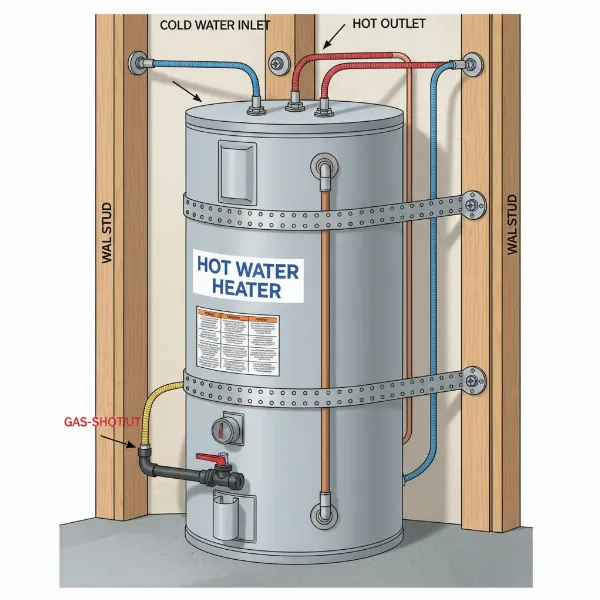 A diagram showing the proper installation of water heater earthquake straps on a tank-style water heater, with two straps clearly placed at the upper and lower thirds of the tank, anchored to wall studs, and highlighting flexible connectors for gas and water lines.
Table: Comparing Common Water Heater Strap Types
| Feature | Galvanized Steel Straps | Soft-Belt Style Straps |
|---|---|---|
| Material | Heavy-gauge steel (e.g., 22 gauge) | Durable polyester or nylon fabric |
| Strength & Rigidity | Very high, provides firm, rigid bracing | High, offers some flexibility for easier fitting |
| Installation Process | Typically involves lag screws, wrenches; potentially more involved | Often features buckle systems, simpler to tighten; can be DIY-friendly |
| Code Compliance | Widely recognized and approved, often a metallic requirement | Approved if independently lab-tested and certified by relevant authorities |
| Durability | Excellent long-term resistance to wear and tear, corrosion-resistant | Good, but material degradation over time might be a consideration; check manufacturer specs |
> “Securing your water heater isn’t just about meeting code; it’s about mitigating the risks of fire, flood, and injury, and preserving a critical water source in an emergency. A small investment of time and resources now can prevent immense damage later.” – John Doe, Master Plumber & Seismic Safety Expert
Conclusion
Ensuring your water heater is properly secured with earthquake straps is a fundamental aspect of home safety, particularly for those residing in seismically active areas. The potential for fire, flooding, and personal injury from a dislodged water heater highlights the critical importance of these preventative measures. By understanding the types of straps available, adhering to correct installation guidelines, and staying informed about local building codes, you can significantly enhance your home’s resilience against earthquakes. Don’t wait for an earthquake to remind you of this vital safeguard. Take action today to protect your water heater, your property, and your loved ones. What steps will you take this week to ensure your water heater is earthquake-ready?
Frequently Asked Questions
Do all water heaters need earthquake straps?
While specific requirements vary by location, it is highly recommended that all tank-style water heaters, especially those in earthquake-prone regions, be secured with proper strapping. Many building codes in high-risk areas mandate this as a safety measure to prevent damage and injury during seismic events.
Can I use plumber’s tape for water heater strapping?
No, plumber’s tape is explicitly not recommended for securing water heaters against earthquakes. It lacks the necessary strength and rigidity to withstand seismic forces and has been shown to fail in real-world earthquake scenarios, leading to dangerous outcomes. Always use approved, heavy-gauge metal or certified soft-belt strapping kits.
How many straps does a water heater need?
Generally, a minimum of two straps is required for most residential water heaters: one in the upper one-third and one in the lower one-third of the tank. Larger water heaters (over 50 gallons) may require three or even four straps to provide adequate stability and meet local building codes.
What tools do I need to install water heater straps?
To install water heater straps, you will typically need a strapping kit, a stud finder, a drill with appropriate bits, a wrench or socket set, a measuring tape, and a pencil or marker. Safety glasses and gloves are also recommended for protection during the installation process.
How often should water heater straps be checked?
It’s advisable to visually inspect your Water Heater straps periodically, especially after any minor tremors or strong winds, and as part of your annual home maintenance routine. Check for any signs of corrosion, wear, loosening, or damage to the straps or their anchor points, and replace them if necessary.