Tired of waiting for hot water to finally reach your faucet or showerhead? You’re not alone. Many homeowners experience frustrating delays and wasted water, especially in larger homes or those with long plumbing runs from a central water heater. Point-of-use (POU) water heaters offer a brilliant solution, delivering hot water instantly right where you need it most. These compact and efficient units are designed to eliminate the wait, providing unparalleled convenience and significant savings on water and energy bills.
This comprehensive guide will demystify point-of-use water heaters, exploring the different types, their benefits, and crucial factors to consider when selecting the perfect model for your under-sink or shower applications. By the end, you’ll have all the knowledge to make an informed decision and enjoy immediate hot water, exactly when you want it.
What is a Point-of-Use Water Heater?
A point-of-use water heater is a small, dedicated unit installed directly at the fixture where hot water is needed, such as under a kitchen sink, beneath a bathroom vanity, or adjacent to a shower. Unlike large, central water heaters that store and heat many gallons of water for the entire home, POU heaters focus on providing hot water to specific, isolated locations. This proximity means hot water doesn’t have to travel far, resulting in instant availability and reducing the amount of cold water wasted while waiting for the temperature to rise.
These compact heaters are ideal for addressing “cold water sandwich” effects or simply boosting the temperature at a distant faucet. They integrate seamlessly with existing plumbing systems, offering a localized hot water solution without the need for extensive renovations.
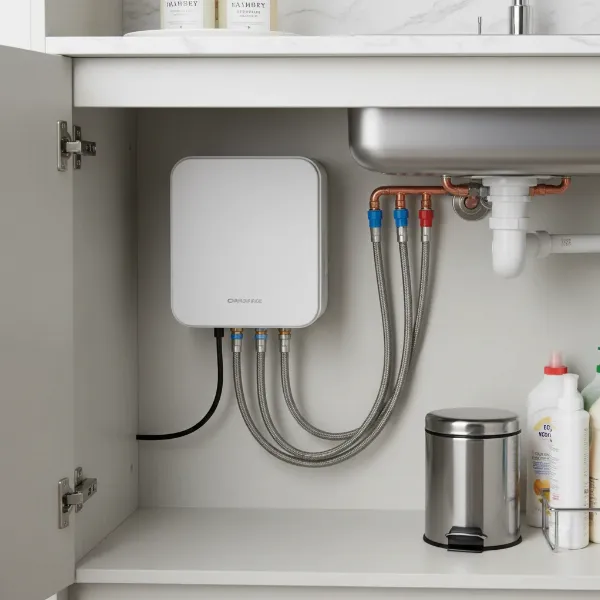 A compact point-of-use water heater installed discreetly under a kitchen sink, providing instant hot water.
Types of Point-of-Use Water Heaters
When considering a point-of-use water heater, you’ll primarily encounter two types: mini-tank and tankless. Each offers distinct advantages and is suited for different hot water demands.
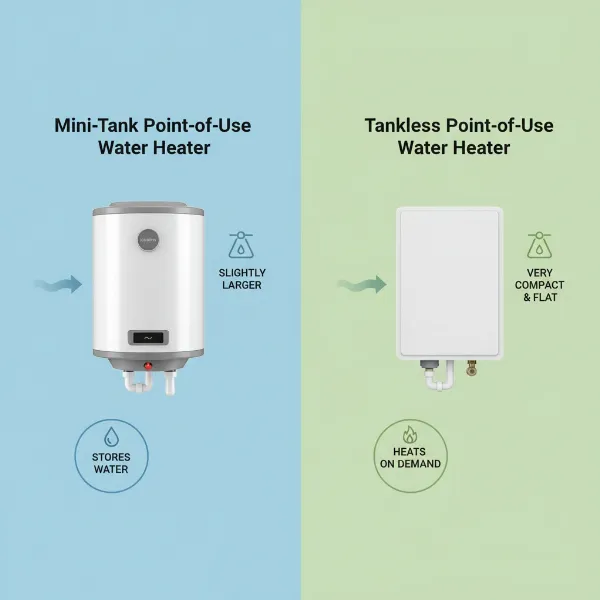 A visual comparison showcasing the compact size and functional differences between a mini-tank and a tankless point-of-use water heater.
Mini-Tank Point-of-Use Water Heaters
Mini-tank POU water heaters are essentially scaled-down versions of traditional storage tank heaters. They store a small volume of water, typically ranging from 1.3 to 7 gallons, and keep it heated to a set temperature. When you turn on the hot water tap, the pre-heated water is immediately available.
- How they work: Water enters the small tank, where an electric heating element warms it. Once heated, the water is stored until needed.
- Pros:
- Rapid Hot Water: Provide immediate hot water as soon as the tap is opened, thanks to the stored heated water.
- Simpler Installation: Often operate on standard 120V outlets, making installation relatively straightforward without requiring major electrical upgrades.
- Cost-Effective: Generally have a lower upfront purchase price compared to tankless models.
- Cons:
- Limited Capacity: The amount of hot water is restricted by the tank size. Once depleted, there’s a recovery period (typically 3-6 minutes for smaller units) before more hot water is available.
- Standby Energy Loss: Although minimal, they consume some energy to maintain the water temperature in the tank, even when not in use.
- Ideal applications: Perfect for single sinks in kitchens, bathrooms, wet bars, or utility rooms where hot water is needed in small, intermittent bursts. Brands like Aokawa, Westinghouse, and BOSCH offer popular 2.5-gallon models that heat water quickly.
|
Our Picks for the Best Water Heater in 2026
As an Amazon Associate I earn from qualifying purchases.
|
||
| Num | Product | Action |
|---|---|---|
| 1 | Cosori Electric Kettle, No Plastic Contact With Water, Wide Mouth For Easy Cleaning, Auto Shut Off, 1.7L Tea Kettle & Hot Water Boiler, Water Heater & Teapot, Borosilicate Glass, Black, 1500W |

|
| 2 | Chefman Electric Kettle, 1.8L 1500W, Hot Water Boiler, Removable Lid for Easy Cleaning, Auto Shut Off, Boil-Dry Protection, Stainless Steel Filter, BPA Free, Borosilicate Glass Electric Tea Kettle |
|
| 3 | Amazon Basics Electric Stainless Steel Kettle for Tea and Coffee, BPA-Free, Fast Boiling, Auto Shut-Off, 1.7 Liter, 1500W, Black and Silver |
|
| 4 | Immersion Water Heater Electric, 2000W Portable Water Heater with 304 S S Guard & LCD Thermometer, Fast Heating Bucket Heater, Ideal for Small Bucket Bathtub, Small Pool, Home Camping Outdoor Use |
|
| 5 | Zojirushi Micom Water Boiler and Warmer (135 oz. / 4L, Silver) |
|
| 6 | Portable Immersion Water Heater 1800W 120V, Electric Heater for Buckets, Bathtubs and Mini Pools, Submersible Design with Thermostat, Real Time Temperature Display and Dry Burn Protection |
|
| 7 | OVENTE Electric Kettle, 1.7L Fast Boiling Water Heater for Coffee or Tea, BPA Free with Water Level Gauge, Auto Shut-Off, Boil-Dry Protection, Indicator Light and Removable Filter, White KP72W |
|
| 8 | Amazon Basics Electric Kettle with Glass Carafe for Tea and Coffee, BPA-Free, Fast Boiling, Auto Shut-Off, 1 Liter, 1500W, Glass and Steel |
|
| 9 | Portable Water Heater 2000W, Pool Heater - Immersion Heater with Digital Thermometer, Upgraded Magnesium Oxide Heating for Fast Heating, for Small Pools, Bathtubs, Buckets, Tanks |
|
| 10 | Amazon Basics Electric Kettle with Glass Carafe for Tea and Coffee, BPA-Free, Fast Boiling, Auto Shut-Off, 1.7 Liter, 1500W, Black and Silver |
|
Tankless Point-of-Use Water Heaters
Tankless POU water heaters, also known as on-demand heaters, do not store water. Instead, they heat water only when a hot water tap is activated.
- How they work: When you turn on the hot water, cold water flows into the unit, and a powerful heating element (electric or sometimes gas) rapidly heats it to your desired temperature before sending it to the faucet.
- Pros:
- Endless Hot Water: Provide a continuous supply of hot water as long as needed, limited only by the unit’s flow rate and temperature rise capabilities.
- Highly Energy-Efficient: Since they only operate on demand, there is virtually no standby heat loss, leading to significant energy savings. Some models boast efficiency ratings up to 99.8%.
- Very Compact: Have the smallest footprint, often resembling a small box that can be mounted discreetly under a sink or on a wall.
- Cons:
- Higher Power Requirements: Electric tankless units often require dedicated 240V circuits and higher amperage, which may necessitate electrical upgrades. Smaller 120V units are available but typically have lower flow rates.
- Higher Initial Cost: Generally more expensive to purchase and install than mini-tank units, especially if electrical or gas line upgrades are needed.
- Flow Rate Limitations: For high-demand applications like showers, a tankless POU unit must be carefully sized to ensure it can provide the necessary flow rate and temperature rise.
- Ideal applications: Excellent for single sinks, or low-flow showers, particularly in areas far from the main water heater. They are also highly favored in RVs or small apartments where space and continuous hot water are paramount.
Why Choose a Point-of-Use Water Heater?
POU water heaters offer several compelling benefits that enhance daily comfort, reduce utility costs, and contribute to a more sustainable home.
Instant Hot Water Access
The most immediate and noticeable advantage of a POU water heater is instant hot water. No more waiting minutes for cold water to clear out of the pipes before hot water arrives. This convenience is invaluable for tasks like washing hands, doing dishes, or taking a quick shower, where immediate warmth is appreciated.
Reduced Water Waste
Waiting for hot water to arrive means gallons of cold water go down the drain. This wasted water contributes to higher utility bills and is environmentally unsustainable. By installing a POU heater, you significantly reduce this waste, as hot water is delivered almost instantaneously, conserving precious resources and saving you money.
Energy Efficiency and Cost Savings
POU water heaters, especially tankless models, are inherently more energy-efficient than traditional central water heaters because they only heat water on demand. This eliminates the standby energy losses associated with keeping a large tank of water constantly hot. For mini-tanks, heating a small volume closer to the point of use is still more efficient than continually heating and circulating water throughout long pipe runs. Energy Star estimates that POU heaters can reduce hot water costs by as much as 50% at each outlet, translating to significant annual savings.
Space-Saving Design
With their compact dimensions, POU water heaters are perfect for homes with limited space. They can be tucked away discreetly under a sink, inside a cabinet, or mounted on a wall, freeing up valuable floor space that a traditional water heater would occupy. This design flexibility makes them an excellent choice for small apartments, condos, RVs, workshops, or any area where space is at a premium.
Enhanced Comfort and Convenience
Beyond savings and efficiency, POU water heaters simply make life more comfortable. Imagine the luxury of hot water for shaving, washing dishes, or a warm shower without any delay. This targeted approach ensures that hot water is consistently available at the specific fixtures you use most, improving your daily routines and overall home experience.
Choosing the Right Point-of-Use Water Heater: A Comprehensive Buying Guide
Selecting the ideal point-of-use water heater involves carefully considering your specific needs, the unit’s specifications, and installation requirements.
Assess Your Hot Water Needs
The first step is to understand how much hot water you’ll need at the specific location. This is determined by two key factors:
- Flow Rate (GPM): This measures how many gallons per minute of hot water your fixture demands.
- Sinks: A standard bathroom faucet typically requires around 0.5 to 2 GPM. A kitchen sink might need 1.5 to 2.5 GPM for washing dishes.
- Showers: Showers generally have higher flow rates, often between 1.5 to 2.5 GPM, with some high-flow showerheads exceeding 5 GPM. Ensure the POU heater you choose can meet this demand, especially for tankless models, to avoid lukewarm water.
- Temperature Rise: This is the difference between the incoming cold water temperature and your desired hot water temperature. Colder climates will have lower incoming water temperatures, requiring a more powerful heater to achieve the desired temperature rise. For example, if incoming water is 50°F and you desire 120°F, you need a 70°F temperature rise.
Determine Capacity (for Mini-Tanks)
If you opt for a mini-tank POU water heater, capacity is crucial.
- 1.3 to 2.5 gallons: Ideal for a single handwashing sink or a very low-demand kitchen sink.
- 4 to 7 gallons: Suitable for light kitchen duty, a bathroom vanity, or a wet bar where slightly more hot water is needed for tasks like filling a small basin.
Power Source and Electrical Requirements
Most POU water heaters are electric, but they have varying power demands:
- 120V Units: Many mini-tank heaters and smaller tankless POU units (like the ThermoMate 3500W for a single sink) operate on standard 120V outlets, making them easier to install. However, 120V tankless units typically offer lower flow rates, suitable only for very low-demand applications.
- 240V Units: Higher-powered tankless POU water heaters that can adequately supply a low-flow shower or multiple sinks often require a dedicated 240V circuit and higher amperage (e.g., 30-40 amps or more). This might necessitate an electrical panel upgrade and professional installation.
- Gas Units: While more common for whole-house tankless systems, gas POU units are rare. Electric models dominate the POU market due to simpler installation and fewer venting requirements.
Key Features to Look For
- Energy Efficiency: Look for models with high thermal efficiency ratings (often 98-99% for tankless) and features like self-modulating technology (adjusts power based on demand) or standby mode (for mini-tanks) to maximize energy savings.
- Safety Features: Prioritize units with overheat protection, temperature and pressure (T&P) relief valves, and anti-scald protection to ensure safe operation and prevent accidents. An IPX4 waterproof rating is beneficial for under-sink installations.
- Durable Construction: Choose heaters made with corrosion-resistant materials like stainless steel tanks or glass-lined tanks (e.g., BOSCH Tronic 3000 T) to ensure longevity. Triple-layer inner tanks also offer enhanced durability.
- Digital Controls/Temperature Adjustment: Adjustable temperature settings, often ranging from 86°F to 167°F, allow you to customize the hot water output to your preference. Digital displays provide precise control.
Top Brands to Consider
Several reputable manufacturers produce high-quality POU water heaters. Some of the leading brands include:
- Bosch: Known for reliable mini-tank heaters like the Tronic 3000 T series.
- EcoSmart: Offers a range of electric tankless POU models.
- Stiebel Eltron: A German manufacturer recognized for efficient electric water heating solutions.
- Ariston: Another well-regarded brand with compact mini-tank options.
- Aokawa, Westinghouse, ThermoMate, Nessxa, Eemax, Chronomite: These brands are frequently mentioned for their efficient and compact mini-tank and tankless POU units, especially for under-sink applications.
Installation and Maintenance Tips
Proper installation and routine maintenance are crucial for the optimal performance and longevity of your point-of-use water heater.
Installation Considerations
- DIY vs. Professional Installation: While some 120V mini-tanks are relatively simple to install for a DIY enthusiast, tankless units, especially 240V models or those requiring new electrical circuits, typically demand professional plumbing and electrical expertise. Incorrect installation can lead to safety hazards and inefficient operation.
- Plumbing and Electrical Connections: Ensure your existing plumbing (standard 1/2 NPT water connections are common) and electrical systems can accommodate the unit. Always confirm the required voltage and amperage, and if a dedicated circuit is needed.
- Location: POU heaters are designed for tight spaces. Consider under-sink cabinets, utility closets, or wall-mounted options near the point of use.
Maintenance for Longevity
- Regular Flushing (for tankless): Depending on water hardness, tankless units may require annual flushing to remove mineral buildup, which can impede efficiency and reduce lifespan.
- Anode Rod Inspection/Replacement (for mini-tanks): Mini-tank heaters, like larger storage tanks, often have an anode rod that sacrifices itself to prevent tank corrosion. Inspect and replace it periodically as part of your maintenance routine.
- Cleaning Sediment: Periodically check and clean any sediment filters to ensure optimal water flow and heating efficiency.
- Checking Connections: Regularly inspect all water and electrical connections for any signs of leaks or wear.
Point-of-Use Water Heaters for Specific Locations
POU water heaters shine in various specific applications where immediate hot water is highly valued.
Under Sink Applications
- Kitchen Sinks: Perfect for washing dishes, cleaning hands, or any task requiring instant hot water without waiting for the main heater to cycle. A 2.5-gallon mini-tank or a small tankless unit is often sufficient.
- Bathroom Vanities: Provides quick hot water for handwashing, shaving, or other grooming routines, significantly enhancing morning convenience.
- Wet Bars/Utility Sinks: Ideal for areas that are used intermittently and where hot water isn’t constantly needed from a central source.
Shower Applications
- Guest Bathrooms: Ensures guests always have hot water, even if the main water heater is being heavily used elsewhere.
- Distant Bathrooms: In large homes, a POU heater can eliminate long waits for hot water in a bathroom far from the main heating unit.
- Small Apartments/RV Showers: Due to space constraints and sometimes lower overall hot water demand, a well-sized electric tankless POU water heater can provide continuous hot showers. However, it’s crucial to select a model with adequate GPM and temperature rise capabilities for shower use, as these demands are higher than a typical sink.
Table Comparing Mini-Tank and Tankless POU Heaters
| Feature | Mini-Tank POU | Tankless POU |
|---|---|---|
| How it works | Stores and heats a small volume of water | Heats water on demand |
| Hot Water Supply | Limited, then recovery time | Continuous, unlimited (within GPM limits) |
| Energy Efficiency | Good for small, intermittent use | Excellent, no standby loss |
| Installation | Simpler (often plugs into 120V) | More complex (higher electrical/gas needs) |
| Size | Compact (e.g., 2.5-7 gallons) | Very compact |
| Cost (Unit) | Lower | Higher |
| Best For | Single sinks, low flow needs | Sinks, low-flow showers, distant fixtures |
Conclusion
Choosing the best point-of-use water heater for your under-sink or shower needs is a smart investment that delivers immediate comfort, reduces water waste, and lowers energy bills. Whether you opt for the quick boost of a mini-tank or the endless supply of a tankless model, these compact devices offer targeted solutions for common hot water frustrations. By carefully assessing your specific requirements for flow rate, temperature rise, and power, you can select a unit that perfectly integrates into your home and lifestyle.
Ready to enjoy instant hot water at every tap? Explore the options, consider your household’s unique demands, and make the switch to a POU water heater. Which location in your home would benefit most from instant hot water?
Frequently Asked Questions
How much does a point-of-use water heater cost?
The cost of a point-of-use water heater varies widely based on type, brand, and capacity. Mini-tank models can range from $100 to $400, while tankless electric POU units typically cost $200 to $600 or more, not including potential installation upgrades like dedicated electrical circuits.
Can a point-of-use water heater supply a shower?
Yes, a point-of-use water heater can supply a shower, but it requires careful sizing. For showers, you’ll generally need a tankless POU unit with a sufficient flow rate (GPM) and temperature rise capability to provide continuous hot water at your desired temperature. Smaller 120V units are usually insufficient for most showers.
Are point-of-use water heaters energy efficient?
Yes, point-of-use water heaters are very energy efficient, especially tankless models. They only heat water when needed, eliminating standby heat loss common in central storage tanks. This can lead to significant energy and cost savings, particularly for fixtures far from the main water heater.
What is the difference between a mini-tank and tankless point-of-use water heater?
A mini-tank POU water heater stores a small amount of pre-heated water, offering instant but limited hot water, followed by a recovery period. A tankless POU water heater heats water on demand as it flows through, providing an endless supply of hot water, but typically requires higher electrical input for continuous flow.
How long do point-of-use water heaters last?
Mini-tank point-of-use water heaters typically last 5-10 years, similar to smaller storage tanks. Tankless POU Water Heaters, with proper maintenance, can have a longer lifespan, often lasting 15 to 25 years. This longevity makes tankless units a durable long-term investment.