Upgrading or installing a new water heater is a significant home improvement, and choosing the right piping material is crucial for long-term performance and safety. PEX (cross-linked polyethylene) piping has become a popular choice for its flexibility, durability, and ease of installation, but connecting it correctly to a water heater requires specific knowledge to ensure a reliable and code-compliant system. If you’re wondering how to seamlessly integrate PEX with your hot water supply, you’ve come to the right place. This comprehensive guide will walk you through everything you need to know, from understanding different PEX connection types to adhering to critical safety regulations, ensuring your hot water system functions flawlessly for years to come.
Understanding PEX Piping for Water Heaters
PEX is a type of plastic tubing made from high-density polyethylene that has undergone a chemical process to create cross-links between its polymer chains. This cross-linking makes PEX incredibly durable, flexible, and resistant to extreme temperatures, making it an excellent material for both hot and cold water supply lines. Its growing popularity in residential and commercial plumbing is undeniable.
Why Choose PEX for Your Water Heater Connections?
Using PEX for your water heater connections offers several compelling advantages:
- Flexibility: PEX is highly flexible, allowing it to bend around corners and obstacles without the need for numerous fittings. This reduces potential leak points and simplifies installation.
- Cost-Effectiveness: Compared to traditional copper piping, PEX materials are generally more affordable, and its easier installation can lead to lower labor costs.
- Corrosion Resistance: Unlike metal pipes, PEX will not corrode, rust, or develop scale buildup, extending the lifespan of your plumbing system and maintaining water quality.
- Freeze Resistance: PEX piping can expand to accommodate freezing water, significantly reducing the risk of burst pipes in cold conditions.
- Quiet Operation: PEX helps to dampen water flow noise, providing a quieter plumbing system compared to rigid metal pipes.
|
Our Picks for the Best Water Heater in 2026
As an Amazon Associate I earn from qualifying purchases.
|
||
| Num | Product | Action |
|---|---|---|
| 1 | Chefman Electric Kettle, 1.8L 1500W, Hot Water Boiler, Removable Lid for Easy Cleaning, Auto Shut Off, Boil-Dry Protection, Stainless Steel Filter, BPA Free, Borosilicate Glass Electric Tea Kettle |

|
| 2 | Portable Immersion Water Heater 1800W 120V, Electric Heater for Buckets, Bathtubs and Mini Pools, Submersible Design with Thermostat, Real Time Temperature Display and Dry Burn Protection |
|
| 3 | Portable Water Heater 2000W, Pool Heater - Immersion Heater with Digital Thermometer, Upgraded Magnesium Oxide Heating for Fast Heating, for Small Pools, Bathtubs, Buckets, Tanks |
|
| 4 | Immersion Water Heater Electric, 2000W Portable Water Heater with 304 S S Guard & LCD Thermometer, Fast Heating Bucket Heater, Ideal for Small Bucket Bathtub, Small Pool, Home Camping Outdoor Use |
|
| 5 | OVENTE Electric Kettle, 1.7L Fast Boiling Water Heater for Coffee or Tea, BPA Free with Water Level Gauge, Auto Shut-Off, Boil-Dry Protection, Indicator Light and Removable Filter, White KP72W |
|
| 6 | Amazon Basics Electric Kettle with Glass Carafe for Tea and Coffee, BPA-Free, Fast Boiling, Auto Shut-Off, 1.7 Liter, 1500W, Black and Silver |
|
| 7 | Zojirushi Micom Water Boiler and Warmer (135 oz. / 4L, Silver) |
|
| 8 | Cosori Electric Kettle, No Plastic Contact With Water, Wide Mouth For Easy Cleaning, Auto Shut Off, 1.7L Tea Kettle & Hot Water Boiler, Water Heater & Teapot, Borosilicate Glass, Black, 1500W |
|
| 9 | Amazon Basics Electric Stainless Steel Kettle for Tea and Coffee, BPA-Free, Fast Boiling, Auto Shut-Off, 1.7 Liter, 1500W, Black and Silver |
|
| 10 | Amazon Basics Electric Kettle with Glass Carafe for Tea and Coffee, BPA-Free, Fast Boiling, Auto Shut-Off, 1 Liter, 1500W, Glass and Steel |
|
PEX Limitations and Important Considerations
While PEX offers many benefits, it’s essential to be aware of its limitations:
- UV Light Sensitivity: PEX can degrade when exposed to direct ultraviolet (UV) light over time, so it’s not suitable for outdoor, unprotected installations.
- Temperature Restrictions: Although PEX is rated for hot water, it has temperature limits. Steam heating systems, for example, produce temperatures that exceed PEX’s safe operating range.
- Fittings and Dezincification: Some brass fittings used with PEX can be susceptible to dezincification, a process where zinc is leached from the brass, potentially weakening the fitting. Using high-quality, lead-free brass or poly-alloy fittings is recommended.
- Chlorine Sensitivity: High levels of chlorine in water can, over many years, potentially degrade PEX pipes, though this is less common with municipal water supplies.
Understanding Common Water Heater Types
Before connecting PEX, it’s helpful to understand the different types of water heaters, as connection methods and safety considerations can vary.
Tankless (Direct) Water Heaters
Tankless water heaters, also known as on-demand water heaters, heat water directly without a storage tank. When a hot water tap is turned on, cold water travels through a pipe into the unit, and either a gas burner or an electric element heats the water rapidly. They are compact and provide an endless supply of hot water.
- Pros: Energy-efficient, space-saving, endless hot water.
- Cons: Higher initial cost, can be overwhelmed by high demand, may require specific venting for gas models.
- Best For: Small households, homes with infrequent hot water use, or those prioritizing energy efficiency.
Storage Tank (Indirect) Water Heaters
These are the most common type of water heater, consisting of an insulated tank where water is heated and stored until needed. They come in various sizes and are typically powered by electricity, natural gas, or propane.
- Pros: Lower upfront cost, reliable hot water supply for typical usage, easier to install.
- Cons: Less energy-efficient due to standby heat loss, takes up more space, hot water supply is finite.
- Best For: Larger families with consistent hot water needs, those on a budget, or homes with existing tank water heater infrastructure.
Solar Water Heaters
Solar water heaters harness energy from the sun to heat water, which is then stored in a tank. These systems typically include solar collectors, a storage tank, and a backup heating system for cloudy days or high demand.
- Pros: Environmentally friendly, significantly reduces energy bills.
- Cons: High initial investment, performance dependent on sunlight, requires a backup heating system.
- Best For: Environmentally conscious homeowners, areas with abundant sunlight, or those looking for long-term energy savings.
Water Heater Comparison Table
| Feature | Tankless (Direct) | Storage Tank (Indirect) | Solar Water Heater |
|---|---|---|---|
| Initial Cost | High | Low to Medium | Very High |
| Energy Efficiency | Excellent | Fair to Good | Superior (with sun) |
| Safety | Good | Good | Good |
| Size | Small, wall-mounted | Large, floor-standing | Large tank + roof collectors |
| Ideal For | Small families, limited space | Large families, consistent demand | Sunny climates, eco-conscious |
Choosing the Right Water Heater with PEX Considerations
Selecting a water heater involves more than just its type; it also influences your PEX piping strategy.
Determine Your Usage Needs
Consider the number of people in your household and your daily hot water consumption. This dictates the required capacity and energy source. A larger family will likely need a higher capacity storage tank or a robust tankless unit. The location of the installation, whether a utility closet or garage, will also influence space requirements and pipe routing.
Selecting the Right Capacity
Matching the water heater size to your household’s needs is key for efficiency and comfort.
- 15-20 Liters: Ideal for 1-2 people.
- 30-50 Liters: Suitable for 2-4 people.
- 50-80 Liters: Recommended for 4-6 people.
- Over 80 Liters: Best for households with more than 6 occupants.
Power and Performance
For electric water heaters, you can generally connect PEX directly. For gas water heaters, the heat generated by the flue necessitates a metal transition piece before connecting PEX to prevent heat damage. High-efficiency tankless units, particularly gas models, might also have specific requirements for exhaust and water temperature, which could impact PEX placement.
Safety Features and PEX Compatibility
Look for features like Electronic Leakage Circuit Breaker (ELCB) for shock protection, anti-overheating safeguards, and dry-burn protection. When using PEX, proper installation including thermal expansion loops or adequate support is essential to prevent stress on connections due to temperature changes.
Reputable Brands
Choosing a well-known brand often ensures quality and readily available parts. Top brands include Ariston, Ferroli, Panasonic, and Kangaroo. Researching models and reading reviews can help you make an informed decision that aligns with your PEX installation plans.
PEX Connection Types: Crimp vs. Expansion
When connecting PEX piping, two primary methods stand out: crimping and expansion. Each has its own tools, advantages, and ideal applications.
Crimp PEX
The crimp method involves sliding a copper or stainless steel ring over the PEX pipe, inserting a barbed fitting into the pipe, and then compressing the ring with a specialized crimping tool.
- Pros:
- Versatility: Works with all PEX types (A, B, and C).
- Cost-Effective Tools: Crimp tools are generally less expensive than expansion tools.
- Accessibility: Easier to use in tight spaces.
- Reliable: Provides durable, leak-free connections when done correctly.
- Cons:
- Flow Restriction: The barb fittings can slightly reduce the internal diameter of the pipe, potentially restricting water flow.
- Installation Errors: Risk of over-crimping or under-crimping if the tool is not properly calibrated or used incorrectly, leading to potential leaks.
Expansion PEX
This method primarily uses PEX-A tubing, which has a “memory.” An expansion tool stretches the end of the PEX pipe, allowing a fitting (often a plastic or brass ring) to be inserted. As the PEX naturally contracts, it forms a tight, secure seal around the fitting.
- Pros:
- Superior Flow: Fittings maintain the pipe’s full internal diameter, ensuring maximum water flow.
- Reliability: Once expanded and contracted, the connection is incredibly secure and less prone to leaks. It’s nearly impossible to have a “false positive” connection.
- Durability: Expansion connections are known for their long-term durability, lasting up to 50 years and withstanding extreme temperatures and pressure.
- Easier in Cold Weather: The expansion method is ideal for colder environments where crimping might be more challenging.
- Cons:
- Tool Cost: Expansion tools can have a higher initial cost.
- PEX-A Specific: Primarily works with PEX-A tubing due to its flexibility and memory properties.
- Space Requirements: The expansion tool may require more clearance in very tight spaces compared to a crimp tool.
Which Connection Type is Right for You?
The best choice depends on your project’s scope, budget, and the type of PEX you’re using. For whole-house plumbing or applications where maximum water flow is critical, expansion PEX-A is often preferred by professionals. For smaller repairs, budget-conscious projects, or if you’re working with PEX-B or PEX-C, crimping offers a reliable and accessible solution.
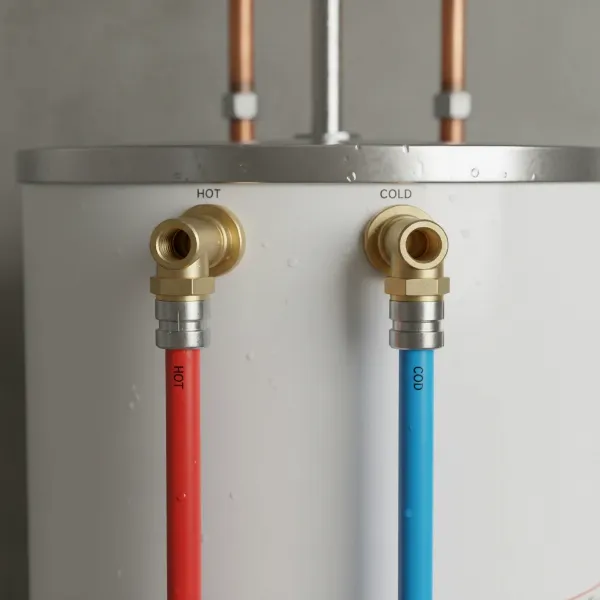 A close-up image showing PEX piping connected to a water heater with proper transition fittings, highlighting different connection types.
Crucial Safety and Code Requirements for PEX Water Heater Connections
Safety and compliance with local plumbing codes are paramount when connecting PEX to a water heater. Ignoring these can lead to leaks, damage, or even hazardous situations.
Electric Water Heaters
For electric water heaters, direct connection of PEX piping is generally acceptable and poses no significant temperature concerns at the connection points. The absence of a high-temperature flue or exhaust stack eliminates the need for metal transition pieces directly at the heater’s ports.
Gas Water Heaters
This is where safety becomes critical. Due to the high temperatures generated by the flue or exhaust of gas-fired water heaters, PEX should never be connected directly to the hot water outlet. Best practices and many plumbing codes require at least an 18-inch section of metal piping (typically copper or stainless steel flexible connectors) immediately off the top of the hot water heater. This metal transition acts as a thermal buffer, protecting the PEX from excessive heat exposure that could cause it to degrade or fail. Additionally, PEX tubing should be kept at least 6 to 12 inches away from the gas water heater’s exhaust vent pipe.
Tankless Water Heaters
Similar to gas tank-style heaters, tankless water heaters, especially gas-fired models, can produce very high temperatures at their outlet. Always refer to the manufacturer’s instructions, as many tankless units also require metal piping (often factory-supplied flexible connectors or short copper stubs) at the inlet and outlet before connecting PEX.
Local Plumbing Codes
Always verify and comply with your local building and plumbing codes. While national codes provide guidelines, local jurisdictions can have specific requirements or amendments regarding PEX installations near water heaters. A permit may also be required for water heater replacement or installation. When in doubt, consult a licensed plumber.
Step-by-Step Guide: Connecting Your Water Heater to PEX Piping Properly
Connecting PEX to your water heater can be a DIY project for those with plumbing experience, but always prioritize safety and precision.
1. Gather Your Tools and Materials
Ensure you have everything ready before you start:
- PEX piping (PEX A is recommended for hot water applications)
- PEX fittings (crimp or expansion type, appropriate for your PEX type)
- PEX cutting tool
- Crimp tool with gauge OR PEX expansion tool and sleeves
- Adjustable wrenches
- Thread sealant tape (PTFE tape) or pipe dope
- Metal transition pieces (18-inch copper or stainless steel flexible connectors for gas heaters)
- Shut-off valves (for cold water inlet)
- Bucket and towels (for draining)
- Safety glasses and gloves
2. Prepare the Water Heater and Utilities
- Turn off Power/Gas: For electric heaters, switch off the circuit breaker. For gas heaters, turn off the gas supply at the unit’s valve and the main gas line if necessary.
- Shut off Water Supply: Locate your home’s main water shut-off valve and close it.
- Drain the Water Heater: Connect a garden hose to the water heater’s drain valve and run it to a floor drain or outdoors. Open a hot water faucet upstairs to break the vacuum and allow the tank to drain completely.
- Position the Water Heater: Ensure the new or existing water heater is in its final desired location and stable.
3. Install Metal Transition Pieces (for Gas Water Heaters)
If you have a gas water heater, thread the 18-inch metal flexible connectors or copper stub-outs onto the hot and cold water heater ports first. Use thread sealant tape or pipe dope for a watertight seal, and tighten with a wrench. This is a critical safety step.
4. Measure and Cut PEX Piping
Measure the distance from your existing supply lines (or the end of your metal transition pieces) to where you need to connect your PEX. Use a PEX cutting tool to make clean, straight cuts. Jagged edges can lead to leaks.
5. Make Your PEX Connections
For Crimp Connections:
- Slide a crimp ring over the PEX pipe end.
- Insert the barbed fitting fully into the PEX pipe until it stops at the base of the fitting.
- Position the crimp ring over the barbed area.
- Use your crimping tool to compress the ring according to the manufacturer’s instructions. Use a go/no-go gauge to confirm the crimp is correctly sized.
For Expansion Connections (PEX-A):
- Slide an expansion ring (or sleeve) over the PEX pipe end.
- Use the expansion tool to expand the PEX pipe and ring.
- Immediately insert the PEX fitting fully into the expanded pipe.
- Allow the PEX to contract around the fitting for a secure connection.
6. Connect PEX to the Water Heater
- Cold Water Inlet: Connect your cold PEX line to the cold inlet (usually blue or marked ‘C’) of the water heater, typically after a shut-off valve. Ensure the shut-off valve is installed 6-16 inches above the water heater connection.
- Hot Water Outlet: Connect your hot PEX line to the hot outlet (usually red or marked ‘H’).
- Ensure all connections are tight and secure.
7. Test for Leaks and Restore Service
- Fill the Tank: Slowly open the main water supply valve to begin filling the water heater. Open a hot water faucet in your home to allow air to escape the system. Once water flows smoothly from the faucet, close it.
- Check for Leaks: Carefully inspect all PEX and fitting connections for any signs of water leaks. If you find a leak, tighten the appropriate fitting.
- Restore Power/Gas: Once you’ve confirmed there are no leaks, restore power to electric water heaters or turn on the gas supply to gas water heaters.
Tips for Using and Maintaining Your PEX Water Heater System
Proper usage and regular maintenance will extend the life of your PEX connections and water heater.
Regular Cleaning and Inspection
Periodically inspect your PEX connections for any signs of wear, stress, or leaks. For tank-style water heaters, drain a few gallons from the tank annually to flush out sediment, which can improve efficiency and prevent premature failure. Consider checking and potentially replacing the anode rod every few years, if applicable, to protect the tank from corrosion.
Adjusting Temperature for Efficiency and Safety
Set your water heater’s temperature to an appropriate level, typically around 120°F (49°C). This temperature is hot enough for most uses, reduces the risk of scalding, and prevents excessive heat that could prematurely stress piping connections. Higher temperatures also increase energy consumption.
Checking Electrical Connections
For electric water heaters, occasionally inspect the electrical connections to ensure they are secure and free from corrosion. If you’re uncomfortable with electrical work, it’s best to call a qualified electrician.
“PEX has revolutionized plumbing with its versatility and durability, but proper installation, especially around heat sources like water heaters, is non-negotiable for safety and longevity. Always respect the 18-inch rule for gas heater transitions.” – John Smith, Master Plumber, Water Heater Max
Conclusion
Connecting a water heater to PEX piping is a practical and efficient choice for many homeowners, offering flexibility, corrosion resistance, and a long lifespan. By understanding the different PEX types and connection methods, and diligently following safety guidelines—especially the critical 18-inch metal transition for gas water heaters—you can achieve a robust and reliable hot water system. Remember to always consult local plumbing codes and, when in doubt, seek professional assistance. A well-installed PEX system ensures consistent hot water for your home for years to come. What kind of water heater do you plan to connect with PEX piping?
Frequently Asked Questions
Can I connect PEX directly to any type of water heater?
No, while PEX can generally connect directly to electric water heaters, gas Water Heaters require an 18-inch metal transition piece (like copper or stainless steel) between the heater’s hot water outlet and the PEX to protect against high flue temperatures. Always check local codes.
What tools do I need for PEX water heater connections?
Essential tools include a PEX cutter, appropriate crimp or expansion tools, measuring tape, adjustable wrenches, and thread sealant. For gas heaters, you’ll also need metal transition connectors.
Is PEX-A or PEX-B better for hot water heater connections?
PEX-A is generally preferred for hot water applications due to its superior flexibility and higher tolerance for extreme temperatures. However, PEX-B can also be used, especially with crimp fittings, if rated for hot water.
How do I prevent leaks in PEX water heater connections?
Ensure clean, straight cuts on the PEX pipe, use the correct fittings and tools for your PEX type (crimp or expansion), and follow manufacturer instructions precisely. Always perform a thorough leak test after installation before restoring full service.
How long do PEX water heater connections typically last?
With proper installation and good water quality, PEX piping and its connections can last 50 years or more. Regular inspections can help identify any potential issues early.