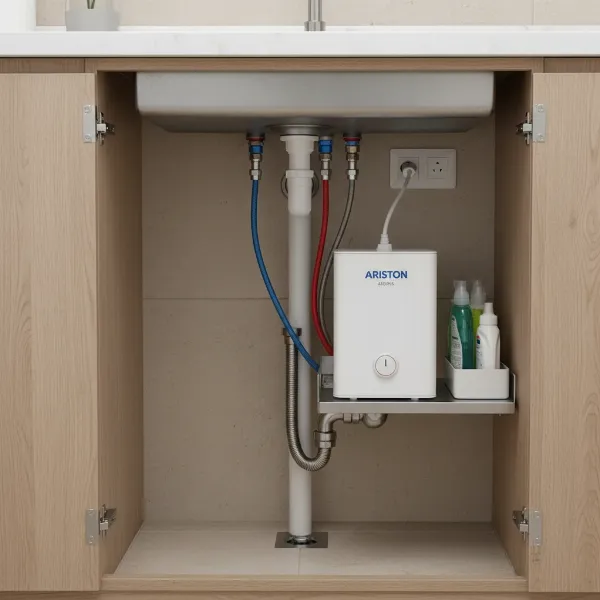
Your water heater is a silent workhorse, consistently providing hot water for showers, dishes, and laundry. Yet, this convenience comes at a cost, as heating water ranks among the top energy consumers in most homes, often running 24/7 to maintain temperature even when no one needs hot water. Installing a water heater timer offers a straightforward and effective solution to curb this unnecessary energy drain, significantly lowering your electricity bills and extending the lifespan of your appliance. This comprehensive guide will walk you through everything you need to know about water heater timers, from their benefits and types to a step-by-step installation process, helping you harness their power for a more energy-efficient home.
Understanding Your Water Heater Timer
A water heater timer is a specialized device designed to control when your electric water heater turns on and off. Instead of constantly heating water, the timer allows you to program specific operating hours, aligning its cycles with your household’s actual hot water demand. This simple yet powerful tool helps prevent the heater from wasting energy by maintaining hot water at times when it’s not needed, such as during work hours, school, or overnight.
Why Install a Water Heater Timer?
The decision to install a water heater timer is driven by several compelling advantages:
- Lower Energy Bills: By scheduling your water heater to operate only when hot water is required, you dramatically reduce its overall runtime. This direct reduction in electricity consumption translates into noticeable savings on your monthly utility statements. Many homeowners attest to the money-saving benefits of smart controls. Water heating is the third-largest user of energy in the home, accounting for 14% of a home’s energy consumption.
- Extended Water Heater Lifespan: Less frequent operation means reduced wear and tear on your water heater’s components, potentially prolonging its operational life.
- Customizable Schedule: Timers offer the flexibility to tailor your hot water availability to your family’s unique routines, ensuring hot water is ready when needed without any waste.
- Maximize Off-Peak Savings: If your utility company offers time-of-use (TOU) rates, a timer enables you to schedule heating cycles during off-peak hours when electricity costs are lower, further amplifying your savings.
- Environmental Benefits: Reducing electricity consumption also means decreasing your home’s carbon footprint, as less energy demand often translates to fewer greenhouse gas emissions associated with power generation.
|
Our Picks for the Best Water Heater in 2026
As an Amazon Associate I earn from qualifying purchases.
|
||
| Num | Product | Action |
|---|---|---|
| 1 | Immersion Water Heater Electric, 2000W Portable Water Heater with 304 S S Guard & LCD Thermometer, Fast Heating Bucket Heater, Ideal for Small Bucket Bathtub, Small Pool, Home Camping Outdoor Use |

|
| 2 | Amazon Basics Electric Stainless Steel Kettle for Tea and Coffee, BPA-Free, Fast Boiling, Auto Shut-Off, 1.7 Liter, 1500W, Black and Silver |
|
| 3 | Cosori Electric Kettle, No Plastic Contact With Water, Wide Mouth For Easy Cleaning, Auto Shut Off, 1.7L Tea Kettle & Hot Water Boiler, Water Heater & Teapot, Borosilicate Glass, Black, 1500W |
|
| 4 | Chefman Electric Kettle, 1.8L 1500W, Hot Water Boiler, Removable Lid for Easy Cleaning, Auto Shut Off, Boil-Dry Protection, Stainless Steel Filter, BPA Free, Borosilicate Glass Electric Tea Kettle |
|
| 5 | OVENTE Electric Kettle, 1.7L Fast Boiling Water Heater for Coffee or Tea, BPA Free with Water Level Gauge, Auto Shut-Off, Boil-Dry Protection, Indicator Light and Removable Filter, White KP72W |
|
| 6 | Amazon Basics Electric Kettle with Glass Carafe for Tea and Coffee, BPA-Free, Fast Boiling, Auto Shut-Off, 1.7 Liter, 1500W, Black and Silver |
|
| 7 | Amazon Basics Electric Kettle with Glass Carafe for Tea and Coffee, BPA-Free, Fast Boiling, Auto Shut-Off, 1 Liter, 1500W, Glass and Steel |
|
| 8 | Portable Immersion Water Heater 1800W 120V, Electric Heater for Buckets, Bathtubs and Mini Pools, Submersible Design with Thermostat, Real Time Temperature Display and Dry Burn Protection |
|
| 9 | Zojirushi Micom Water Boiler and Warmer (135 oz. / 4L, Silver) |
|
| 10 | Portable Water Heater 2000W, Pool Heater - Immersion Heater with Digital Thermometer, Upgraded Magnesium Oxide Heating for Fast Heating, for Small Pools, Bathtubs, Buckets, Tanks |
|
Types of Water Heater Timers
Water heater timers come in various forms, each offering different levels of functionality and convenience:
- Analog (Mechanical) Timers: These are traditional, often more affordable timers with a manual dial and pins or trippers to set on/off times. They are reliable but offer limited scheduling flexibility and may require occasional adjustment to maintain accurate time.
- Digital Timers: Offering more precise control, digital timers feature electronic controls and a digital display. They allow for more complex scheduling, including daily or weekly programs, and are generally more accurate than analog models.
- Wi-Fi and Smart Timers: These advanced timers connect to your home’s Wi-Fi network, allowing for remote control and scheduling via a smartphone app. Some smart timers can even learn your usage patterns and automatically adjust the heating schedule for optimal efficiency, often integrating with home automation systems.
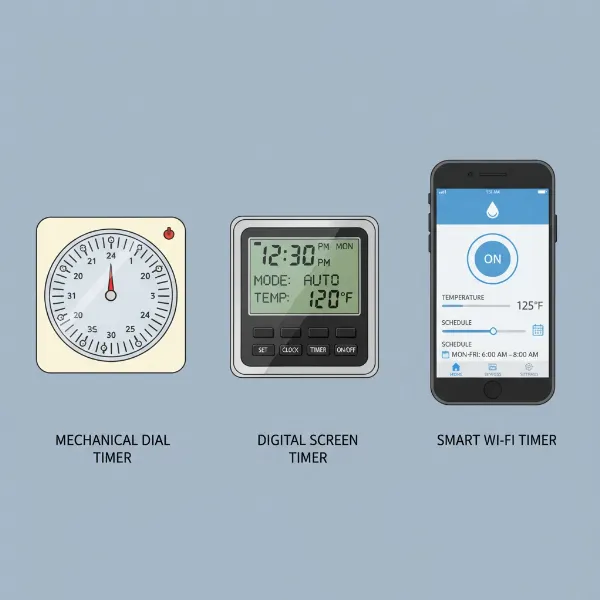 Illustration of various water heater timer types, including analog, digital, and smart Wi-Fi models, showcasing their distinct interfaces and features.
Preparing for Installation: Safety First!
Installing a water heater timer involves working with your home’s electrical system, which can be dangerous if not approached with caution. Safety should always be your top priority.
Essential Safety Precautions
Before you begin, always adhere to these critical safety measures:
- Turn Off Power: Locate your home’s main electrical panel and identify the circuit breaker that controls your water heater. Flip it to the “OFF” position. Verify that the power is indeed off at the water heater by testing with a non-contact voltage tester. This step is absolutely critical to prevent electric shock.
- Read the Manual: Always consult the instruction manual provided with your specific water heater timer. Each model may have unique wiring requirements or installation steps.
- Professional Help: If you are uncomfortable with electrical work or unsure about any step, it is highly recommended to hire a qualified electrician.
Tools and Materials You’ll Need
While specific tools may vary slightly by timer type, a general list includes:
- Screwdrivers (Phillips and flathead)
- Wire strippers/cutters
- Non-contact voltage tester
- Needle-nose pliers
- Electrical tape
- Wire nuts (often included with the timer)
- Mounting hardware (screws, wall anchors – usually included)
- A sturdy step ladder (if the water heater is tall)
Identifying Your Water Heater’s Voltage
Most electric tank water heaters are 220-volt (or 240-volt) appliances and require a specialized 220V timer. Smaller, point-of-use water heaters might use a standard 120-volt outlet and can often utilize a simpler, plug-in timer. Check the label on your water heater or its circuit breaker for voltage information.
Step-by-Step Installation Guide
The installation process varies depending on whether your water heater uses a 120V plug-in connection or is hardwired to a 220V circuit.
Method 1: 120V Plug-in Timer Installation (for smaller units)
This method is significantly simpler and typically applies to small, portable, or point-of-use water heaters that plug into a standard wall outlet.
- Safety First: Ensure the water heater is unplugged from the wall outlet.
- Plug in Timer: Plug your 120V water heater timer directly into the wall outlet.
- Connect Water Heater: Plug the water heater’s power cord into the timer’s outlet.
- Set Schedule: Follow the timer’s instructions to set your desired on/off schedule.
- Restore Power: Once everything is securely connected and programmed, you can plug the timer into the wall and verify its operation.
Method 2: 220V Hardwired Timer Installation (for most electric tank water heaters)
This method is more involved and requires working directly with your home’s electrical wiring. If you’re not confident, call a professional.
- Crucial Safety Step: Go to your main electrical panel and TURN OFF THE CIRCUIT BREAKER for your water heater. Use your non-contact voltage tester to confirm that the power is off at the water heater’s junction box or disconnect switch.
- Access Wiring: Open the cover of the existing electrical junction box or disconnect where the water heater’s power supply wires are connected. You will typically see three wires: two hot wires (black and red) and a bare copper ground wire.
- Mount the Timer Box: Choose a suitable location near the water heater, often on a wall stud or directly above the existing junction box. Securely mount the water heater timer box using appropriate screws and mounting hardware.
- Connect Wiring (Incoming Power):
- Route the incoming power supply wires (from your breaker panel) into the timer box through one of the knockouts.
- Connect the incoming black wire to the timer’s “Line 1” terminal.
- Connect the incoming red wire to the timer’s “Line 2” terminal.
- Connect the incoming bare copper ground wire to the timer’s ground terminal (usually a green screw).
- Connect Wiring (To Water Heater):
- Route the water heater’s power wires (the ones that originally went to the junction box) into the timer box through another knockout.
- Connect the water heater’s black wire to the timer’s “Load 1” terminal.
- Connect the water heater’s red wire to the timer’s “Load 2” terminal.
- Connect the water heater’s bare copper ground wire to the timer’s ground terminal (if there are two, connect to the second one, or pigtail if only one).
- Secure and Close: Ensure all wire connections are tight and secure using wire nuts and/or terminal screws. Carefully tuck the wires into the box, replace the timer’s cover, and close the original junction box cover (if applicable).
- Restore Power: Return to your main electrical panel and FLIP THE WATER HEATER CIRCUIT BREAKER BACK TO THE “ON” POSITION.
Setting Your Water Heater Timer for Maximum Savings
Once installed, correctly programming your water heater timer is key to maximizing energy savings without sacrificing comfort.
Identifying Peak Usage Times
Consider your household’s daily routine:
- When do family members typically shower?
- Are there specific times for washing dishes or laundry that require hot water?
- When is the house usually empty (e.g., during work or school hours)?
Most households have distinct peak usage times in the morning and evening. For instance, you might set the timer to turn on an hour before the first shower and turn off shortly after the last one, and then repeat this for evening use.
Accounting for Heat-Up Time
A typical electric water heater tank needs approximately 30 to 60 minutes to fully heat its contents. When setting your schedule, ensure the timer activates the heater at least 30-60 minutes before you anticipate needing hot water.
Utilizing Off-Peak Utility Rates
If your electricity provider offers variable rates, strategically schedule your heater to run during the lowest-cost “off-peak” periods. This often includes late nights and early mornings, or sometimes certain hours during the middle of the day.
Adjusting for Weekends and Holidays
Many digital and smart timers allow for different schedules on weekdays versus weekends. Take advantage of this feature to accommodate different routines, such as later mornings on weekends, ensuring hot water is available when you need it most.
Potential Savings and Considerations
While installing a water heater timer is a sound investment, understanding the factors influencing your savings is important.
- Average Savings: A water heater timer can help save money by preventing the tank from constantly reheating to compensate for “standby loss” (when water cools down inside the tank). Some estimates suggest savings can be around 15% of your total water heating costs, potentially translating to $45 or more annually for an average household.
- Factors Affecting Savings: The actual amount saved can vary based on several elements:
- Heater Age and Insulation: Older, less insulated water heaters tend to lose heat faster, so a timer can provide more significant savings. Newer, energy-efficient models with better insulation already have lower standby losses, potentially leading to smaller, though still valuable, savings.
- Household Size and Habits: Larger families with higher hot water demand or inconsistent schedules might see different savings compared to smaller households.
- Local Electricity Rates: The cost of electricity in your area, especially if you have time-of-use rates, heavily influences your financial returns.
- Modern Heaters: While beneficial for many, if your water heater was manufactured after 1998, it might be so energy-efficient that a timer’s cost savings are less dramatic, though still positive. However, installing a timer couldn’t hurt, and it’s a relatively inexpensive upgrade.
Conclusion
Installing a water heater timer is a smart, affordable upgrade that empowers you to take control of one of your home’s most significant energy consumers. By simply programming your hot water availability to match your actual needs, you can significantly reduce electricity consumption, lower your utility bills, and potentially extend the life of your water heater. Whether you opt for a basic analog timer or a sophisticated smart device, this small investment yields long-term benefits for both your wallet and the environment. Isn’t it time to stop heating water you don’t use and start enjoying the convenience of hot water on your schedule?
Frequently Asked Questions
Is it worth installing a timer on an old water heater?
Yes, it is often more beneficial to install a timer on an older water heater. Older models typically have less insulation and higher standby heat loss, meaning they waste more energy keeping water hot when not in use. A timer can significantly cut down on this wasted energy, leading to greater savings compared to more modern, well-insulated units.
How long does it take for a water heater to reheat?
The time it takes for a water heater to reheat a full tank typically ranges from 30 to 60 minutes. This duration can depend on factors such as the tank’s size, its recovery rate, the incoming water temperature, and the heating element’s wattage. Planning for this reheat time is essential when setting your timer schedule.
Can I install a water heater timer myself, or do I need an electrician?
A handy homeowner comfortable with light electrical work can generally install an electric Water Heater timer, especially 120V plug-in models. For 220V hardwired units, the main task involves rerouting power cables through the timer. However, due to the inherent dangers of working with electricity, if you are unsure or lack experience, hiring a qualified electrician is highly recommended to ensure a safe and proper installation.