Imagine turning on any faucet in your home and instantly feeling warm, comforting water. No more waiting, no more wasted cold water running down the drain. This isn’t a luxury reserved for high-end hotels; it’s a reality achievable with a hot water recirculating pump. If you’re tired of the daily struggle for hot water, this comprehensive guide will walk you through everything you need to know about these ingenious systems, from how they work to choosing the perfect one for your home. We’ll explore the various types, their benefits, potential drawbacks, and practical tips for selection and maintenance, ensuring you make an informed decision for consistent hot water comfort.
How Hot Water Recirculating Pumps Work
At its core, a hot water recirculating pump creates a continuous loop within your plumbing system, ensuring that hot water is always near your faucets. In a traditional setup, when you open a hot water tap, you first experience cold water because the water sitting in the pipes has cooled down. This “cold slug” must be purged before hot water from your water heater can reach you. A recirculating pump eliminates this wait by constantly moving water.
The pump, typically installed near your water heater or at the furthest fixture, draws cooled water from the hot water supply line and sends it back to the water heater to be reheated. Simultaneously, it pulls fresh hot water from the heater into the supply line, maintaining a ready supply throughout your home. This continuous or on-demand circulation means hot water is available almost immediately when you need it, significantly reducing water waste and enhancing convenience.
Dedicated Return Line Systems
|
Our Picks for the Best Water Heater in 2026
As an Amazon Associate I earn from qualifying purchases.
|
||
| Num | Product | Action |
|---|---|---|
| 1 | Amazon Basics Electric Kettle with Glass Carafe for Tea and Coffee, BPA-Free, Fast Boiling, Auto Shut-Off, 1.7 Liter, 1500W, Black and Silver |

|
| 2 | Amazon Basics Electric Stainless Steel Kettle for Tea and Coffee, BPA-Free, Fast Boiling, Auto Shut-Off, 1.7 Liter, 1500W, Black and Silver |
|
| 3 | Immersion Water Heater Electric, 2000W Portable Water Heater with 304 S S Guard & LCD Thermometer, Fast Heating Bucket Heater, Ideal for Small Bucket Bathtub, Small Pool, Home Camping Outdoor Use |
|
| 4 | Portable Water Heater 2000W, Pool Heater - Immersion Heater with Digital Thermometer, Upgraded Magnesium Oxide Heating for Fast Heating, for Small Pools, Bathtubs, Buckets, Tanks |
|
| 5 | Cosori Electric Kettle, No Plastic Contact With Water, Wide Mouth For Easy Cleaning, Auto Shut Off, 1.7L Tea Kettle & Hot Water Boiler, Water Heater & Teapot, Borosilicate Glass, Black, 1500W |
|
| 6 | Amazon Basics Electric Kettle with Glass Carafe for Tea and Coffee, BPA-Free, Fast Boiling, Auto Shut-Off, 1 Liter, 1500W, Glass and Steel |
|
| 7 | Chefman Electric Kettle, 1.8L 1500W, Hot Water Boiler, Removable Lid for Easy Cleaning, Auto Shut Off, Boil-Dry Protection, Stainless Steel Filter, BPA Free, Borosilicate Glass Electric Tea Kettle |
|
| 8 | OVENTE Electric Kettle, 1.7L Fast Boiling Water Heater for Coffee or Tea, BPA Free with Water Level Gauge, Auto Shut-Off, Boil-Dry Protection, Indicator Light and Removable Filter, White KP72W |
|
| 9 | Zojirushi Micom Water Boiler and Warmer (135 oz. / 4L, Silver) |
|
| 10 | Portable Immersion Water Heater 1800W 120V, Electric Heater for Buckets, Bathtubs and Mini Pools, Submersible Design with Thermostat, Real Time Temperature Display and Dry Burn Protection |
|
The most efficient type of recirculating system involves a dedicated return line. This is a separate pipe that runs from the furthest hot water fixture back to the water heater. The pump is installed on this return line, creating a closed loop where hot water constantly circulates. This setup is ideal for new constructions where additional plumbing can be easily integrated, offering the most direct and efficient path for water circulation.
Crossover (Under-Sink) Systems
For existing homes without a dedicated return line, crossover or integrated pump systems provide a cost-effective retrofit solution. These systems cleverly utilize your existing cold water line as the return path. A small pump and a crossover valve are typically installed under the sink at the fixture farthest from the water heater. When the pump activates, it pushes hot water into the hot water line and simultaneously diverts the cooler water from the hot line into the cold water line, sending it back to the water heater. A thermostatic valve prevents excessive hot water from entering the cold line. While easy to install, this method might result in slightly lukewarm cold water for a few seconds at the connected fixture.
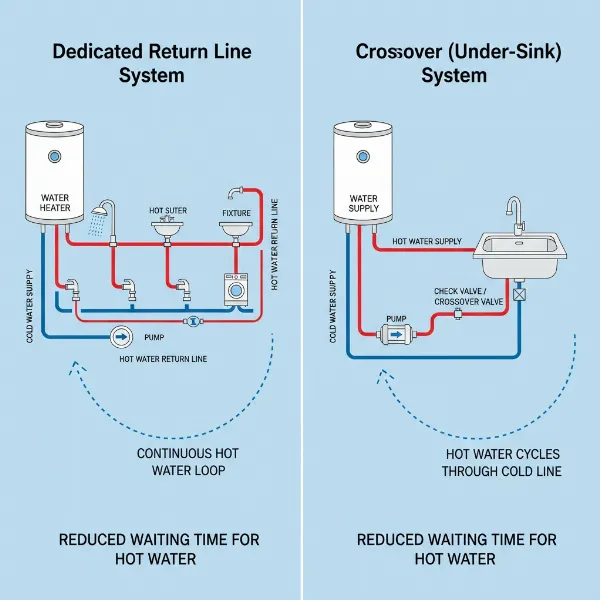 Diagram showing how a hot water recirculation pump works with both dedicated and crossover lines.
Types of Hot Water Recirculating Pumps
The world of recirculating pumps offers several control mechanisms, each designed to balance instant hot water delivery with energy efficiency. Choosing the right type depends on your household’s hot water usage patterns and energy-saving priorities.
Continuous Recirculation Pumps
These pumps operate 24/7, constantly circulating hot water through your pipes. They provide immediate hot water at any time but are generally the least energy-efficient due to continuous pump operation and heat loss from the pipes. While offering unparalleled convenience, they can significantly increase water heating costs if not managed.
Timer-Controlled Recirculation Pumps
Timer-controlled systems offer a balance between convenience and energy savings. These pumps allow you to program specific operating times, typically coinciding with peak hot water usage periods like mornings and evenings. By running only when hot water is most likely to be needed, they reduce energy consumption compared to continuous systems while still providing quick hot water during those crucial times.
Thermostatic Recirculation Pumps
Thermostatic pumps activate based on water temperature. When the water in the hot water line cools below a predetermined temperature, the pump automatically kicks in to circulate hotter water. This ensures a consistent temperature in your pipes without constant operation, making them a good option for households with frequent, but not necessarily scheduled, hot water use.
On-Demand Recirculation Pumps
For ultimate energy efficiency, on-demand recirculating pumps are the go-to choice. These systems only activate when hot water is specifically requested. This can be triggered by a push-button near the faucet, a motion sensor that detects presence in a bathroom or kitchen, or smart controllers that learn your habits. By running only for brief periods, on-demand systems drastically reduce both electricity use for the pump and heat loss from the pipes, offering significant energy savings.
Gravity-Fed (Passive) Recirculation Systems
Less common for active pumps, passive systems rely on natural convection, where warmer water rises and cooler water falls, creating a natural circulation loop without a mechanical pump. While highly energy-efficient, they are typically more expensive to install due to specific plumbing requirements and are often better suited for new constructions.
Benefits of a Hot Water Recirculating Pump
Installing a hot water recirculating pump can transform your daily routine and offer several tangible advantages for your home and wallet.
Instant Hot Water
The most immediate and appreciated benefit is instant access to hot water at any faucet or shower. Gone are the days of waiting impatiently for the water to warm up, whether you’re washing dishes, taking a quick shower, or just washing your hands. This convenience adds a touch of luxury and efficiency to everyday tasks.
Water Conservation
Without a recirculating pump, hundreds, if not thousands, of gallons of cold water are wasted annually as homeowners wait for hot water to reach distant fixtures. Recirculating pumps eliminate this waste by keeping hot water in the pipes, ready for use. An average family can save thousands of gallons of water each year, which translates to lower water bills and a reduced environmental footprint, especially in drought-prone regions.
Enhanced Convenience and Comfort
Beyond just saving water, recirculating pumps significantly enhance daily comfort. The consistent availability of hot water streamlines morning routines, makes kitchen tasks easier, and provides a more pleasant overall experience throughout the home. This upgrade can feel like a major improvement in quality of life.
“The convenience is undeniable—hot water in seconds instead of minutes.” – Homeowner, Rancho Cordova
Potential Drawbacks and Considerations
While the benefits are compelling, it’s crucial to consider the potential downsides of recirculating pumps before installation.
Energy Consumption
Perhaps the most significant drawback, especially for continuously running systems, is increased energy consumption. The pump itself uses electricity, and constantly circulating hot water leads to heat loss through the pipes, requiring the water heater to work more frequently. A typical 25-watt continuous pump can add $26-$34 annually to electricity bills and increase water heating costs by up to 50% due to heat loss. However, smart controls like timers, thermostats, or on-demand activation can drastically cut this, reducing electricity use by up to 90% and water heating energy by a third.
Initial Cost and Installation
The upfront investment for a recirculating pump system can range from a few hundred dollars for a basic pump to over $1,000 for advanced, smart-controlled models. Professional installation costs can add significantly, particularly if a dedicated return line needs to be installed in an existing home, which can sometimes reach $3,000 or more in new construction. While DIY installation is possible for some under-sink models, complex systems often require a professional plumber.
Noise and Maintenance
Some recirculating pumps, especially in older plumbing systems, can produce noticeable noise or vibration during operation. Modern, high-quality pumps are often designed to be quieter, and proper installation can minimize these issues. Additionally, these systems require regular maintenance, including flushing to remove sediment, lubricating bearings, and inspecting electrical connections and sensor valves (which may need replacement every two years) to ensure efficient and reliable operation.
Choosing the Right Recirculating Pump
Selecting the ideal recirculating pump involves assessing your home’s unique characteristics and your specific hot water needs.
Home Layout and Plumbing
Consider the distance of your furthest fixtures from the water heater. Homes with long pipe runs benefit most. For new construction, a dedicated return line system offers optimal efficiency. For existing homes, a crossover (under-sink) system is a more practical retrofit.
Usage Patterns
If your household has consistent hot water usage at predictable times (e.g., morning showers), a timer-controlled pump can be highly effective. For irregular or infrequent hot water needs, an on-demand system with a push-button or motion sensor will provide convenience with minimal energy waste.
Energy Efficiency Goals
Prioritize on-demand or smart-controlled systems if energy savings are a primary concern. These systems are designed to minimize continuous operation and heat loss. Pairing your pump with well-insulated hot water pipes can further enhance overall efficiency.
Budget
Recirculating pumps vary widely in price. Determine your budget for both the pump and potential installation costs. While higher-end models with smart features have a greater upfront cost, their long-term energy savings can lead to a quicker return on investment.
Key Features
Look for features like programmable timers, temperature sensors, and smart home integration (Wi-Fi connectivity, app control) to maximize efficiency and convenience. These controls allow you to customize the pump’s operation to your lifestyle.
Simplified Installation Guide
While professional installation is often recommended, especially for complex systems, understanding the basic steps can help you prepare or even tackle a simple DIY project.
DIY vs. Professional Installation
Basic under-sink crossover systems are often designed for DIY installation, requiring common tools and basic plumbing knowledge. However, systems involving a dedicated return line or modifications to your main water heater connections are best left to a qualified plumber. Professional installation ensures proper sizing, correct component placement, and adherence to local codes.
Basic Installation Steps (General Overview)
- Safety First: Always turn off the power to your water heater (and gas, if applicable) and shut off the main water supply to your home.
- Drain Pipes: Open hot water faucets to relieve pressure and drain some water from the hot water lines.
- Mount the Pump: Depending on the system, the pump will be mounted near the water heater or under the furthest sink. Follow manufacturer instructions regarding orientation (e.g., vertical mounting) and clearance.
- Connect Piping: For a water heater-mounted pump, it typically connects to the hot water outlet. For under-sink systems, a crossover valve connects between the hot and cold water supply lines. Use plumber’s tape on threaded connections.
- Wire Controls: Install any timers, sensors, or smart modules according to instructions. Ensure a stable power source for the pump.
- Restore Water and Power: Slowly turn the water supply back on, checking for leaks. Then, restore power to the water heater and pump.
- Test the System: Activate the pump and test hot water delivery at various fixtures. Bleed any air from the system.
- Insulate Pipes: For optimal efficiency, insulate exposed hot water pipes.
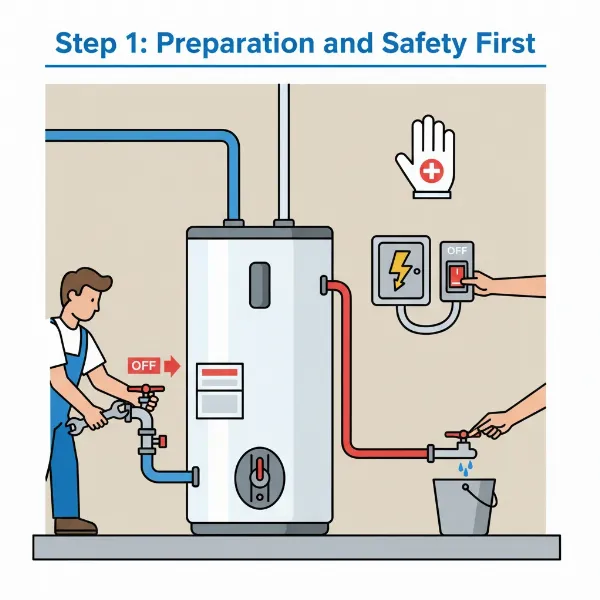 Illustrated guide showing basic installation steps for a hot water recirculation pump system.
Maintenance Tips for Your Recirculating Pump
Regular maintenance is key to ensuring your hot water recirculating pump operates efficiently and reliably for years to come.
Regular Cleaning
Periodically flush the system to remove sediment buildup, which can impede flow and reduce pump performance. Refer to your manufacturer’s guide for specific instructions on how often and how to perform this task.
Adjust Temperature Settings
Ensure your water heater’s temperature is set appropriately, typically between 120-125°F (49-52°C). This balance prevents scalding while being energy-efficient. Continuously running the water heater at excessively high temperatures can lead to higher energy costs.
Inspect Electrical Connections
Regularly check all electrical connections and components for any signs of wear, corrosion, or damage. Promptly address any issues to ensure safe and continuous operation. If your pump has a sensor valve, be aware that these may need to be replaced every two years.
Conclusion
The pursuit of instant hot water is a common desire for many homeowners, and a hot water recirculating pump provides an effective solution. By eliminating the frustrating wait and reducing water waste, these systems significantly enhance convenience and comfort throughout your home. While continuous systems can have notable energy costs, modern on-demand and smart-controlled pumps offer a far more energy-efficient pathway to enjoying hot water exactly when you need it.
Choosing the right recirculating pump involves a thoughtful consideration of your home’s layout, usage patterns, budget, and energy efficiency goals. Whether you opt for a dedicated return line system in new construction or a clever under-sink retrofit, the long-term benefits of water savings and instant comfort make it a worthwhile investment for a more efficient and enjoyable home. Are you ready to stop waiting and start enjoying instant hot water everywhere?
Frequently Asked Questions
Are recirculating pumps truly energy efficient?
The energy efficiency of recirculating pumps varies greatly by type. Continuous systems can significantly increase energy consumption. However, on-demand, timer-controlled, and thermostatic pumps are designed to optimize energy use, activating only when needed or during peak times, leading to considerable energy savings compared to constantly running systems.
How much water can a recirculating pump save annually?
A hot water recirculating pump can save a household thousands of gallons of water per year. While manufacturers often claim savings of 10,000-15,000 gallons, real-world savings for an average home typically range from 3,000 to 8,000 gallons annually, depending on pipe length, household size, and usage habits.
Can I install a hot water recirculating pump myself?
Some basic under-sink recirculating pumps, particularly those designed for crossover systems, can be installed by homeowners with basic plumbing knowledge. However, systems requiring a dedicated return line or modifications to the main water heater plumbing are more complex and typically require professional installation to ensure safety and optimal performance.
What is the average lifespan of a hot water recirculating pump?
With proper maintenance, most quality hot water recirculating pumps are designed to last between 10 to 15 years. Regular inspections, cleaning, and timely replacement of components like sensor valves can help extend the lifespan of the system.
Do recirculating pumps work with tankless water heaters?
Yes, many recirculating pumps are compatible with tankless Water Heaters, often referred to as “tankless recirculation pumps.” These systems are specifically designed to overcome the initial cold water delay sometimes associated with tankless units, providing instant hot water efficiently. It’s important to choose a pump designed for tankless applications.