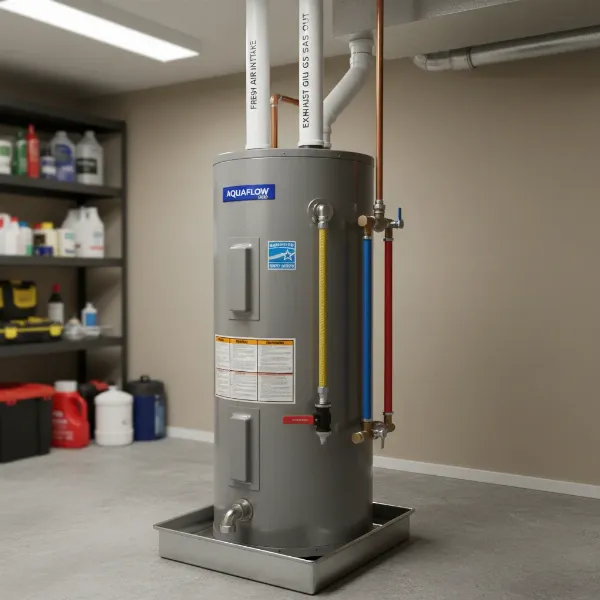
Have you ever stood in an appliance aisle, bewildered by the array of water heaters and their technical specifications, especially when trying to decipher energy efficiency? You’re not alone. Choosing a new water heater is a significant investment, and understanding its energy efficiency rating is crucial for both your wallet and the environment. This guide will demystify the Uniform Energy Factor (UEF) rating, explaining what it is, why it matters, and how to use it to select the perfect water heater for your home.
What is Uniform Energy Factor (UEF)?
The Uniform Energy Factor (UEF) is a critical metric designed to measure a water heater’s overall energy efficiency. Essentially, it represents the ratio of usable hot water a unit produces compared to the total energy it consumes over a typical 24-hour period [cite: 1 (search 1), 3 (search 1), 5 (search 1)]. In simpler terms, a higher UEF rating signifies a more efficient water heater, meaning it converts a greater percentage of its energy into hot water, with less wasted heat [cite: 1 (search 1), 2 (search 1), 3 (search 1)]. For instance, a water heater with a UEF of 0.90 indicates that 90% of the energy it uses is converted into hot water, while only 10% is lost [cite: 1 (search 1), 4 (search 4)]. This efficiency directly translates to lower energy bills and a reduced environmental footprint for your household [cite: 1 (search 3), 5 (search 3)].
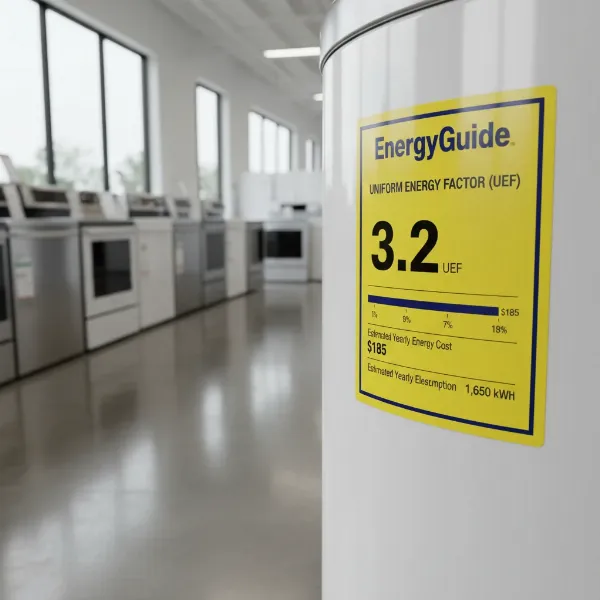 A clear close-up of a water heater's yellow EnergyGuide label, highlighting the Uniform Energy Factor (UEF) rating.
UEF vs. Energy Factor (EF): The Evolution of Efficiency Measurement
Before June 2017, water heaters were typically rated using the Energy Factor (EF) system [cite: 1 (search 1), 3 (search 1), 1 (search 2), 4 (search 2), 5 (search 2), 4 (search 4), 5 (search 4)]. While EF also aimed to quantify efficiency, it often led to confusion and inconsistent comparisons across different brands and models due to varying testing procedures [cite: 3 (search 1), 1 (search 2), 4 (search 2), 5 (search 2)]. Recognizing these limitations, the U.S. Department of Energy (DOE) introduced the UEF standard to provide a more accurate, reliable, and standardized method for evaluating residential water heater performance [cite: 3 (search 1), 1 (search 2), 4 (search 2), 5 (search 2), 4 (search 4), 5 (search 4)].
The transition to UEF was designed to allow for true “apples-to-apples” comparisons, making it easier for consumers to choose the most energy-efficient unit [cite: 3 (search 1), 4 (search 2), 5 (search 2), 5 (search 4)]. UEF testing incorporates more realistic household usage patterns and provides a comprehensive assessment by factoring in elements like recovery rate (how quickly the heater can replenish its hot water supply), standby energy loss (heat loss from the tank when not in use), and cycling losses (energy lost during heating cycles) [cite: 3 (search 1), 5 (search 1), 1 (search 3)]. This holistic approach ensures that the UEF rating offers a more accurate reflection of a water heater’s real-world energy consumption.
How UEF Ratings Are Determined
The process for determining a water heater’s UEF rating is comprehensive and standardized by the DOE. It begins by categorizing water heaters into one of four “bins” based on their hot water delivery capacity, specifically their First-Hour Rating (FHR) for tank-type models or Max GPM (gallons per minute) for tankless models [cite: 2 (search 1), 1 (search 2), 4 (search 2), 5 (search 2), 4 (search 4), 5 (search 4)]. These bins represent different levels of daily hot water usage: Very Small, Low, Medium, and High [cite: 4 (search 4), 5 (search 4)].
After being assigned a bin, the water heater undergoes a 24-hour Simulated Use Test (SUT) [cite: 3 (search 2), 4 (search 2)]. During this test, the unit is subjected to specific hot water draw patterns that simulate actual household use, with the thermostat set to deliver water at a consistent 125°F (±5°F) [cite: 3 (search 2)]. The energy consumed versus the hot water delivered is meticulously measured, leading to the final UEF score [cite: 1 (search 1), 3 (search 1)]. This rigorous testing methodology ensures that the UEF rating is a reliable indicator of a water heater’s efficiency under diverse operating conditions.
> “The Uniform Energy Factor provides a vital, standardized metric, ensuring homeowners can confidently choose appliances that align with their energy-saving goals. It’s about empowering consumers with transparent, real-world performance data.” – John Smith, Senior Energy Efficiency Analyst
 A technician monitoring water heater performance tests in a lab with various gauges and equipment.
Decoding Your Water Heater’s UEF Rating
When you look at a water heater’s yellow EnergyGuide label, the UEF rating will be prominently displayed. Remember, the general rule is: the higher the UEF number, the more energy-efficient the water heater [cite: 1 (search 1), 2 (search 1), 3 (search 1)]. However, a crucial nuance is that UEF ratings are only directly comparable between water heaters within the same usage bin [cite: 2 (search 1), 1 (search 2), 2 (search 2), 5 (search 2), 3 (search 3), 4 (search 4), 5 (search 4)].
For example, a high-capacity (high-bin) water heater with a UEF of 0.95 will perform efficiently for its category, but its UEF cannot be directly compared to a very-small-capacity (low-bin) water heater also rated at 0.95 UEF [cite: 1 (search 2), 5 (search 2), 4 (search 4), 5 (search 4)]. This is because the testing conditions and simulated usage patterns are different for each bin. To make an informed decision, always compare models of similar type (e.g., tank, tankless, heat pump) and designed capacity within their respective UEF bins. The EnergyGuide label will also provide an estimated annual operating cost, which can be a valuable tool for direct comparison among models.
The Benefits of High UEF Water Heaters
Investing in a water heater with a high UEF rating offers a multitude of advantages for homeowners. The most immediate and tangible benefit is significant savings on your utility bills [cite: 1 (search 3), 2 (search 3), 5 (search 3)]. Because these units are designed to convert energy into hot water with minimal waste, they require less electricity or gas to operate, leading to noticeable reductions in monthly expenses. Over the lifespan of a water heater, these savings can amount to hundreds or even thousands of dollars.
Beyond cost savings, high-UEF water heaters also contribute to a greener home and a healthier planet. By consuming less energy, they help reduce your household’s carbon footprint, aligning with broader sustainability goals [cite: 1 (search 3), 5 (search 3)]. Furthermore, water heaters with higher UEF ratings often incorporate advanced technologies, such as improved insulation, more efficient burners, or innovative heat transfer mechanisms, leading to better overall performance and reliability [cite: 1 (search 3)]. These modern features can enhance user experience, providing more consistent hot water and longer unit lifespan.
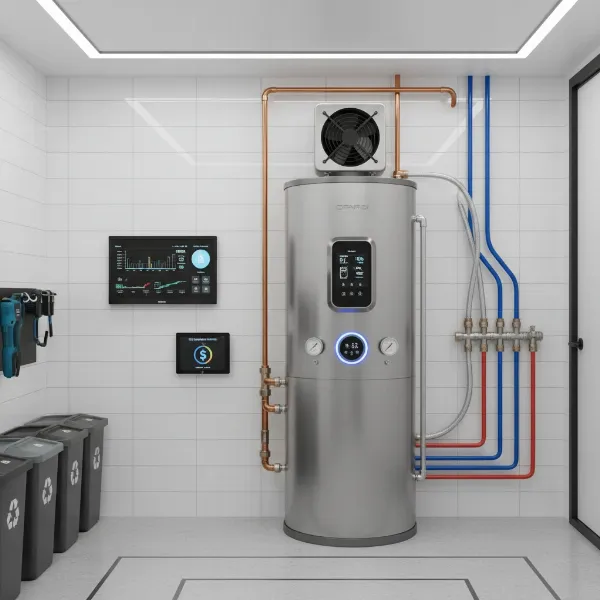 A sleek, modern high-efficiency water heater in a well-organized utility room, symbolizing energy savings and modern technology.
Choosing the Right Water Heater Based on UEF
While UEF is a crucial indicator of efficiency, it shouldn’t be the sole factor in your purchasing decision [cite: 2 (search 1)]. A holistic approach involves considering several other elements to ensure the water heater perfectly matches your household’s needs.
- First-Hour Rating (FHR) or Max GPM: For tank-type water heaters, FHR indicates the amount of hot water the unit can deliver in the first hour of operation, critical for peak demand times. For tankless models, Max GPM measures the flow rate of hot water. Ensure this matches your family’s usage patterns, especially if you have multiple hot water demands simultaneously.
- Fuel Type: Consider whether you prefer electric, natural gas, propane, or heat pump models, as each has different UEF ranges and operating costs. For example, standard electric tanks often have higher UEFs than standard gas tanks, but heat pump water heaters typically boast the highest UEFs of all [cite: 3 (search 3)].
- Capacity: Determine the appropriate size based on the number of residents and your hot water consumption habits. An undersized, super-efficient unit can still lead to dissatisfaction if it can’t meet your daily demands [cite: 3 (search 3)].
- Overall Cost & Payback Period: Factor in the initial purchase price, installation costs, and estimated annual operating costs shown on the EnergyGuide label [cite: 2 (search 1)]. A higher-UEF unit might have a higher upfront cost but could offer significant long-term savings.
- Installation Realities: Be aware of specific installation requirements. For instance, heat pump water heaters need adequate space and airflow, and they can cool and dehumidify the surrounding room [cite: 3 (search 3)]. Condensing gas models may require different venting and a condensate drain.
By balancing UEF with these practical considerations, you can confidently select a water heater that provides both efficiency and effective performance for your home.
Future of Water Heater Efficiency: DOE Regulations
The Department of Energy continues to push for greater energy efficiency in residential appliances, including water heaters. Upcoming energy conservation standards are scheduled to take effect on May 6, 2029 [cite: 2 (search 4), 3 (search 4), 4 (search 4)]. These regulations aim to further reduce overall energy consumption in the United States and will require updates for various water heater types.
Notably, electric storage water heaters with capacities greater than 35 gallons will be required to incorporate heat pump technology to meet new minimum UEF standards [cite: 2 (search 4), 3 (search 4), 4 (search 4)]. While minor updates will also be required for gas-fired storage water heaters, the gas instantaneous (tankless) product category is currently exempt from this specific rule and will be addressed in future regulations [cite: 2 (search 4), 4 (search 4)]. These ongoing regulatory changes underscore the increasing importance of UEF ratings and the continuous drive towards more sustainable and cost-effective hot water solutions.
Conclusion
Understanding the Uniform Energy Factor (UEF) rating is essential for any homeowner looking to make an informed decision about their water heater. This standardized metric provides a clear, reliable way to compare the energy efficiency of different models, helping you identify units that will save you money on utility bills and reduce your environmental impact. While a higher UEF generally indicates better efficiency, remember to consider your household’s specific hot water demands, fuel type, and installation requirements to ensure you choose the perfect match.
As technology advances and regulations evolve, UEF will remain a cornerstone of water heater selection. Are you ready to take control of your hot water costs and contribute to a more sustainable future?
Frequently Asked Questions
What does a good UEF rating for a water heater typically look like?
|
Our Picks for the Best Water Heater in 2026
As an Amazon Associate I earn from qualifying purchases.
|
||
| Num | Product | Action |
|---|---|---|
| 1 | Amazon Basics Electric Stainless Steel Kettle for Tea and Coffee, BPA-Free, Fast Boiling, Auto Shut-Off, 1.7 Liter, 1500W, Black and Silver |

|
| 2 | Cosori Electric Kettle, No Plastic Contact With Water, Wide Mouth For Easy Cleaning, Auto Shut Off, 1.7L Tea Kettle & Hot Water Boiler, Water Heater & Teapot, Borosilicate Glass, Black, 1500W |
|
| 3 | Portable Immersion Water Heater 1800W 120V, Electric Heater for Buckets, Bathtubs and Mini Pools, Submersible Design with Thermostat, Real Time Temperature Display and Dry Burn Protection |
|
| 4 | Amazon Basics Electric Kettle with Glass Carafe for Tea and Coffee, BPA-Free, Fast Boiling, Auto Shut-Off, 1.7 Liter, 1500W, Black and Silver |
|
| 5 | Immersion Water Heater Electric, 2000W Portable Water Heater with 304 S S Guard & LCD Thermometer, Fast Heating Bucket Heater, Ideal for Small Bucket Bathtub, Small Pool, Home Camping Outdoor Use |
|
| 6 | Chefman Electric Kettle, 1.8L 1500W, Hot Water Boiler, Removable Lid for Easy Cleaning, Auto Shut Off, Boil-Dry Protection, Stainless Steel Filter, BPA Free, Borosilicate Glass Electric Tea Kettle |
|
| 7 | Amazon Basics Electric Kettle with Glass Carafe for Tea and Coffee, BPA-Free, Fast Boiling, Auto Shut-Off, 1 Liter, 1500W, Glass and Steel |
|
| 8 | OVENTE Electric Kettle, 1.7L Fast Boiling Water Heater for Coffee or Tea, BPA Free with Water Level Gauge, Auto Shut-Off, Boil-Dry Protection, Indicator Light and Removable Filter, White KP72W |
|
| 9 | Zojirushi Micom Water Boiler and Warmer (135 oz. / 4L, Silver) |
|
| 10 | Portable Water Heater 2000W, Pool Heater - Immersion Heater with Digital Thermometer, Upgraded Magnesium Oxide Heating for Fast Heating, for Small Pools, Bathtubs, Buckets, Tanks |
|
A “good” UEF rating varies by water heater type and usage bin. For standard gas tank models, UEFs around 0.60-0.70 are common, while high-efficiency gas condensing units or tankless models will be higher. Standard electric tank water heaters often range from 0.90-0.95 UEF, but heat pump water heaters are significantly more efficient, often exceeding 3.3 UEF [cite: 3 (search 3)].
Can I compare UEF ratings between different types of water heaters?
No, UEF ratings are designed to be compared primarily within the same usage bin and typically within the same type of water heater (e.g., comparing two electric tank water heaters, not an electric tank with a gas tankless) [cite: 2 (search 1), 1 (search 2), 5 (search 2), 3 (search 3)]. This ensures you’re making an “apples-to-apples” comparison based on similar performance expectations.
Where can I find the UEF rating for a water heater?
The UEF rating is prominently displayed on the yellow EnergyGuide label attached to all new residential water heaters [cite: 2 (search 1)]. This label also provides estimated annual operating costs, which can be helpful for direct comparisons.
Is a higher UEF always better?
Generally, yes, a higher UEF indicates greater energy efficiency and lower operating costs within the same water heater type and usage bin [cite: 3 (search 3)]. However, it’s essential to consider other factors like the unit’s capacity, your hot water demand, and initial purchase/installation costs for a truly optimal choice.
What happened to the old Energy Factor (EF) rating?
The Energy Factor (EF) rating was replaced by the Uniform Energy Factor (UEF) in June 2017 by the U.S. Department of Energy (DOE) [cite: 1 (search 1), 3 (search 1), 1 (search 2)]. UEF provides a more consistent and accurate way to measure and compare Water Heater efficiency across brands.